
Key Highlights
- Rangitoto Island is the youngest and most iconic landmark in the Auckland volcanic field.
- The island's unique ecosystem supports a thriving population of native birds.
- Ongoing conservation efforts are crucial for protecting the island's natural and archaeological sites.
Rising with a sudden, perfect symmetry from the turquoise waters of the Hauraki Gulf, Rangitoto Island stands as the youngest and most iconic landmark of the Auckland volcanic field. This landscape, characterized by stark, monochromatic beauty, features the jagged black scoria of lava fields juxtaposed against the vibrant green of the world’s largest pohutukawa forest. Walking the path to the summit reveals a pioneer world—a place where life is slowly reclaiming the scorched earth left by a six-hundred-year-old eruption. It embodies a narrative of resilience, etched in the dark stone and the silver leaves of coastal woods.
The island exudes a profound, rhythmic quiet, occasionally interrupted by the crunch of volcanic rock underfoot or the bell-like call of a tūī in the canopy. Rangitoto is a master of contradiction, appearing as a gentle curve from the mainland while concealing a rugged, unforgiving interior filled with lava caves and rock crevices. For visitors, the experience is one of geological immediacy—a reminder that the city exists on the edge of a sleeping giant. Here, the ancient fire of the earth has cooled in the embrace of the Pacific, creating a sanctuary for species that thrive in both heat and salt.
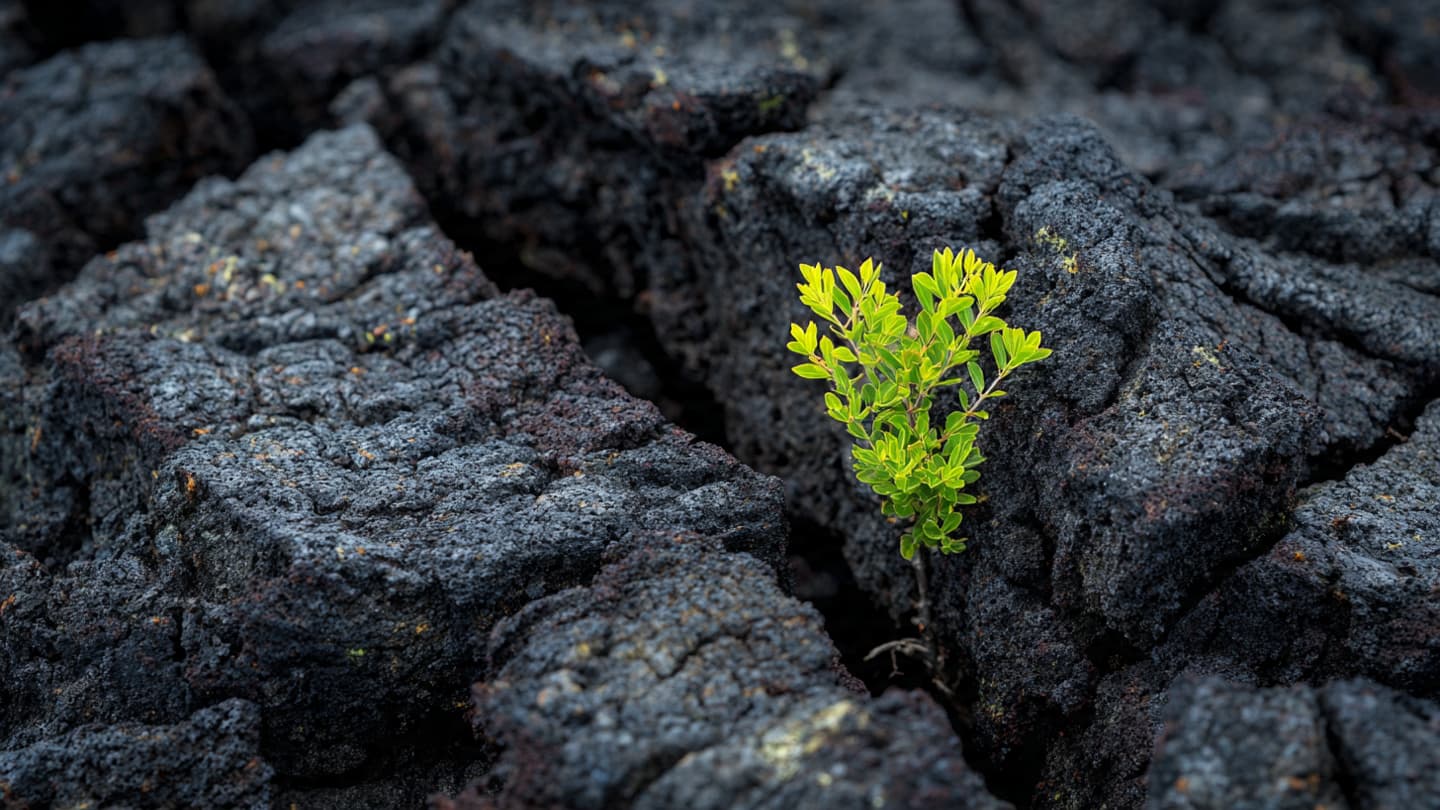
The pohutukawa trees, with their twisted, silver-grey trunks and vibrant crimson blooms in early summer, are the true colonizers of the lava. Their roots find purchase in the smallest cracks of the scoria, drawing life from the iron-rich stone. This struggle for survival reflects the island's own history, showcasing a dignity and endurance that resonates with the character of the gulf itself—resilient, beautiful, and perfectly adapted to the challenges of a marine environment.
The light on Rangitoto possesses a brilliant, shifting quality, transforming from deep sapphire blue in the morning to soft, shimmering silver as the sun sets over the Waitakere Ranges. This illumination reveals the intricate textures of the lava and the delicate patterns of moss carpeting the cooler hollows. It is a world of detail, where even the smallest fern plays a crucial role in the health of the ecosystem, emphasizing that the island serves as a living laboratory, allowing us to witness the slow, beautiful process of primary succession in real-time.
The isolation of the island offers a restorative power, providing a chance to view the city from a distance and gain a different perspective. Rangitoto does not seek attention; it simply exists, a persistent and beautiful presence that remains a fixed point on the horizon, regardless of the noise from the land. Its endurance serves as a source of hope, reminding us of the earth's magnificent capacity for renewal. The island is a treasure of the Hauraki Gulf, a silent guardian of the northern shore.
As visitors descend from the summit and return to the wharf, the memory of the black rock and green forest lingers as a vivid afterimage. They carry with them the feeling of the sun on the lava and the scent of the salt air. Rangitoto remains as it has always been, a silent monument to the forces that shaped the Auckland isthmus. We are merely the current witnesses to its majesty, grateful for the brief window of time spent in its shadows.
Recent reports from the New Zealand Department of Conservation highlight that the predator-free status of Rangitoto and neighboring Motutapu islands has led to a significant increase in native bird populations, including the saddleback (tieke) and the New Zealand dotterel. Ongoing forest health surveys indicate that the pohutukawa canopy is thriving, despite the challenges posed by the volcanic terrain. Authorities continue to manage visitor numbers to minimize the impact on the fragile lava fields and ensure the protection of the island’s unique archaeological and natural sites.
Published by Banx Network. This article is part of the Banx decentralized media programme, powered by the BXE token on the XRP Ledger.



