

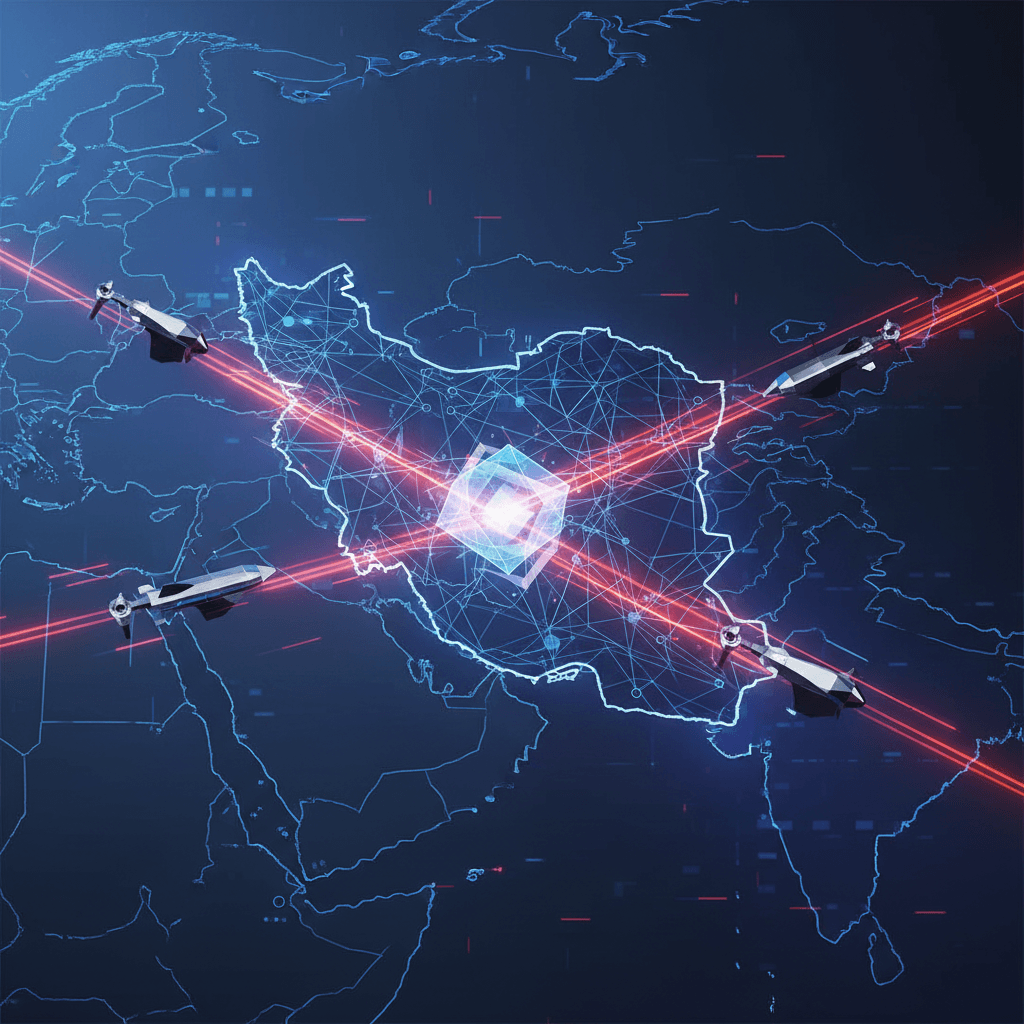
Key Highlights
- AI is transforming military engagement in the Persian Gulf.
- Nations are investing billions in defense AI for ISR capabilities.
- Cybersecurity threats pose risks to AI-driven military systems.
Artificial intelligence is no longer a distant concept; it is actively reshaping the landscape of modern warfare, particularly in volatile regions like the Persian Gulf. The integration of AI technologies into military strategies is not merely a theoretical discussion confined to academic circles. Recent reports indicate that countries are investing heavily in AI to enhance their intelligence, surveillance, and reconnaissance (ISR) capabilities, fundamentally altering the nature of conflict.
According to intelligence officials cited by the Wall Street Journal, AI is significantly accelerating military operations, especially concerning Iran. Advanced systems can now analyze satellite imagery and communications data at unprecedented speeds, allowing for rapid decision-making that can compress timelines from hours to mere minutes. This shift is not just about deploying faster drones; it represents a profound transformation in how conflicts are managed and escalated.
The implications of this technological evolution extend beyond the battlefield. Financial markets, particularly those tied to oil prices and global trade routes, are increasingly influenced by the algorithmic dynamics of military engagements. The historical volatility introduced by high-frequency trading is now mirrored in military decision-making processes. As AI systems dictate the tempo of conflict, the margin for human intervention and diplomatic resolution diminishes, creating a climate of uncertainty that can destabilize economies.
However, the reliance on AI in military operations introduces significant vulnerabilities. A report by cybersecurity firm CrowdStrike highlights a surge in state-sponsored cyberattacks targeting military networks and critical infrastructure. While AI may provide a tactical advantage, it also exposes systems to new forms of deception and manipulation. The potential for false intelligence to disrupt predictive models raises critical questions about the reliability of AI in high-stakes environments.
Moreover, the integration of AI into military strategies accelerates an arms race that transcends traditional weaponry. The competition is no longer solely about physical assets like tanks and aircraft; it now encompasses the development of superior algorithms and resilient data infrastructures. This digital arms race is less visible and more complex, complicating international relations and strategic stability.
As nations continue to invest in AI technologies, it is crucial to recognize the limitations and risks associated with these advancements. The reliance on machines for complex decision-making may overlook the unpredictable human elements that can significantly impact outcomes. Just as sophisticated weather models can fail to predict sudden changes in conditions, military AI systems may miss critical anomalies that defy algorithmic logic.
In conclusion, the algorithmic shadow cast over the Persian Gulf represents a new frontier in warfare, where the stakes are higher, and the consequences of miscalculation could be dire. As the region grapples with these technological advancements, understanding the interplay between AI, cybersecurity, and military strategy will be essential for navigating the complexities of modern conflict.
Published by Banx Network. This article is part of the Banx decentralized media programme, powered by the BXE token on the XRP Ledger.




