Key Highlights
- Energy Crisis:Russia threatens to halt energy supplies to Europe amid rising crude prices.
- AI Trading:The launch of AI-driven trading tools transforms market dynamics.
- Economic Shift:China consolidates wealth and builds a parallel economic system.
The global economic order has entered a period of unprecedented turbulence in March 2026. A convergence of geopolitical aggression, radical financial shifts in the Asia-Pacific, and the rise of autonomous AI trading has created a 'perfect storm' that is fundamentally rewriting the rules of the world market.
The Energy Ultimatum
Following a series of escalations in the Middle East and a surge in Brent crude to $120 per barrel, President Vladimir Putin has issued his most direct threat to European energy security to date. Recent communications from the Russian Embassy indicate that the Kremlin has shifted from a reactive stance to a strategy of preemptive decoupling. By instructing the Russian government to evaluate an immediate cessation of all energy supplies, including liquefied natural gas (LNG), Putin aims to act before the EU's planned total ban on Russian energy imports takes effect in 2027. This 'leap before you're pushed' strategy is designed to shock European industrial hubs during a period of high volatility, potentially forcing a diplomatic retreat. For Europe, the risk is a return to 'energy poverty' for its manufacturing sector; for Russia, it represents a final gamble on redirecting its entire infrastructure toward the East.
The Rise of the Machine-Led Market
While heads of state engage in brinkmanship, financial markets are being re-engineered by tools like the OKX Agent Trade Kit. This open-source toolkit marks a significant shift where humans no longer set the pace of trade—AI agents do. By allowing traders to connect large language model (LLM)-based agents directly to exchange order books via natural language, the market's response to geopolitical news is now instantaneous. A tweet from the Kremlin or a headline from the Strait of Hormuz can trigger thousands of autonomous agents to hedge, short, or rebalance portfolios in milliseconds. This algorithmic armor provides liquidity in a crisis, but it also creates a feedback loop where volatility can be magnified by the sheer speed of AI-driven execution.
China’s New Dynasties and the Wealth Transfer
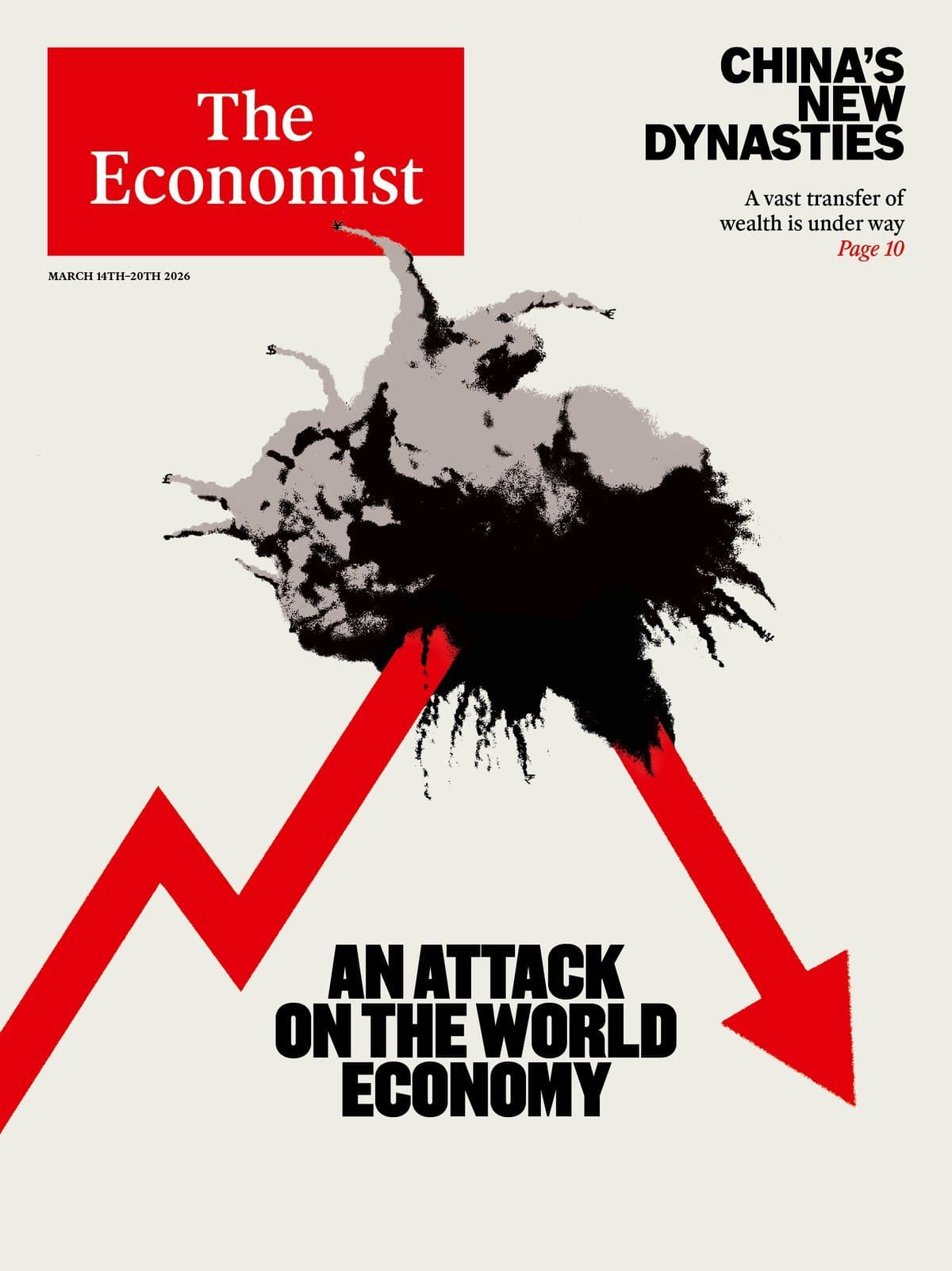
The cover of The Economist for March 14–20, 2026, encapsulates this chaos with the headline: 'An Attack on the World Economy.' The visual of a plummeting market chart erupting into a cloud of smoke symbolizes the destruction of the post-World War II financial consensus. Simultaneously, the 'China’s New Dynasties' feature highlights a vast transfer of wealth occurring as the East consolidates its own digital and energy networks. While the West focuses on containment and sanctions, China is building a parallel economic universe—one where Ripple’s expansion into Australia serves as a crucial regulated bridge between traditional fiat systems and the new digital infrastructure of the Asia-Pacific region.
We are no longer approaching a global shift; we are living through the fracture. The winners of 2026 will be those who can navigate the 'unreliable' energy corridors of the old world while mastering the autonomous, licensed financial rails of the new one.
Published by Banx Network. This article is part of the Banx decentralized media programme, powered by the BXE token on the XRP Ledger.