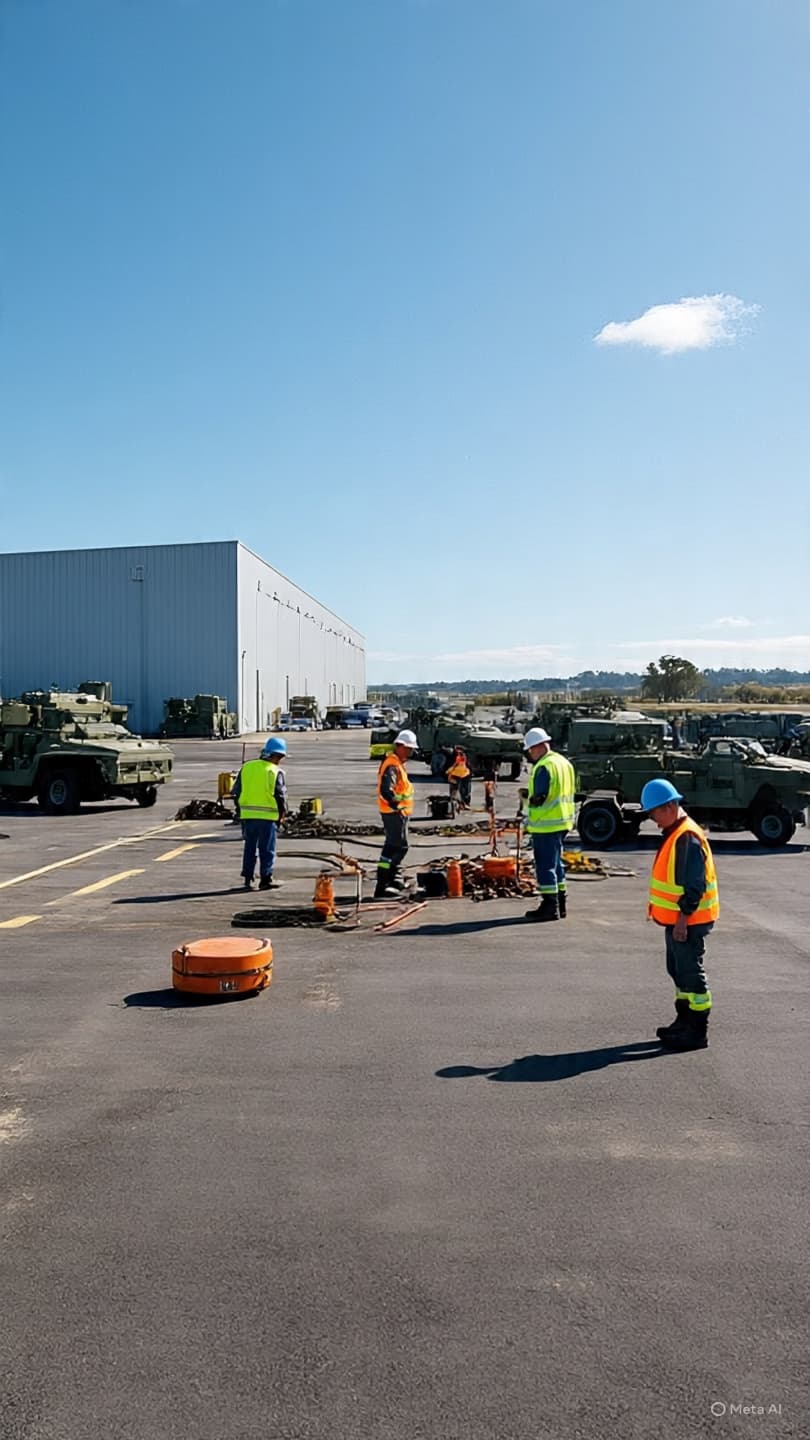
In the expansive training grounds of Waiouru and the busy operational hubs of the Whenuapai airbase, a new and massive commitment to New Zealand’s sovereign capability is being finalized this Friday. The official selection of Citycare and PAE New Zealand to manage the Defence Estate marks a moment where the "scaffolding" of the nation’s security has been entrusted to local, iwi-owned, and operated hands. It is a story of $1 billion and a 10-year vision, a move toward ensuring that the country’s most complex property portfolio is maintained with a "local economic benefit" at its core. The "shield" of the NZDF is being maintained with a new and homegrown intensity.
This contract award is a reflection of a procurement strategy that now values "resilience" as much as "value for money." To observe the selection of these two companies is to see the first major application of the 5th edition of the Government Procurement Rules, where the impact on the local economy is a weighted evaluation criterion. There is a certain gravity in this investment, a recognition that the "operational readiness" of the troops depends on the quality of the grounds they train on and the buildings they inhabit. The contract is not just about maintenance; it is a map of New Zealand’s commitment to building its own industrial depth.
Within the leadership teams of Citycare and PAE, the atmosphere is one of focused pride and long-term readiness. The transition to these site-based delivery teams represents a significant boost for local employment, with New Zealand-based leadership roles and call centers being established across the country. For the workers on the ground, the challenge is to deliver "preventative and reactive" maintenance in highly specialized and often sensitive environments. There is a sense of historic responsibility in the air, a feeling that these contracts are a vote of confidence in the ability of Kiwi businesses to support the nation’s most critical infrastructure.
To observe this industrial bloom is to witness the power of "social procurement" to reshape the national landscape. By backing local companies to do complex work, the NZDF is fostering a more sustainable and capable domestic supply chain. It is a strategic thickening of the national economic skin, ensuring that the "Brand Aotearoa" is synonymous with self-reliance and excellence. The contract is a display of pragmatism that ripples through the construction firms of Canterbury and the facilities management sectors of Auckland.
The influence of these changes extends to the 10,000 personnel of the NZDF, who will see a surge in the quality of their work and living environments as the new contracts commence progressively from July. It is a dialogue of care and capability, where the health of the estate is linked to the morale of the force. As PAE NZ’s Chris Pile noted, the "long-term focus" allowed by this 10-year deal will see significant investment in people and systems within New Zealand. The lawnmower and the paintbrush are the new tools of national resilience.
In the regional communities that host the major defense bases, the impact is felt in the stability of the local contracts and the creation of career pathways for young tradespeople. There is a narrative of community evolution here, a feeling that the defense of the nation is a shared and tangible effort. The 1 billion dollar investment is a gift to the long-term harmony of the New Zealand people, providing a foundation of infrastructure stability upon which the safety of the future can be built. The "Defence Estate" is being protected by a more formidable and ready local guard.
As the planning for the transition begins this April 17, the focus remains on the "seamless handover" from outgoing contractors. The success of the strategy depends not just on the scale of the budget, but on the integrity of the partnership between the NZDF and its new service providers. The future of New Zealand’s infrastructure is being written in the local workshops and the management offices of Citycare and PAE.
Ultimately, the 2026 Defence Estate Contract is a testament to the resilience and the realism of the New Zealand spirit. It is a reminder that in an age of global uncertainty, the most enduring progress is that which invests in one's own people and place. The estate is the liquid history of the region being reimagined for a modern and capable age. Standing at the gates of an NZDF base, watching the local teams arrive, one can feel the pulse of a nation that is ready to maintain its own future.
The New Zealand Defence Force (NZDF) has officially selected Citycare and PAE New Zealand as the primary providers for facilities maintenance across its national estate as of April 17, 2026. The contracts, valued at approximately $1 billion over 10 years, represent one of the country’s largest-ever property maintenance investments. In a first for the NZDF, the procurement applied new rules weighting "local economic benefit," resulting in the selection of locally and iwi-owned businesses. The services, covering grounds, preventative maintenance, and minor works, are set to commence progressively between July and November 2026.
AI Image Disclaimer “Visuals are AI-generated and serve as conceptual representations.”
Sources UK Prime Minister's Office - 10 Downing Street (April 16 & 17, 2026) NZ Defence Estate and Infrastructure (Mark Brunton Statement) Line of Defence Magazine - NZ (April 17, 2026) S&P Global Ratings (April 17, 2026 - Palmerston North) IMF World Economic Outlook (April 2026 Edition) Tennis West - News & Governance (April 17, 2026) Wikipedia Portal: Current events/April 2026 CNN International (Strait of Hormuz Coverage) Le Monde (Paris Summit Briefing)
Published by Banx Network. This article is part of the Banx decentralized media programme, powered by the BXE token on the XRP Ledger.