
Key Highlights
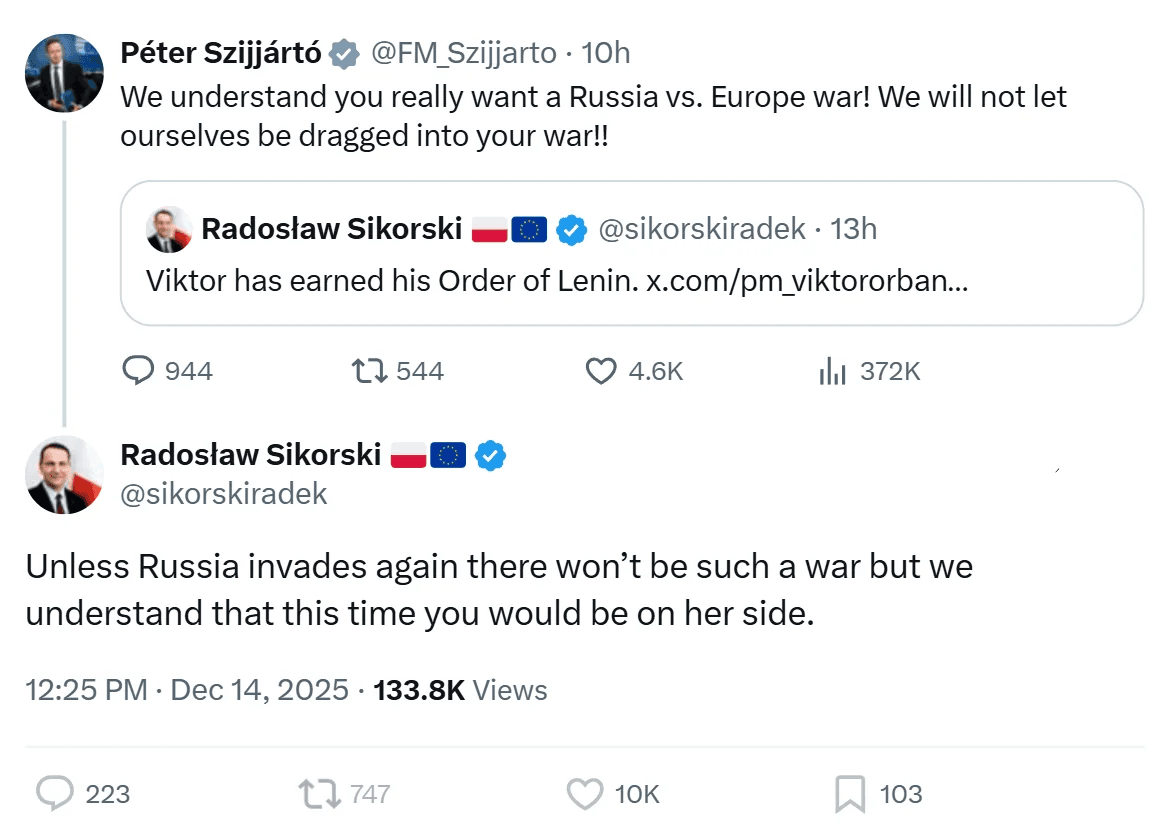
- Diplomatic Row:Polish and Hungarian foreign ministers clash publicly.
- EU Policies:Disagreement centers on migration and rule of law issues.
- Regional Implications:Tensions may affect Central European cooperation.
In a significant diplomatic row, the Polish Minister of Foreign Affairs, Zbigniew Rau, clashed with his Hungarian counterpart, Péter Szijjártó, during a recent press conference. The confrontation arose in response to Hungary's controversial approach to European Union policies, particularly concerning migration and rule of law issues. This incident underscores the growing rift between the two nations, which have historically shared a close relationship.
Rau did not hold back, expressing strong disapproval of Hungary's perceived deviation from EU standards. He stated, "Solidarity among member states is crucial for maintaining the integrity of our union." This statement reflects Poland's commitment to EU principles, contrasting sharply with Hungary's more nationalist approach. Szijjártó, on the other hand, defended Hungary's sovereignty and its right to pursue policies that reflect its national interests, arguing that "Hungary will not bow to external pressure." This assertion highlights Hungary's ongoing resistance to EU mandates that it views as infringing on its autonomy.
This public disagreement is not an isolated incident; it reflects a broader trend in Central Europe where both countries often find themselves on opposing sides of critical issues. The tensions have been exacerbated by Hungary's close ties with Russia and its contentious relationship with Brussels, contrasting sharply with Poland's more EU-aligned stance. This divergence has led to a complex dynamic within the Visegrád Group, which includes Poland, Hungary, the Czech Republic, and Slovakia.
Observers suggest that this clash could have implications for regional cooperation in Central Europe, particularly as both nations navigate upcoming challenges related to EU funding, democratic norms, and foreign relations. The fallout from this encounter could influence how the Visegrád Group approaches policy-making in the future. As the EU continues to grapple with issues of migration and rule of law, the differing perspectives of Poland and Hungary may complicate collective decision-making processes.
As the situation evolves, it remains to be seen whether this latest clash will lead to a broader reevaluation of alliances within Central Europe or if it will be yet another chapter in the complex narrative of Polish-Hungarian relations. The ongoing tensions may prompt other member states to reassess their positions and strategies in light of the shifting dynamics within the EU.
In conclusion, the clash between Rau and Szijjártó serves as a reminder of the challenges facing the EU as it seeks to maintain unity among its member states while respecting national sovereignty. The outcome of this diplomatic row could have lasting effects on the future of Central European cooperation and the EU's ability to address pressing issues effectively.
Published by Banx Network. This article is part of the Banx decentralized media programme, powered by the BXE token on the XRP Ledger.



