

Key Highlights
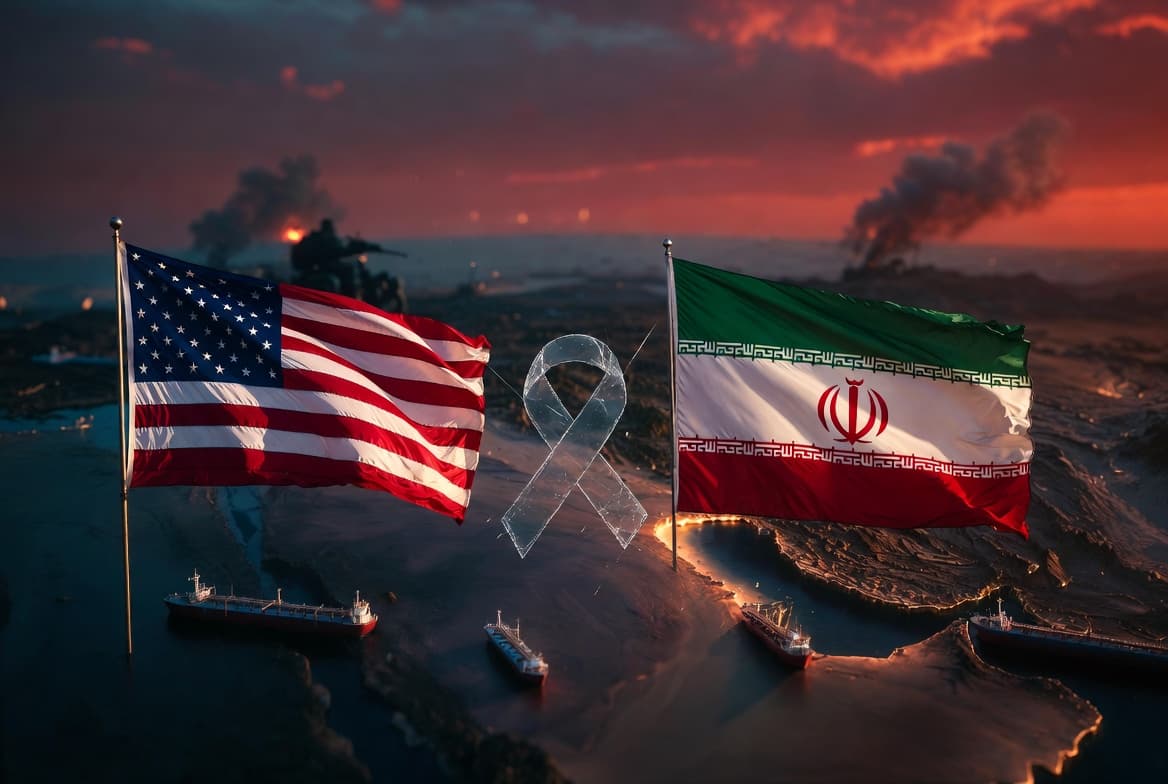
- Conflict Escalation:The US and Israel launched a major offensive against Iran on February 28, 2026.
- Ceasefire Agreement:A two-week truce was established just hours before a potential US strike on Iranian infrastructure.
- Ongoing Tensions:Despite the ceasefire, air raids and military actions continue in the region, raising concerns about its stability.
[Background: From Rapid Escalation to a Last-Minute Agreement] The conflict erupted on February 28, 2026, when the United States and Israel initiated a large-scale aerial campaign against Iran, targeting military, nuclear, and ballistic missile sites, as well as command centers. This offensive included the assassination of Supreme Leader Ali Khamenei, which significantly escalated tensions. In retaliation, Tehran launched hundreds of missiles and drones at Israeli targets and U.S. military bases in the Gulf region. The situation worsened when the Strait of Hormuz, a crucial passage for 20% of the world’s oil supply, was partially blocked, leading to a spike in oil prices.
After 39 days of intense fighting, U.S. President Donald Trump issued an ultimatum threatening a devastating strike on Iranian civilian infrastructure if the strait was not reopened. Just hours before the deadline, a deal was brokered for a two-week ceasefire, contingent upon the secure reopening of the Strait of Hormuz and a cessation of direct attacks between U.S. and Iranian forces. Negotiations are set to commence in Pakistan, with U.S. Vice President JD Vance participating in the discussions.
[Immediate Weaknesses of the Ceasefire] Despite the ceasefire, tensions remain high. On April 8, air raid sirens were activated in several countries, and Israel conducted extensive airstrikes against Hezbollah in Lebanon, reportedly killing over 250 people, according to Lebanese authorities. Iran has condemned these actions as violations of the ceasefire, asserting that it encompasses all “axes of resistance,” including Hezbollah. In contrast, Washington and Tel Aviv argue that the agreement pertains solely to direct U.S.-Iran exchanges and does not extend to Hezbollah's activities.
Israeli Prime Minister Benjamin Netanyahu has made it clear that the truce does not signify the end of military operations against Iran and its proxies, emphasizing that Israel's objectives of permanently weakening these threats remain unchanged. Iranian sources have reported that maritime movements in the Strait of Hormuz continue to be restricted, with accusations of multiple violations by the U.S. and Israel.
[Key Issues for Upcoming Negotiations] The upcoming discussions in Islamabad will tackle several contentious issues, including: • Iran’s nuclear program and uranium enrichment • The withdrawal of U.S. forces from the region • The lifting of sanctions against Iran • Compensation for damages and cessation of attacks on Lebanon and other proxies
Experts have characterized the ceasefire as “precarious” or “tenuous.” While a prolonged ceasefire could potentially evolve into a more permanent solution, the risk of renewed hostilities remains significant, particularly if Israel continues its military operations in Lebanon. Market reactions have been cautiously optimistic, with oil prices declining and stock markets rising, although this positivity may be short-lived.
[Regional and International Consequences] The ongoing conflict has resulted in substantial loss of life across Iran, Israel, Lebanon, and the Gulf states, with economic damages estimated at over $120 billion for Arab nations. Millions have been displaced due to the violence. French President Emmanuel Macron has called for Lebanon to be explicitly included in the ceasefire framework, reflecting the international community's concern over the potential for renewed violence that could destabilize energy prices and maritime security further.
[A Pause or a Reprieve?] This ceasefire offers a much-needed pause following a conflict that nearly spiraled into a humanitarian and energy crisis. However, fundamental disagreements regarding Iran’s regional influence, its nuclear ambitions, and Israel’s security needs persist. Without swift progress in the Islamabad negotiations, the truce risks collapsing before the two weeks are up. The Middle East remains precariously balanced, and effective diplomacy will require significant goodwill from all involved parties to transform this fragile ceasefire into a lasting peace. The region's recent history indicates that while ceasefires can be declared, maintaining them is often a far more challenging endeavor.
The situation is evolving rapidly; this article reflects information available as of April 9, 2026.
Published by Banx Network. This article is part of the Banx decentralized media programme, powered by the BXE token on the XRP Ledger.




