
Key Highlights
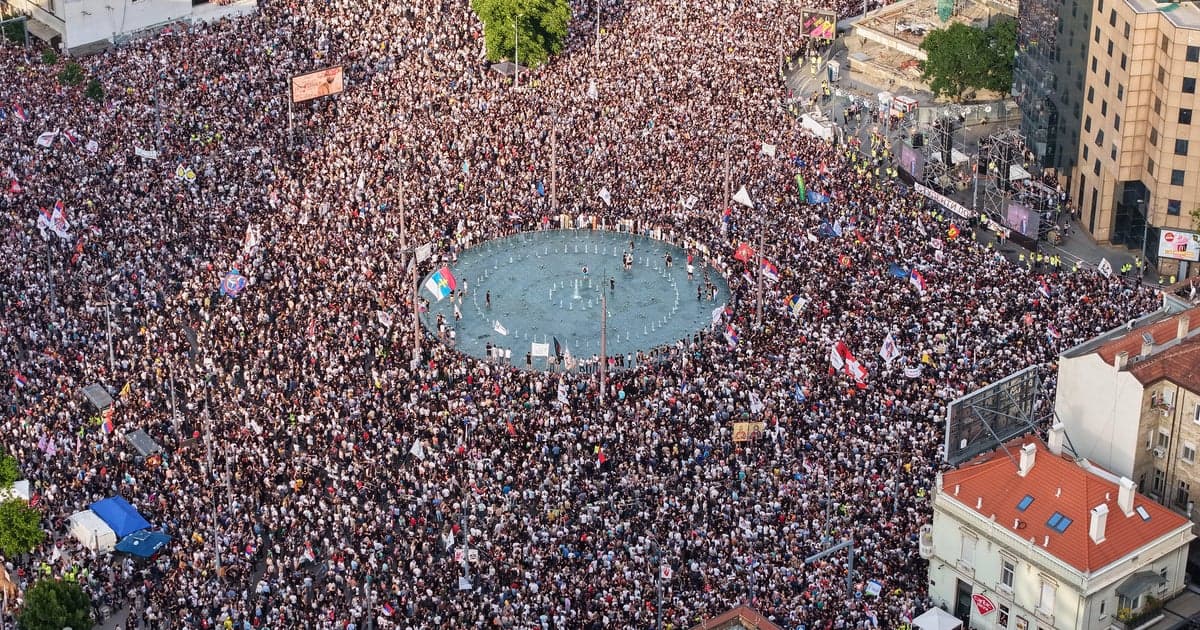
- Tens of thousands of protesters gathered in Serbia's capital, Belgrade, to express discontent with the government.
- The demonstrations are among the largest in recent years, highlighting widespread grievances over governance and economic issues.
- Organizers and opposition leaders called for democratic reforms and accountability from government officials.
The streets of Belgrade were filled with tens of thousands of demonstrators on Saturday, marking one of the largest antigovernment rallies in Serbia in recent years. Citizens from various backgrounds united to voice their frustrations with the current administration, which they accuse of authoritarian practices and failing to address critical social and economic challenges. The protests come amid rising living costs and a growing sense of disenfranchisement among the populace.
Participants at the rally expressed their demands for greater transparency and accountability from government officials. Many protesters highlighted issues such as corruption, media censorship, and the government's handling of economic crises, which have left many struggling to make ends meet. The atmosphere was charged with a sense of urgency, as speakers from opposition parties rallied the crowd with calls for democratic reforms and a return to fundamental rights.
Organizers of the protest emphasized the importance of collective action, urging citizens to continue standing up for their rights. Prominent opposition figures delivered impassioned speeches, resonating with the crowd and reinforcing the message that change is necessary for Serbia's future. The protests reflect a growing movement among citizens who are increasingly dissatisfied with the status quo and are demanding a more accountable government.
In response to the demonstrations, the ruling political party has attempted to downplay the significance of the protests while acknowledging the need to address citizens' concerns. This dual approach indicates a recognition of the growing dissent within the country. As the political landscape in Serbia becomes increasingly tense, the potential for further protests looms large, suggesting that the current unrest may not be a fleeting moment but rather a sign of deeper societal issues.
International observers are closely monitoring the situation, as the outcome of these protests could have far-reaching implications for Serbia's political future and its aspirations for closer ties with the European Union. The rallying cries for change echo throughout the nation, reflecting the determination of Serbian citizens to reclaim their democratic rights and push for a government that truly represents their interests.
As the situation continues to develop, the protests serve as a reminder of the power of collective action and the importance of civic engagement in shaping the future of Serbia.
Published by Banx Network. This article is part of the Banx decentralized media programme, powered by the BXE token on the XRP Ledger.



