
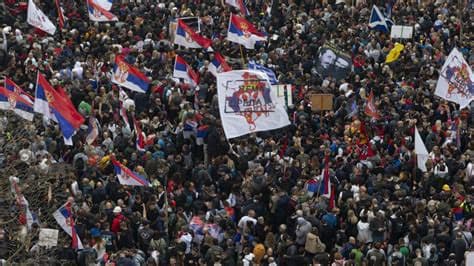
Key Highlights
- Date of Protest:May 23, 2026, saw tens of thousands rally in Belgrade.
- Protest Size:Estimates suggest around 34,300 participants, with organizers claiming higher numbers.
- Government Response:Clashes with police led to 23 detentions amid accusations of excessive force.
On May 23, 2026, Serbia experienced a significant outpouring of public dissent as tens of thousands gathered in Belgrade to protest against President Aleksandar Vucic. The rally, which filled the central square, was fueled by widespread accusations of authoritarianism and a government perceived as increasingly corrupt. Protesters voiced their demands for accountability and adherence to democratic principles, reflecting a growing frustration with the current administration.
While the main body of the protest remained peaceful, tensions escalated later in the day when groups of young demonstrators, including soccer fans, clashed with riot police. The confrontations involved throwing flares, rocks, and bottles, prompting police to respond with pepper spray in an effort to disperse the crowds. Authorities reported that 23 individuals were detained during these altercations, highlighting the volatile atmosphere surrounding the event.
The protests were not an isolated incident but rather part of a broader movement that has been gaining momentum over the past year. This unrest was initially sparked by a tragic train station disaster in northern Serbia that claimed 16 lives, leading to public outrage and demands for government accountability. Protesters are now calling for early elections and a renewed commitment to the rule of law, criticizing the government for its alleged ties to organized crime and corruption.
President Vucic, who was abroad on a state visit to China during the protests, characterized the demonstrators as "violent" and reiterated his commitment to governing within the law. His administration has faced scrutiny for its handling of previous protests, with accusations of excessive force and human rights violations drawing the attention of international observers. This latest wave of protests underscores the growing discontent among the populace regarding Vucic's leadership.
Estimates of the protest turnout suggest approximately 34,300 attendees, although organizers believe the actual number may have been higher. The protests reflect a significant moment in Serbia's political landscape, as the country grapples with a democratic backslide under Vucic's administration, despite its aspirations for European Union membership. Calls for reform and accountability are becoming increasingly urgent as citizens demand a government that respects democratic values.
As the situation in Belgrade continues to unfold, both protesters and government supporters remain entrenched in a political struggle that poses challenges to the stability of Vucic's regime. The protests signal a critical juncture for Serbia, as citizens seek to reclaim their democratic rights and hold their leaders accountable for their actions.
Published by Banx Network. This article is part of the Banx decentralized media programme, powered by the BXE token on the XRP Ledger.



