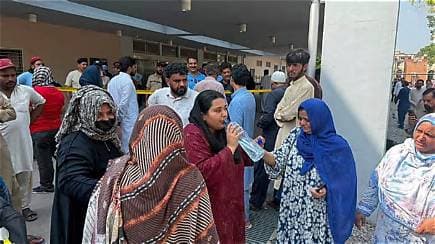
At dawn, Europe’s railway stations hold a particular kind of stillness. Suitcases rest upright beside metal benches; paper cups of coffee steam in the cool air. Departure boards flicker between cities—Warsaw, Berlin, Prague—names that have become both destinations and waypoints. Among the travelers are families who did not plan these journeys, who carry documents in plastic folders and photographs folded into coat pockets.
Since Russia’s full-scale invasion of Ukraine in 2022, millions of Ukrainians have crossed into neighboring states, seeking safety from bombardment and uncertainty. The European Union activated its Temporary Protection Directive, granting Ukrainians the right to live, work, and access services across member countries without entering lengthy asylum procedures. What began as an emergency response has stretched into a prolonged condition—legal, practical, and emotional.
Across Poland, classrooms absorbed new students almost overnight. In Germany, municipal offices adapted systems to process registrations and housing requests. The Czech Republic, Spain, and the Baltic states opened doors as well, each negotiating the balance between solidarity and capacity. According to European officials, more than four million Ukrainians remain under temporary protection status across the bloc.
In the early months, the atmosphere was one of urgency and welcome—train platforms lined with volunteers, handwritten signs offering spare rooms. Over time, the practicalities of prolonged displacement have surfaced. Temporary protection, extended by the European Union through at least 2025, offers stability but not certainty. Many Ukrainians cannot safely return home; at the same time, the status they hold does not automatically translate into permanent residency.
For parents, decisions carry a particular weight. Children enrolled in German or Polish schools now speak new languages with ease, reciting multiplication tables and local geography. Yet their textbooks coexist with Ukrainian curricula studied online in the evenings, an effort to preserve continuity in case of return. The future is held in two hands at once.
Employment, too, tells a layered story. Many Ukrainians—often women who fled with children while men remained due to mobilization rules—have entered labor markets in healthcare, hospitality, and manufacturing. Yet qualifications do not always transfer smoothly. A teacher may become a caregiver; an engineer may accept part-time service work. The adjustment is practical, but beneath it lies the quiet ache of interrupted professions.
European governments face their own calculations. Housing shortages in major cities have tightened rental markets. Social services, already strained in some regions, must adapt to sustained demand. Policymakers debate funding mechanisms and long-term integration strategies, aware that public sentiment can shift as economic pressures mount. Still, surveys suggest broad support for continuing protection, even as the horizon remains uncertain.
Meanwhile, in Ukraine, the war grinds on. Cities like Kharkiv and Odesa endure periodic attacks; reconstruction begins in some areas even as fighting persists elsewhere. The possibility of return flickers unevenly, shaped by security conditions and personal circumstance. Some families test the waters with short visits home; others choose to remain abroad, wary of rebuilding only to flee again.
The experience of displacement has woven Ukrainians into the social fabric of European towns and neighborhoods. Churches hold bilingual services; community centers host cultural evenings; blue-and-yellow flags hang beside local banners. And yet, beneath the gestures of belonging, there is a shared sense of suspension. Life moves forward—birthdays celebrated, jobs started, friendships formed—but always with an asterisk.
As evening settles over another station platform, a train arrives from the east. Passengers step onto foreign ground that has, over time, grown familiar. The European Union’s temporary protection framework continues to offer legal shelter, and host countries maintain funding for housing, education, and healthcare. But the word “temporary” lingers, elastic yet finite.
Ukrainians scattered across Europe inhabit this in-between space—neither fully uprooted nor fully restored. Their presence has reshaped classrooms, workplaces, and city streets, quietly binding nations together through shared responsibility. And as policymakers extend protections and weigh future options, millions wait within the gentle uncertainty of borrowed time, carrying with them both the memory of home and the question of when, or whether, they will return.
AI Image Disclaimer Visuals are AI-generated and serve as conceptual representations.
Sources UNHCR European Commission Reuters BBC News International Organization for Migration
Published by Banx Network. This article is part of the Banx decentralized media programme, powered by the BXE token on the XRP Ledger.