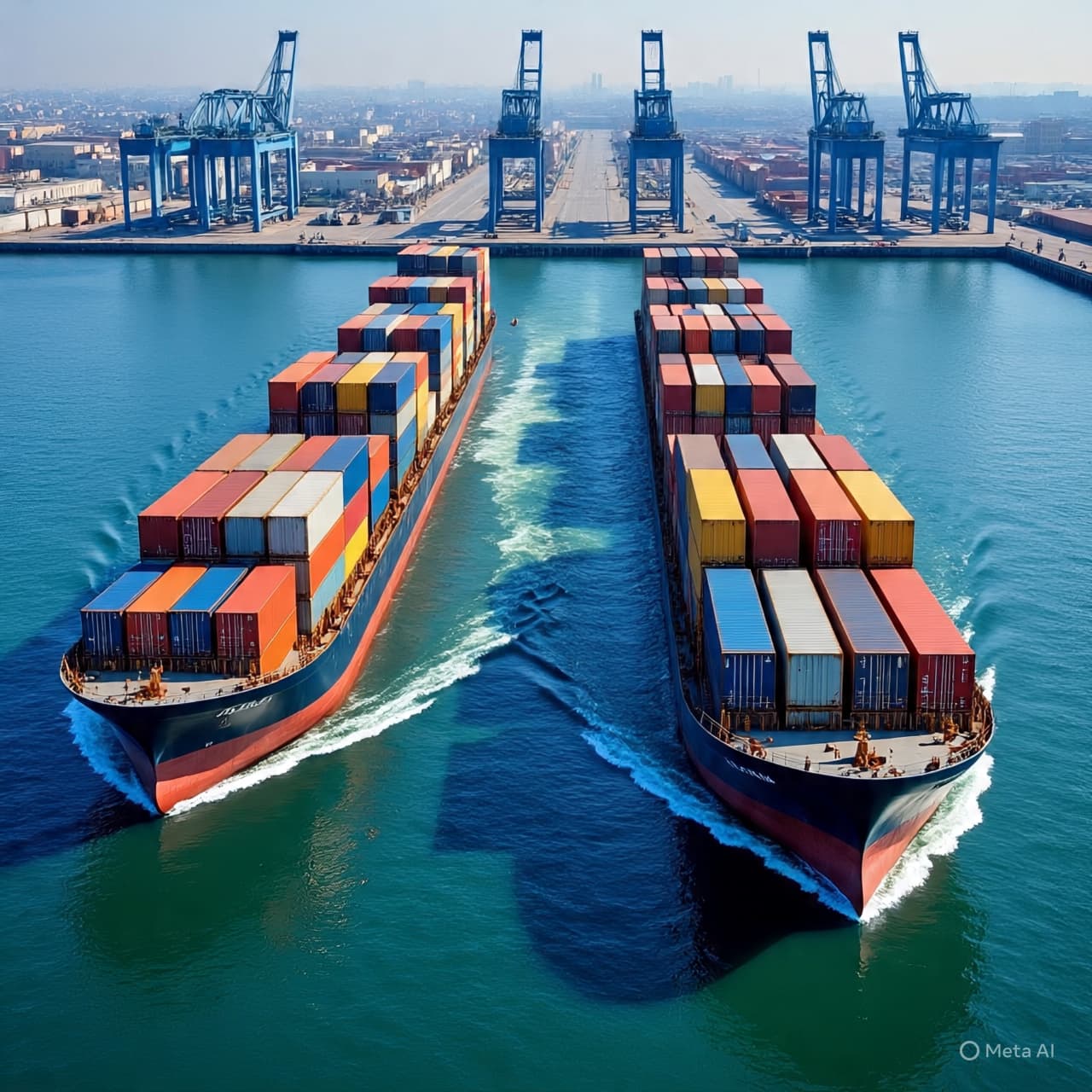
Trade has always moved like water — seeking the easiest current, bending around obstacles, reshaping coastlines without noise. This year, that current has shifted. As U.S. tariffs tightened around Chinese goods, especially textiles and clothing, manufacturers across China began looking west — toward Europe.
Reports from the *Financial Times* and several trade monitors suggest that apparel exports once bound for American retailers are now streaming into European markets, from Spain to Poland. Factories in Guangdong and Zhejiang have retooled their logistics, with new shipping lanes opening through the Suez Canal and Mediterranean hubs.
It’s not the first time global commerce has been redrawn by politics, but this shift feels more like quiet resilience than confrontation. The tariffs, part of Washington’s wider recalibration of trade with Beijing, have made certain clothing lines uncompetitive in the U.S. Yet Europe, hungry for affordable fashion and faster turnaround, has emerged as a natural recipient.
Analysts describe this rerouting as a form of “economic elasticity” — the ability of supply chains to stretch without breaking. Even as American ports report reduced container volumes from China, European warehouses in Rotterdam, Hamburg, and Marseille show rising textile inflows.
But beyond numbers lies a subtler story: adaptation. China’s clothing industry, facing one of the most protectionist climates in decades, has quietly turned disruption into opportunity. Many mid-tier factories now label their goods under joint ventures with European firms, softening the image of “Made in China” and easing regulatory passage.
In the background, both sides of the Atlantic are recalculating. Europe gains cheaper garments. China preserves employment and production. The U.S., meanwhile, continues its high-stakes experiment in decoupling — a policy that may redirect trade, but not necessarily reduce it.
Like threads crossing a loom, global commerce finds its pattern again.
AI Image Disclaimer
*Visuals are created with AI tools and are not real photographs.
Sources
Financial Times, Global Textile Times, Cross-Border Magazine
Published by Banx Network. This article is part of the Banx decentralized media programme, powered by the BXE token on the XRP Ledger.