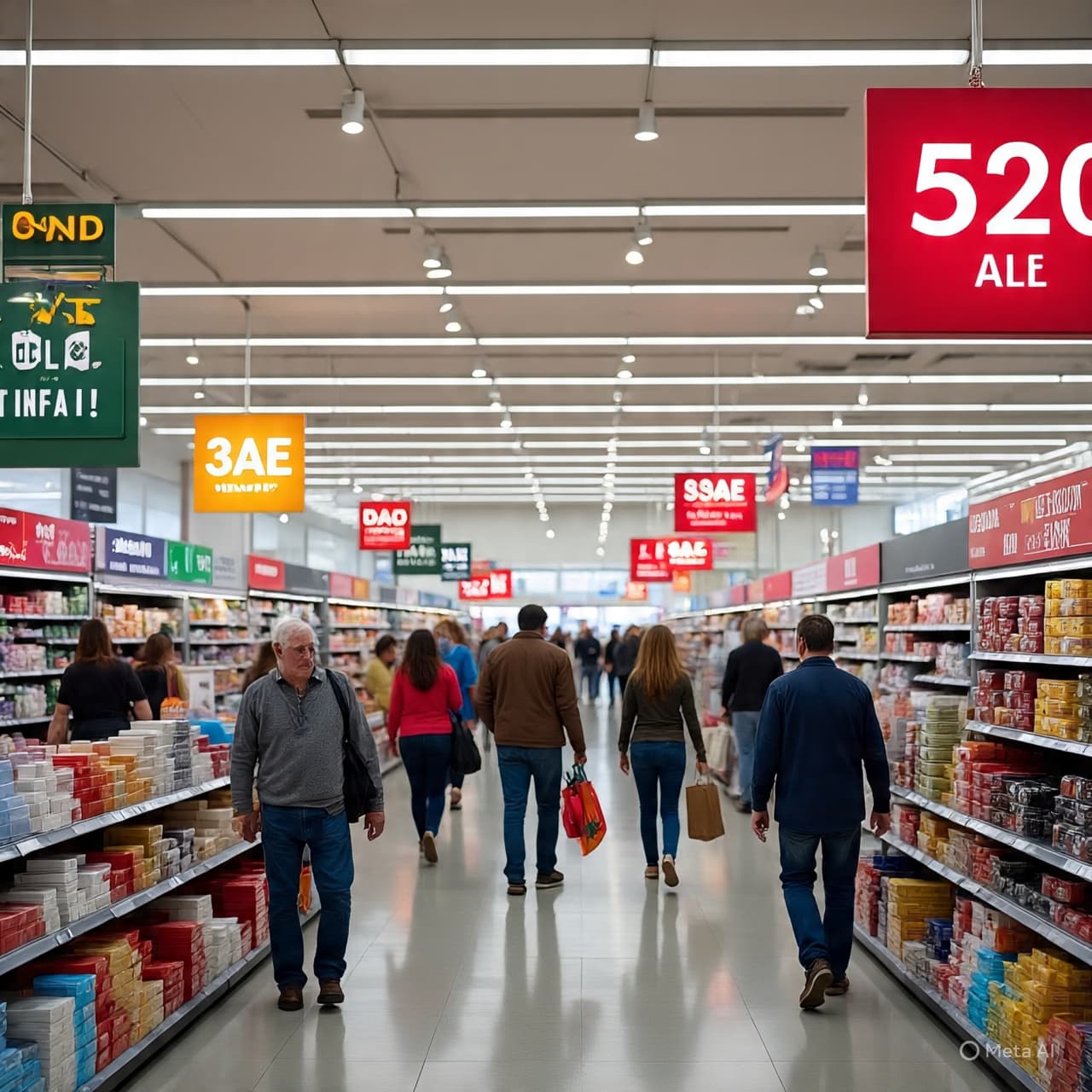
Across the United States, the economic consequences of prolonged tariff policies are increasingly visible in household finances and business performance, as many Americans face shrinking savings and slowing sales tied to higher costs and market uncertainty.
Trade measures introduced during the Trump administration were originally framed as tools to protect domestic industries and rebalance global trade relationships. Over time, however, their effects have extended beyond international markets and corporate supply chains, filtering into everyday economic life. Higher import costs have translated into rising prices for goods, tighter margins for businesses, and greater financial pressure on consumers.
For households, the impact has been gradual but persistent. Increased costs of everyday products, combined with broader inflationary pressures, have made it harder for families to maintain savings. Many consumers have shifted spending priorities, cutting back on discretionary purchases and focusing on essentials. This change in behavior has reshaped demand patterns across retail, services, and small businesses.
Businesses, particularly those dependent on imported materials or consumer spending, have felt the effects through declining sales and rising operating costs. Retailers, manufacturers, and distributors have been forced to adjust pricing strategies, absorb higher expenses, or restructure supply chains. For smaller businesses with limited flexibility, these pressures can be especially difficult to manage.
The broader economy reflects this strain in subtle but meaningful ways. Consumer confidence, business investment decisions, and local economic activity are increasingly influenced by uncertainty surrounding trade policy and long-term cost structures. While some sectors have adapted or benefited from shifts in sourcing and production, others continue to face instability.
These developments highlight a central tension in trade policy: measures designed to strengthen national economic positioning can produce uneven domestic consequences. The benefits and burdens are not distributed equally, with working households and consumer-facing businesses often experiencing the most immediate effects.
As trade policy continues to evolve, attention is turning toward its long-term domestic implications. Policymakers face the challenge of balancing strategic economic goals with the lived realities of consumers and small businesses navigating rising costs and uncertain markets.
Looking forward, the recovery of household savings and business sales will depend not only on broader economic conditions, but on the stability and predictability of trade policy itself. For many Americans, the impact of tariffs is no longer an abstract policy debate, but a daily economic reality shaping how they spend, save, and sustain their livelihoods.
AI Image Disclaimer
This image was generated using artificial intelligence for illustrative purposes only and does not represent real individuals or specific events.
Sources
Reuters Associated Press Bloomberg The Wall Street Journal Financial Times
Published by Banx Network. This article is part of the Banx decentralized media programme, powered by the BXE token on the XRP Ledger.