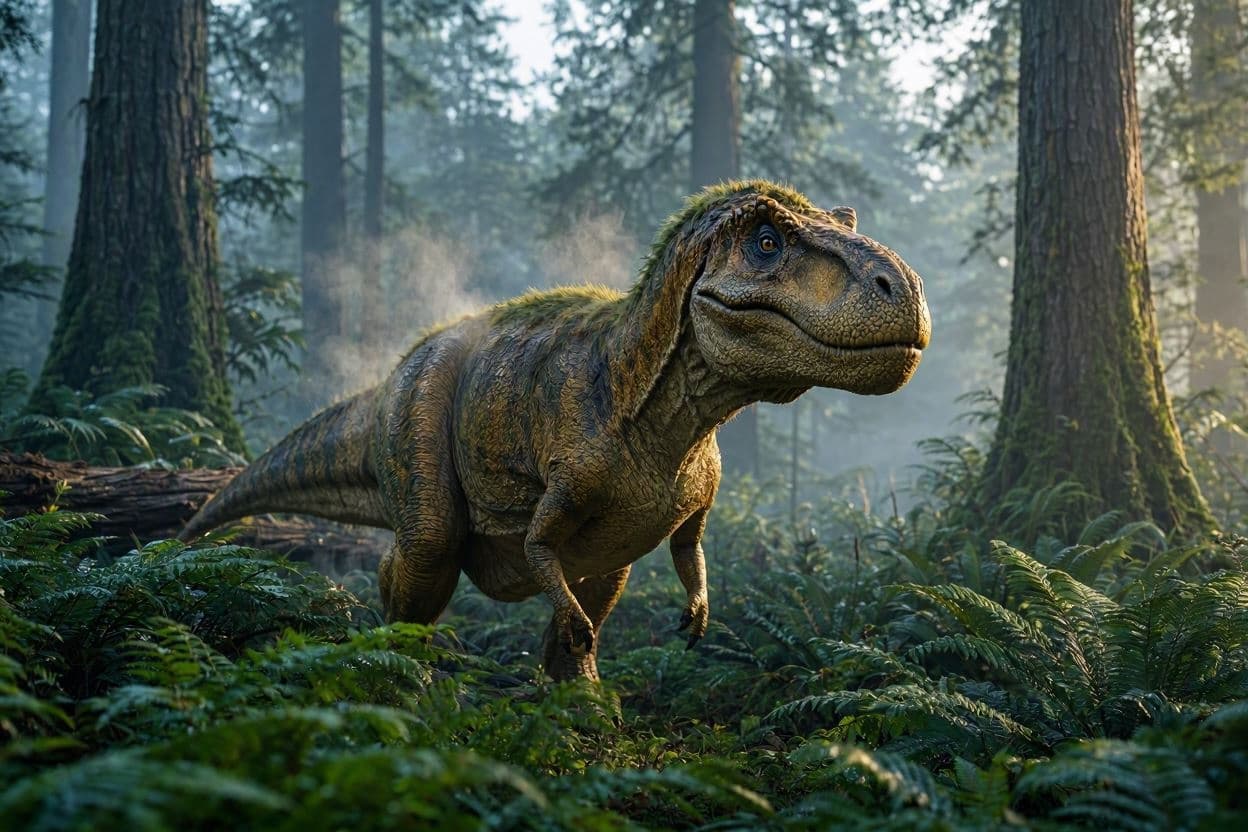
For decades, the image of the Tyrannosaurus rex has been one of cold-blooded ferocity, a reptilian monster driven by instinct and external heat. Yet, beneath the enamel of its formidable teeth lay a secret that challenges this long-held perception. Recent scientific analysis suggests that the king of the dinosaurs maintained a body temperature remarkably similar to our own, hovering around 97 degrees Fahrenheit. This discovery invites us to reimagine the T. rex not as a sluggish giant basking in the sun, but as a warm, vibrant creature with an internal furnace that fueled its dominance.
The breakthrough came from a technique known as clumped isotope thermometry, which examines the chemical bonds within fossilized tooth enamel. By measuring the arrangement of carbon and oxygen isotopes, researchers can determine the temperature at which the enamel formed. In three well-preserved T. rex teeth unearthed in Montana, these microscopic clues pointed to a consistent internal temperature of approximately 36.3 degrees Celsius. This finding places the T. rex firmly in the realm of endotherms, or warm-blooded animals, aligning it more closely with mammals and birds than with modern reptiles.
This revelation helps resolve a longstanding debate in paleontology about dinosaur metabolism. While some scientists argued that large dinosaurs relied on their massive size to retain heat, a phenomenon known as gigantothermy, the precision of the T. rex’s temperature regulation suggests a more active metabolic process. It implies that these predators were capable of sustained activity and rapid growth, traits that would have been essential for hunting and surviving in the competitive ecosystems of the Late Cretaceous.
The implications extend beyond just one species. If the T. rex was warm-blooded, it is likely that other theropods, including its smaller relatives and ancestors, shared similar physiological traits. This could mean that the evolution of warm-bloodedness occurred earlier in the dinosaur lineage than previously thought, potentially influencing how we understand the rise of birds, which are the direct descendants of theropod dinosaurs. The warmth of the T. rex may well be the ancestral heat that still burns in the sparrows outside our windows.
For the public, this finding adds a new layer of intimacy to our understanding of these ancient giants. Knowing that a T. rex had a body temperature close to our own makes them feel less like alien monsters and more like distant, albeit formidable, cousins. It bridges the gap between the prehistoric past and the present, reminding us that life, in all its forms, shares fundamental biological rhythms. The heat that once coursed through their veins is a testament to the vitality of life on Earth.
However, the study also highlights the complexities of dinosaur physiology. While the T. rex was warm, it may not have been as hot as modern birds, suggesting a unique metabolic strategy that balanced energy efficiency with performance. This middle ground offers insights into how large animals manage heat dissipation, a challenge that remains relevant for understanding the biology of today’s largest mammals. It is a reminder that nature often finds nuanced solutions to physical constraints.
As research continues, scientists hope to apply these techniques to other dinosaur species, building a broader picture of thermoregulation in the Mesozoic era. Each tooth analyzed is a window into the past, offering data that refines our models of ancient ecosystems. The story of the T. rex’s temperature is just one chapter in a growing library of knowledge that brings these extinct creatures to life in vivid detail.
In the end, the warmth of the T. rex is a symbol of the enduring quest for understanding. It shows how even the most familiar icons of science can hold new secrets, waiting to be uncovered by innovative methods. By looking closer at the teeth of a tyrant, we have found a connection to our own humanity, a shared warmth that transcends millions of years.
AI Image Disclaimer: The visual representations included here are AI-generated illustrations designed to depict prehistoric scenes and scientific concepts, not actual photographs of the specific fossils or laboratory analyses.
Sources: Science Advances UCLA Newsroom Reuters
Published by Banx Network. This article is part of the Banx decentralized media programme, powered by the BXE token on the XRP Ledger.