
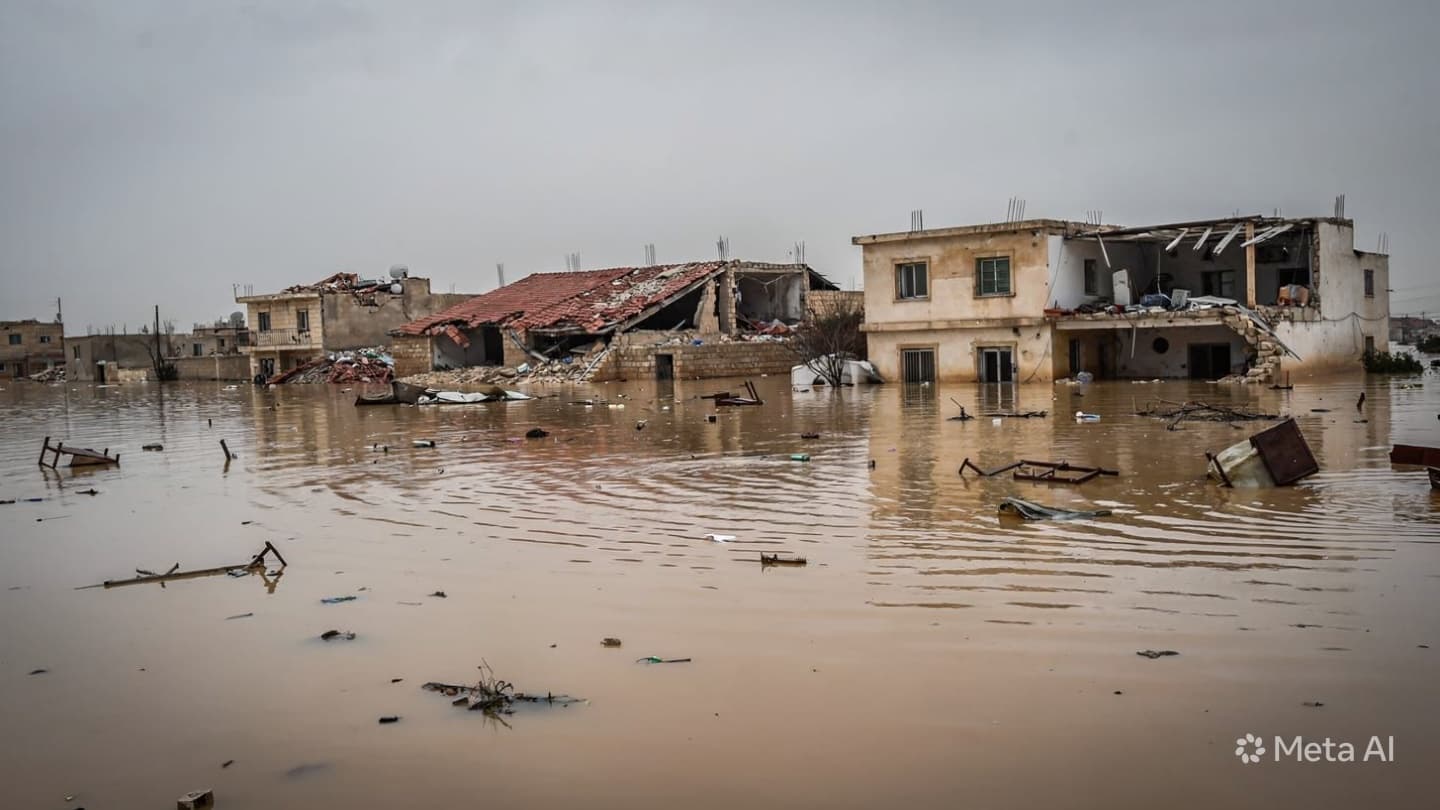
Key Highlights
- Date of Flooding:June 30, 2026, marked by severe flooding in Deir ez-Zor.
- Evacuations:Thousands of residents forced to leave their homes due to rising water levels.
- Agricultural Impact:Significant damage to wheat and barley crops during peak harvest season.
Deir ez-Zor, Syria—On June 30, 2026, floodwaters from the Euphrates River surged through low-lying settlements, forcing thousands of residents to abandon their homes. The massive inundation followed critical releases from upstream dams, leading to water levels reaching dangerous heights and breaking through embankments that had protected local villages for decades.
The agricultural sector has suffered the most immediate impact from the flooding. Thousands of hectares of wheat and barley crops now sit underwater, threatening the livelihoods of local farmers. The timing of the flooding could not be worse, as it coincides with the peak of the harvest season. This loss represents a total collapse of livelihoods for entire districts, exacerbating the already dire economic conditions in the region.
Infrastructure across the river corridor is failing under the pressure of the floodwaters. Reports from the region confirm that dozens of water pumping stations are non-functional, leaving hundreds of thousands of people without access to clean drinking water. Mud and debris have clogged the intake pipes, further complicating the situation for emergency responders.
Official statements describe the situation as a logistical nightmare. Engineering teams are struggling to reach many of the damaged sites due to flooded access roads that have cut off entire communities. Transporting food and medical supplies into these areas now requires boats or air support, adding to the complexity of the relief efforts.
Local shelters are nearing capacity as displaced families cram into makeshift camps, including abandoned schools and civic centers. Conditions in these sites are poor, with overcrowding raising concerns about hygiene and the rapid spread of waterborne illnesses. Humanitarian organizations are mobilizing to provide assistance, but the scale of the disaster is overwhelming.
Government officials have acknowledged the strain on resources, with emergency management teams prioritizing the restoration of water services. However, progress remains slow as reports of new dike breaches continue to emerge. The river shows no sign of receding in the short term, leaving residents in a precarious situation.
As the immediate outlook remains grim for those trapped in the flood zone, officials have issued fresh warnings for residents in downstream areas to vacate immediately. They are monitoring the dam spillway levels around the clock, as the situation continues to evolve with the rising waters pushing into new territories.
Published by Banx Network. This article is part of the Banx decentralized media programme, powered by the BXE token on the XRP Ledger.



