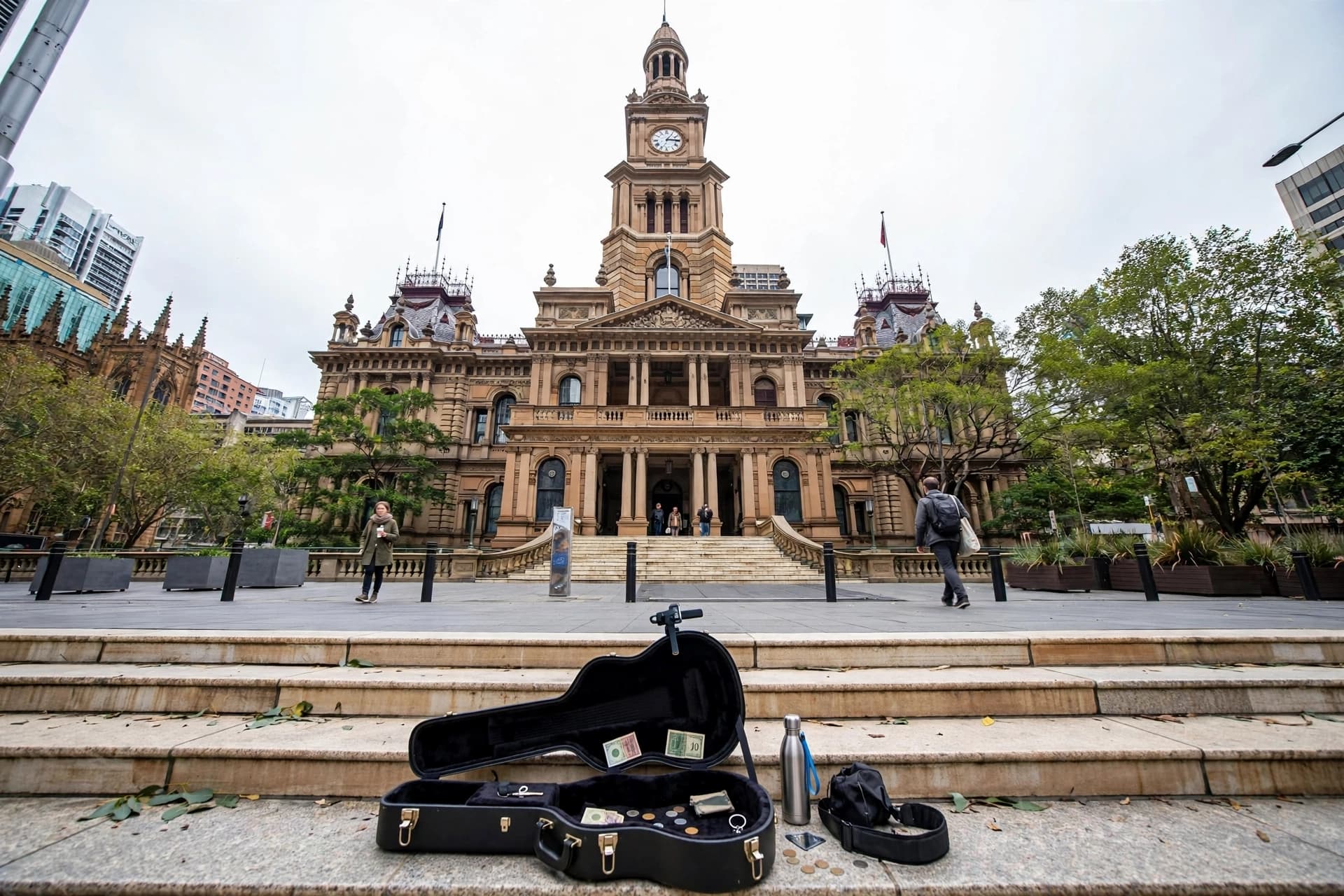
There is a particular kind of silence that follows a life lived on the margins—a silence that settles not because no one cared, but because the systems meant to care did not speak. In Sydney, a man known as the “king of town hall” spent his days on the steps of the city’s central building, offering cheeky advice to passersby and playing music. When he died this year, he was buried in an unmarked communal grave at Rookwood cemetery, in a plot shared with four strangers. His support workers were never told .
The man was a familiar presence in Sydney’s CBD—funny, engaging, and well-known across homelessness services. Jon Swain, an adviser to the Australian Alliance to End Homelessness, described him as “a massive personality” who was housed for a period but struggled without the connections he had made on those steps. Before his death, Swain and other workers helped him get into aged care housing support. Then the New South Wales government designated him a “person without means” and took over responsibility for his remains .
At least 17 other Australians who were clients of Sydney homelessness support services have also been buried in communal unmarked graves by the NSW government, according to a three-month investigation by The Guardian. The investigation identified hundreds of unmarked graves at Rookwood in western Sydney, where “persons without means” are buried in bare patches of earth between walkways and old headstones. The vast majority have no plaque or tombstone .
The practice has shocked the homelessness sector. Major providers like the St Vincent de Paul Society said they were not aware burials were happening this way. One homelessness manager, speaking anonymously, said: “These people were loved at some point in their lives, they were somebody’s family member or friend. A crowded, yet lonely and desolate end and just like their life on the street these men and women are afforded no privacy in death, and no final resting place of their own” .
Rev Bill Crews, who runs a support service in Ashfield, makes a point of conducting funerals at his foundation’s expense when he learns a client has died. The investigation found three individuals buried in communal graves who were former clients. Crews says he was never told. “They would all have had a dignified funeral and a proper cremation,” he said .
NSW Health has apologised, acknowledging that people without the financial means for a funeral have not always been treated with dignity and respect. Health minister Ryan Park described the previous failings as “unacceptable” and signalled he wants to end the use of unmarked communal graves. The department says it changed processes in 2025, establishing a six-person team to seek alternative funeral arrangements .
The policy requires NSW Health to do everything it can to secure funding from family, friends, and organisations the deceased may have been associated with. Swain says that is not occurring. “There is something profoundly unsettling about the idea that a person could live through such exclusion and then be buried in...” he said, the sentence trailing into the silence that the system has left behind .
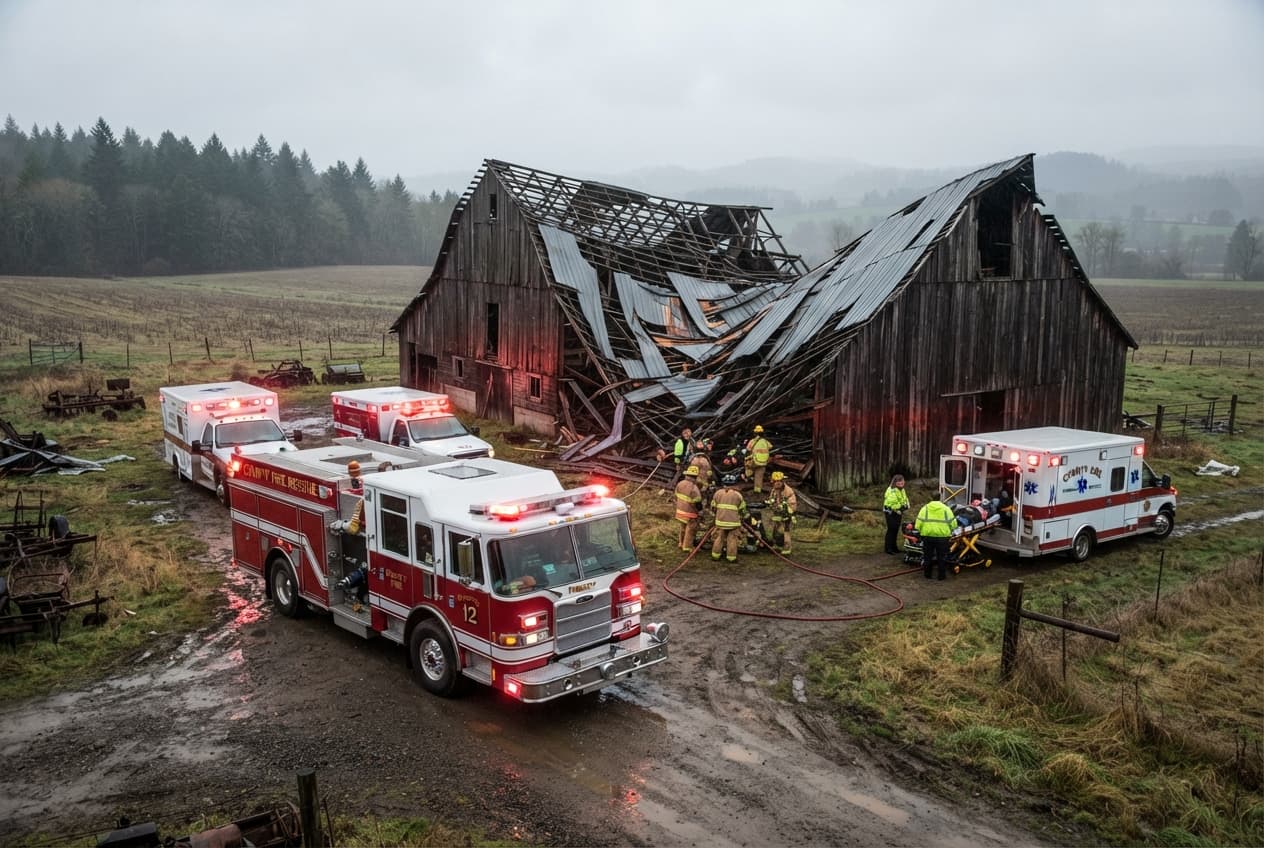
AI Image Disclaimer: The images accompanying this article are generated by artificial intelligence and are intended for illustrative purposes only.
Sources: The Guardian, OZ Arab Media
Published by Banx Network. This article is part of the Banx decentralized media programme, powered by the BXE token on the XRP Ledger.