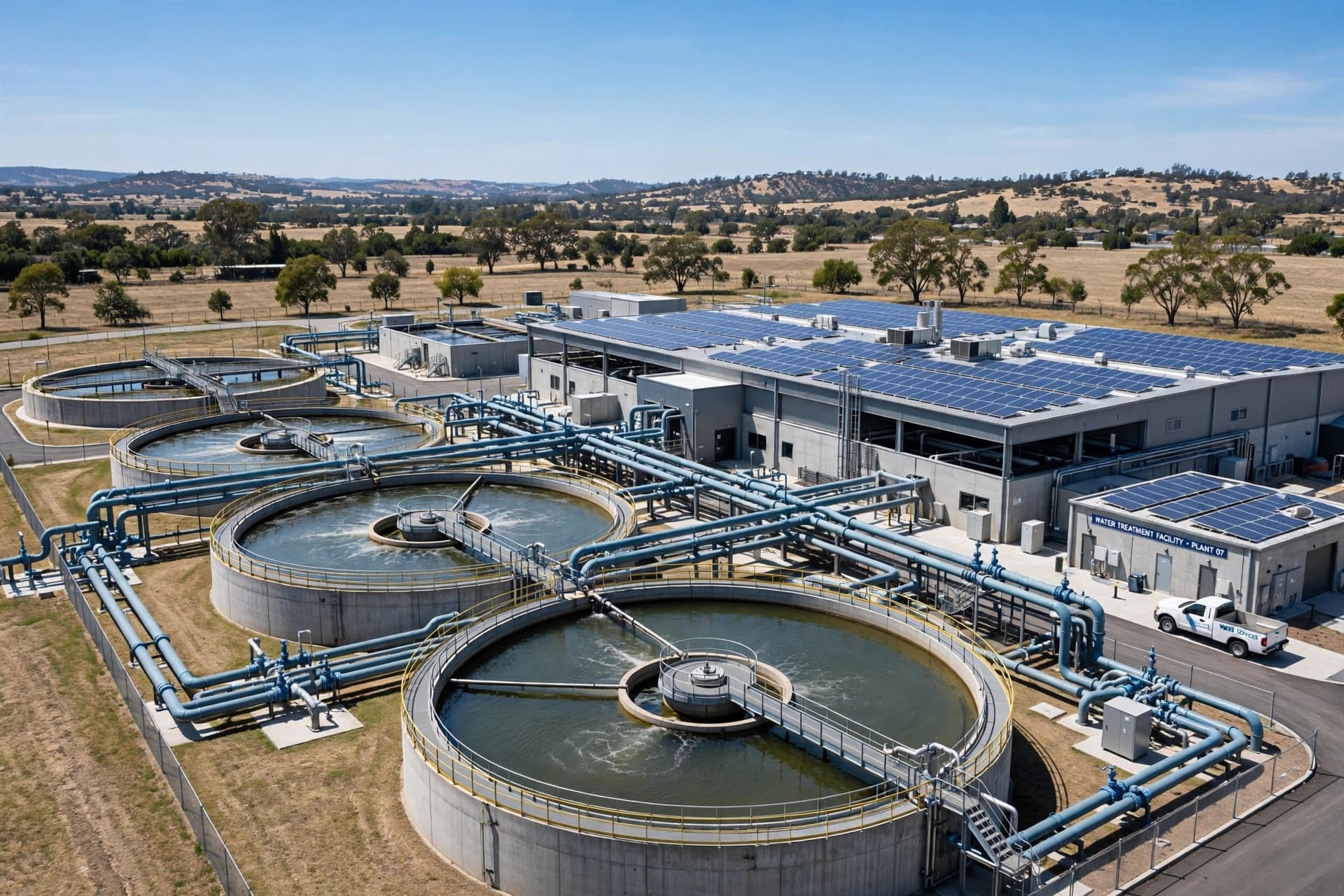
There is a particular logic to the way a city learns to reuse what it once discarded—a logic born of scarcity, of growth, of the recognition that water, like time, is not infinite. In Sydney, that logic has taken the form of a $1.2 billion water recycling plant, the largest investment of its kind in the city's history, designed not for households or farms but for the data centres that have become the unseen infrastructure of the digital economy. The plant, to be built at the St Marys Water Recycling Plant in Western Sydney, will produce up to 40 megalitres of recycled water per day—enough to fill 16 Olympic swimming pools—piped directly to the massive computing facilities that have transformed the region's industrial landscape.
The project is a partnership between Sydney Water and the private sector, announced as part of a broader push to secure water supplies for the data centre industry, which has faced growing community opposition over its water consumption. Data centres require enormous volumes of water for cooling, and the rapid expansion of AI infrastructure has strained local supplies. The Western Sydney facility is expected to serve the Marsden Park and Kemps Creek data centre precincts, where companies including Microsoft and others have invested billions. The recycled water will be treated to a standard suitable for industrial cooling, freeing potable water for residential use.
For Sydney Water, the plant represents a strategic pivot. The utility has faced criticism for its handling of water security in a city that has experienced repeated droughts and whose dam levels have fluctuated dangerously in recent years. By supplying data centres with recycled water rather than drinking water, Sydney Water argues it can accommodate the growth of the digital economy without compromising the supply available to homes and businesses. The plant will also reduce the volume of treated effluent discharged into local waterways, an environmental benefit that has been welcomed by community groups.
The announcement has been met with cautious optimism by some and skepticism by others. The data centre industry has welcomed the certainty of a dedicated water source, which removes a significant regulatory and reputational risk. But critics have noted that the plant's capacity is finite, and that the data centre industry's demand for water is growing faster than any single facility can accommodate. They argue that the real solution lies in reducing consumption—through more efficient cooling technologies and greater use of air cooling—rather than simply finding new sources of supply. The plant is expected to be operational by 2029, subject to planning approvals. For now, the water that once flowed out to sea will be captured, treated, and returned to the industrial heart of Western Sydney—a closed loop in a city learning to live within its means.
AI Image Disclaimer: The images accompanying this article were generated by artificial intelligence and are for illustrative purposes only.
Sources: Sydney Water, Australian Financial Review, The Sydney Morning Herald
Published by Banx Network. This article is part of the Banx decentralized media programme, powered by the BXE token on the XRP Ledger.