Newton’s third law of motion—that for every action, there is an equal and opposite reaction—is a cornerstone of classical physics. It governs everything from the recoil of a gun to the propulsion of a rocket. Yet, in a recent experiment, physicists managed to make 10,000 particles violate this fundamental rule for an hour. This breakthrough invites reflection on the nuances of physical laws in complex systems and the potential for new technologies. It is a reminder that even established principles can have exceptions under specific conditions.
The experiment involved colloidal particles suspended in a fluid and manipulated by sound waves. By creating a non-equilibrium environment, the researchers induced interactions where the force exerted by one particle on another was not reciprocated equally. This asymmetry, known as non-reciprocal interaction, allowed the particles to move in ways that defied traditional action-reaction symmetry. The system behaved like a "time crystal," maintaining dynamic motion without external energy input after initialization.
For an hour, the particles exhibited self-propelled behavior, forming pairs that moved continuously without coarsening or settling. This sustained motion challenges the expectation that systems eventually reach equilibrium. The stability of this state offers insights into how matter can organize itself in non-equilibrium conditions. Order emerges from chaos.
The implications of this discovery extend beyond theoretical physics. Non-reciprocal systems could lead to the development of new materials with unique properties, such as self-healing structures or adaptive robotics. Understanding how to control these interactions opens doors to innovative engineering solutions. Application follows understanding.
Critics might argue that Newton’s laws are not truly broken but rather applied in a context where environmental mediators play a significant role. The fluid and sound waves act as intermediaries, absorbing and redistributing momentum. Thus, the total momentum of the entire system, including the environment, remains conserved. Context matters in physics.
As research continues, scientists aim to scale up these experiments and explore other types of non-reciprocal interactions. The goal is to harness these phenomena for practical uses while deepening our understanding of statistical mechanics. Curiosity drives progress.
Physicists have created a system where 10,000 particles defy Newton’s third law for an hour using sound waves and non-reciprocal interactions. The discovery offers insights into non-equilibrium physics and potential new materials. The hope is for further exploration of these unique states of matter.
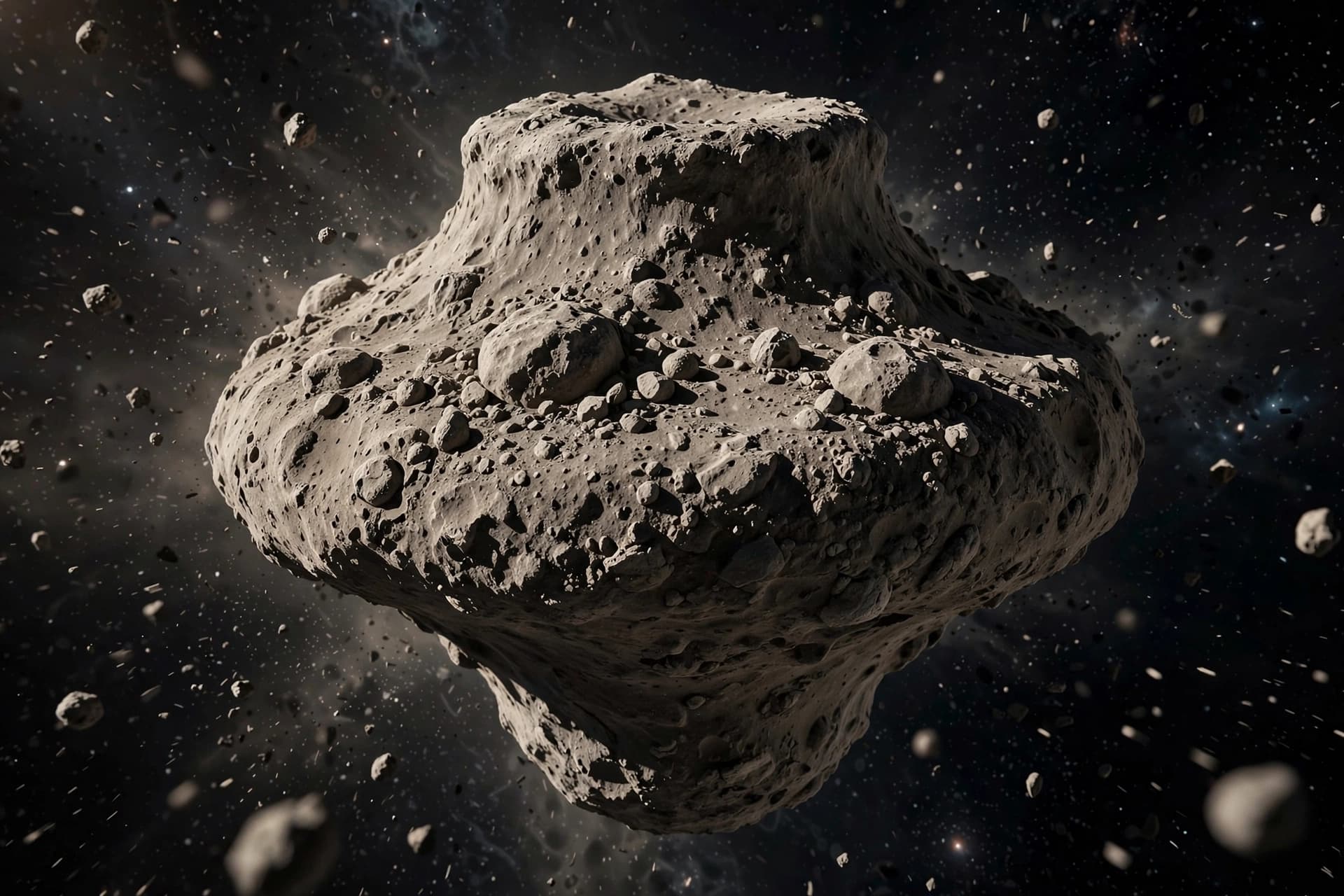
AI Image Disclaimer: Visuals associated with this article are AI-generated to illustrate the themes of physics and experimental science.
Sources: ScienceDaily Phys.org New York University
Published by Banx Network. This article is part of the Banx decentralized media programme, powered by the BXE token on the XRP Ledger.