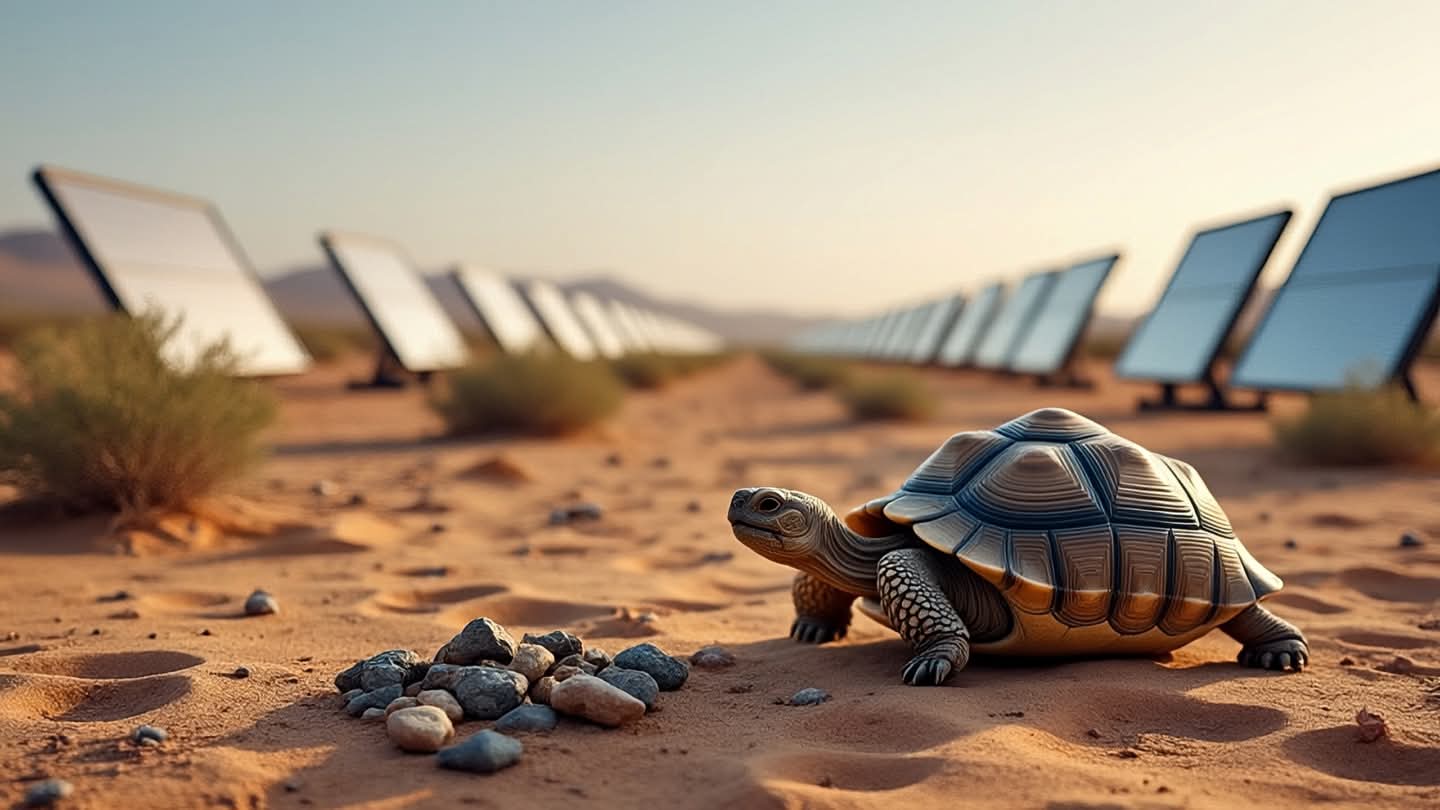
In the vast, sun-drenched expanse of the Mojave Desert, where silence is broken only by the wind and the occasional rustle of scrub brush, a collision occurred between human ambition and ancient resilience. The Ivanpah Solar Electric Generating System, designed to harness the power of the sun, found itself paused by the slow, deliberate pace of the desert tortoise. What began as a routine environmental survey, predicting a modest presence of these protected reptiles, quickly unraveled into a complex ecological puzzle. The discovery of nearly 1,000 tortoises, far exceeding the initial estimate of 32, forced a halt to construction and sparked a costly, intricate effort to relocate them, highlighting the unpredictable nature of development in fragile ecosystems.
The discrepancy between prediction and reality was stark. Initial surveys had suggested a sparse population, but as crews began clearing land, they uncovered a hidden community of tortoises burrowed beneath the sand. This revelation triggered a mandatory pause in construction, lasting three months, as developers and environmentalists worked to devise a plan that would protect the animals while allowing the project to proceed. The cost of this intervention soared to 56 million, a sum that underscores the financial weight of environmental stewardship in large-scale infrastructure projects.
The relocation process was meticulous and fraught with challenges. Each tortoise was carefully captured, tagged with a microchip for tracking, and moved to designated conservation areas. However, the desert is not a controlled environment, and nature often has its own plans. In one poignant instance, a juvenile tortoise, freshly relocated and still emitting the ping of its microchip, was carried off by a golden eagle. This event, while tragic, served as a reminder that conservation efforts cannot fully shield wildlife from the natural rhythms of predation and survival.
The incident at Ivanpah raised broader questions about the accuracy of environmental impact assessments. How could such a significant population be missed? Experts point to the elusive nature of desert tortoises, which can remain underground for long periods, making them difficult to detect during standard surveys. This limitation highlights the need for more robust and prolonged monitoring techniques, especially in habitats known to support sensitive species.
For the solar industry, the Ivanpah experience serves as a cautionary tale. It demonstrates that renewable energy projects, while beneficial for reducing carbon emissions, are not without their own environmental footprints. Balancing the urgent need for clean energy with the protection of biodiversity requires careful planning, transparency, and a willingness to adapt when unexpected challenges arise.
The 56 million spent on relocation was not just a cost but an investment in coexistence. It funded the creation of new habitat protections, ongoing monitoring programs, and research into tortoise behavior. These efforts have contributed to a deeper understanding of the species and have set precedents for how future projects might approach similar ecological constraints.
As the solar plant now operates, casting its mirrors toward the sky, the story of the tortoises remains part of its legacy. It is a narrative of conflict and compromise, of human ingenuity meeting natural persistence. The microchips still ping in the desert, some in safe havens, others lost to the wild, serving as silent witnesses to the complex interplay between progress and preservation.
The Ivanpah solar project’s encounter with the desert tortoise illustrates the intricate balance required in modern development. While the cost was high and the process challenging, it reinforced the importance of thorough environmental diligence. As the world transitions to renewable energy, lessons from the Mojave will continue to inform how we build a sustainable future that respects both the sun and the soil.
AI Image Disclaimer: Please note that any accompanying visuals for this article are AI-generated representations intended for illustrative purposes only.
Sources: Los Angeles Times Space Daily VVDailyPress Heartland Institute Biological Diversity
Published by Banx Network. This article is part of the Banx decentralized media programme, powered by the BXE token on the XRP Ledger.