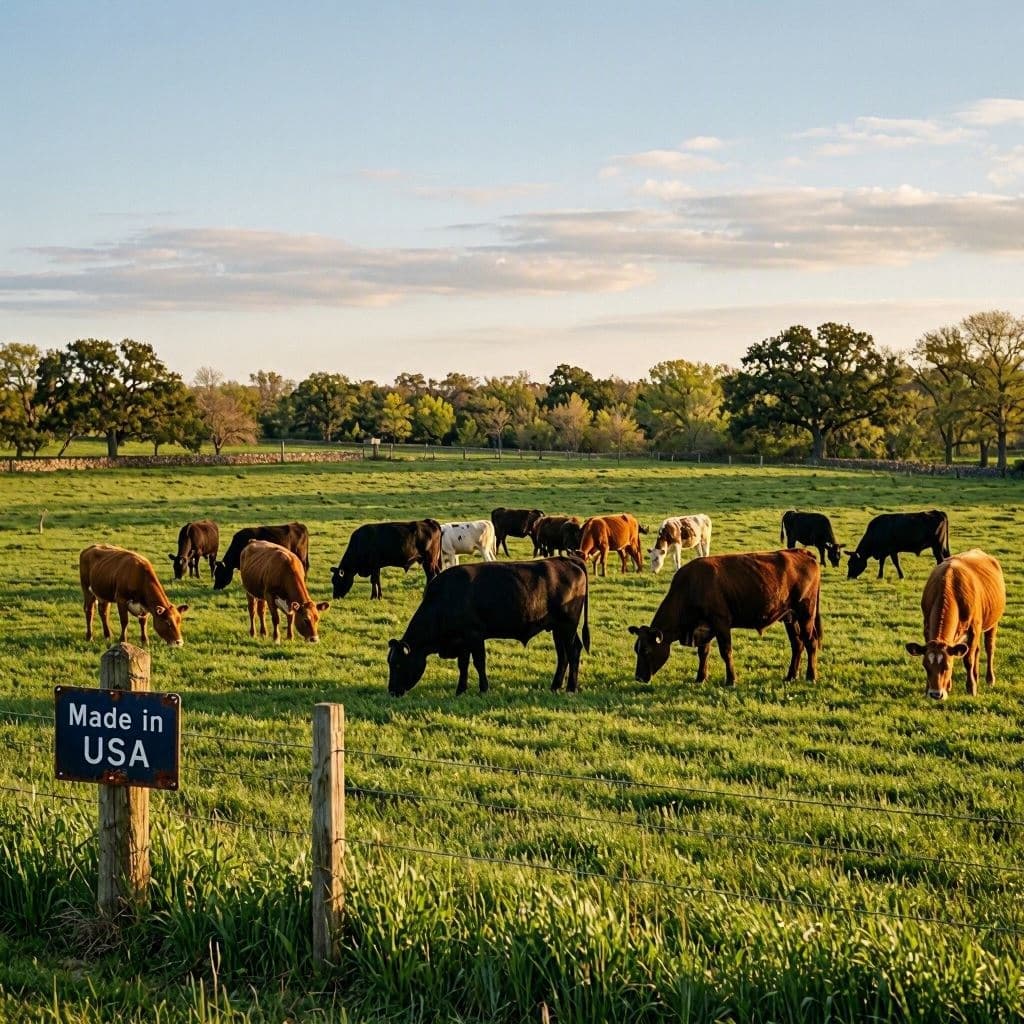
The American rancher stands as a symbol of self-reliance and connection to the land, yet their livelihood is increasingly influenced by global market forces. As debates over imported beef intensify, farmers are calling for significant changes to protect domestic production. This push for reform highlights the tension between free trade ideals and the need to sustain local agricultural communities. It is a conversation about fairness, sustainability, and the future of food security in the United States.
The core of the debate centers on country-of-origin labeling (COOL) and tariff structures. Farmers argue that current regulations allow imported beef to be labeled as "Product of the USA" after minimal processing, confusing consumers and undercutting domestic producers. They seek stricter labeling requirements to ensure that meat raised and harvested in the U.S. is clearly distinguished from foreign imports.
Proponents of imported beef emphasize the benefits of lower prices and market diversity. They argue that restrictions could lead to higher costs for consumers and retaliatory trade measures from partner nations. This perspective highlights the complex interdependence of global agriculture, where efficiency and affordability often drive policy decisions.
However, for U.S. farmers, the issue is one of survival. Rising production costs, coupled with competition from countries with lower labor and environmental standards, create an uneven playing field. The push for labeling changes is seen as a way to level the field, allowing consumers to make informed choices that support local economies.
The political landscape surrounding this issue is shifting. Lawmakers from agricultural states are increasingly vocal in their support for stricter origin labels. Bipartisan efforts are emerging, recognizing that rural economies are vital to the nation’s overall health. This growing consensus suggests that change may be on the horizon.
Consumer awareness is also playing a key role. As people become more conscious of where their food comes from, demand for transparent labeling grows. Surveys indicate that many Americans prefer domestically produced beef and are willing to pay a premium for it. This shift in consumer behavior empowers farmers to advocate for policy reforms.
International trade agreements add another layer of complexity. Any changes to labeling or tariffs must navigate existing treaties and diplomatic relationships. Negotiations require careful balancing to avoid disrupting broader economic ties while addressing domestic concerns. It is a delicate diplomatic dance with significant stakes.
Farmers are organizing and lobbying with renewed vigor, sharing their stories to humanize the economic data. They emphasize the cultural and environmental value of family-owned ranches. Their advocacy is not just about profit but about preserving a way of life that has shaped the American identity for generations.
As the debate heats up, the outcome will have far-reaching implications. It will determine the competitiveness of U.S. beef in the global market and the viability of domestic ranching. The voices of farmers are central to this discussion, urging policymakers to prioritize long-term sustainability over short-term gains.
The push by U.S. farmers for stricter beef labeling reflects a growing desire for transparency and fairness in the agricultural market. As the debate over imports continues, the need to balance consumer choice, trade relations, and domestic production remains a critical challenge. The resolution will shape the future of American ranching.
AI Image Disclaimer: The visual elements accompanying this article are AI-generated interpretations designed to illustrate the themes of agriculture, trade, and consumer choice, using neutral and descriptive imagery.
Sources: National Cattlemen’s Beef Association Agri-Pulse U.S. Department of Agriculture Reports
Published by Banx Network. This article is part of the Banx decentralized media programme, powered by the BXE token on the XRP Ledger.