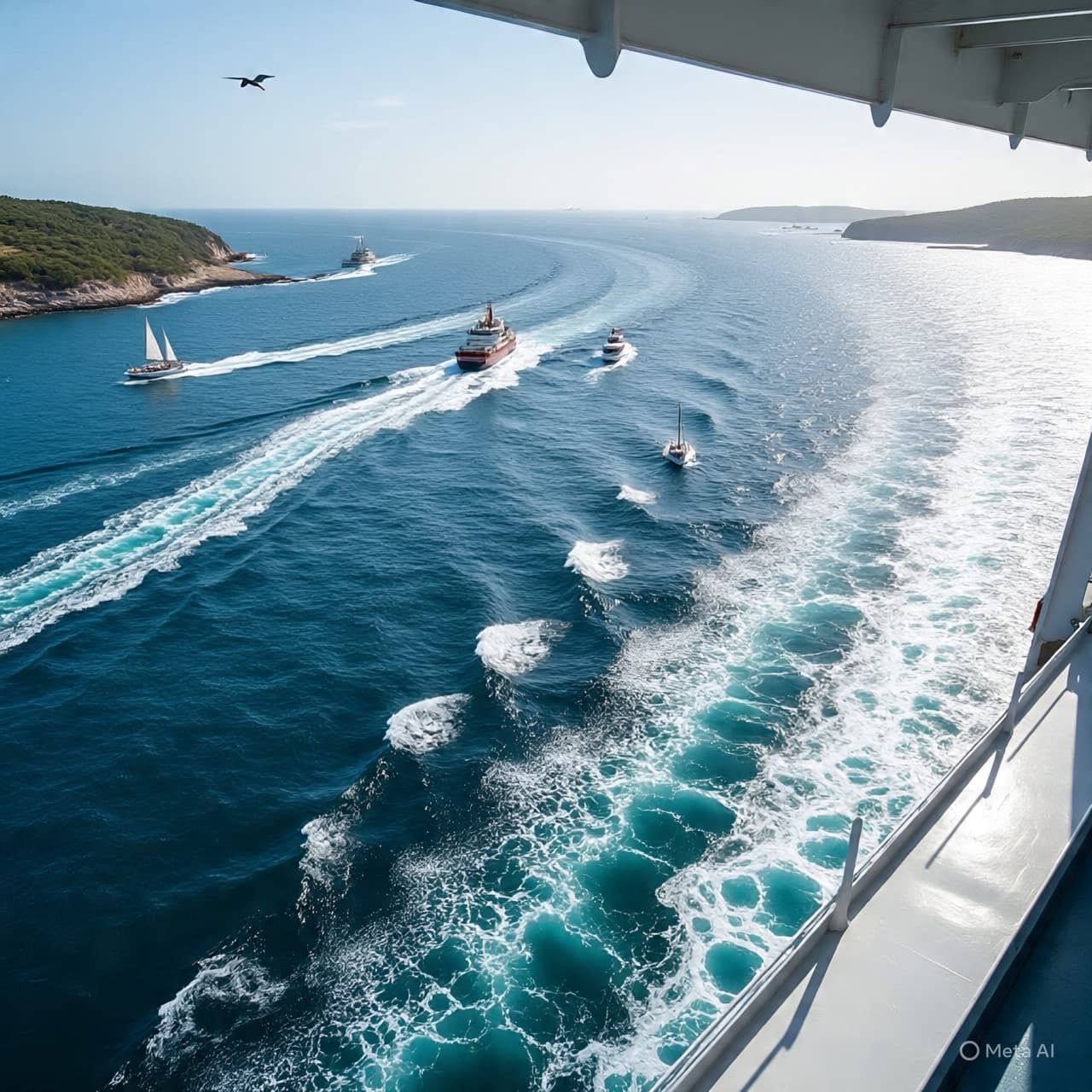
The sun rises over the Strait of Hormuz, scattering light across waters that have carried commerce, tension, and history for centuries. In the early morning haze, the silhouettes of ships drift like quiet sentinels, their flags fluttering in a subtle breeze. Among them, twenty vessels flying the green-and-white of Pakistan navigate a channel long watched by global powers, their passage a reminder that trade and diplomacy often sail hand in hand with the currents of uncertainty.
Iran’s decision to permit these Pakistani-flagged ships reflects both caution and coordination. The Strait, a narrow yet vital artery connecting the Persian Gulf to the open sea, has often been a stage for geopolitical signaling. Here, the movement of cargo vessels is never simply commercial; it carries the weight of international watchfulness, of economic lifelines entwined with security considerations. Local pilots guide the ships, while maritime authorities maintain a careful vigil, ensuring that the delicate rhythm of passage is preserved.
For Pakistan, these voyages are more than logistical necessities—they are gestures of regional connectivity and economic resilience. Crude oil, refined products, and manufactured goods weave through these vessels, linking economies even amid broader tensions in the Gulf. Analysts note that Iran’s decision, permitting safe transit, signals a strategic balancing act: asserting influence while maintaining channels that support neighboring states and international trade alike.
As the day stretches onward, the ships continue their slow glide through the narrow strait, engines humming and flags snapping in the wind. Observers, both near the shore and across continents, watch for subtle shifts in pattern and protocol, aware that in a region where waterways are as much political theater as transport routes, each passage carries layered meanings. The sight of these twenty ships, moving with deliberate care, is a quiet testament to how commerce, diplomacy, and caution navigate the same currents, leaving a trace of reflection in their wake.
AI Image Disclaimer Visuals are AI-generated and serve as conceptual representations.
Sources Reuters Al Jazeera BBC News The Guardian Bloomberg
Published by Banx Network. This article is part of the Banx decentralized media programme, powered by the BXE token on the XRP Ledger.