Key Highlights
- Event:A four-day blackout in El Dueim, Sudan, caused by a drone attack.
- Impact:Hospitals struggled to maintain services, and local businesses were forced to close.
- Recovery:Electricity has returned on a rotating schedule, but challenges remain.
Residents of El Dueim in Sudan’s White Nile state are grappling with the aftermath of a significant four-day blackout that began on October 26, following a drone attack that damaged the Mashkour substation. This incident has severely disrupted essential services, particularly in healthcare, as local hospitals scrambled to maintain operations amid the crisis.
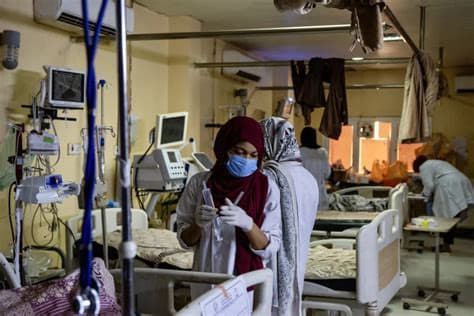
El Dueim Hospital, a critical facility in the region, resorted to using diesel generators to keep its lights on and continue surgical services. However, this solution has not come without challenges, as the hospital faces rising costs due to ongoing fuel shortages. The reliance on generators highlights the precarious situation of healthcare in the area, where access to reliable electricity is vital for patient care.
In addition to the hospital, the city’s dialysis center managed to stay operational by utilizing solar power, showcasing an innovative response to the energy crisis. This adaptation is crucial for patients who rely on regular dialysis treatments, emphasizing the importance of alternative energy sources in times of crisis.
The blackout has also had a profound impact on local businesses and the economy. Many workshops and small enterprises were forced to close their doors, leaving daily-wage workers without income. This sudden loss of earnings has pushed some residents to borrow money for basic household necessities, further straining their financial situations. The economic ripple effects of the blackout are likely to be felt for some time, as businesses struggle to recover from the disruption.
As of now, electricity has returned to El Dueim, but on a rotating schedule, which means that residents and businesses must continue to adapt to intermittent power supply. This situation raises concerns about the long-term stability of the power grid in Sudan, especially in light of recent drone strikes that have targeted critical infrastructure.
The recent events in El Dueim serve as a stark reminder of the vulnerabilities faced by communities in conflict-affected regions. The combination of military actions and infrastructure damage poses significant challenges to the delivery of essential services, including healthcare and economic stability. As the situation evolves, the resilience of the local population will be tested, and the need for reliable energy sources will remain a pressing issue.
In conclusion, the four-day blackout in El Dueim has highlighted the fragility of essential services in Sudan, particularly in the context of ongoing conflict and infrastructure challenges. The community's response, including the use of alternative energy sources, reflects both the immediate impacts of the blackout and the broader implications for the region's future.
Published by Banx Network. This article is part of the Banx decentralized media programme, powered by the BXE token on the XRP Ledger.