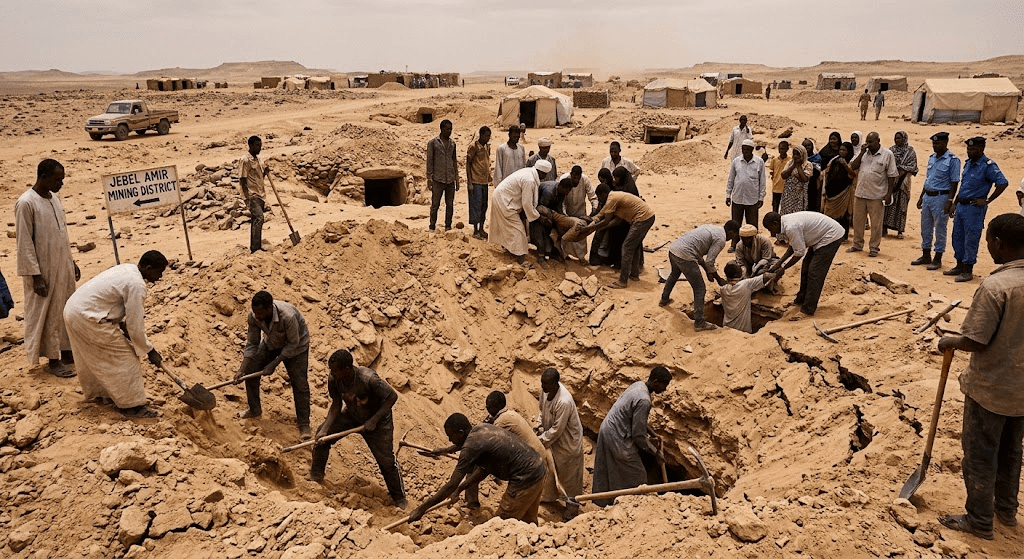
A tragic collapse at an artisanal gold mine in the Jebel Amir area of North Darfur, Sudan, has claimed the lives of at least 60 miners and left an unknown number trapped underground.
The shaft, which extended nearly 40 meters deep into the earth, caved in unexpectedly while workers were inside manually extracting ore. The accident occurred in a remote mining district, delaying official reporting to the capital due to isolated communications.
Rescuers attempting to retrieve survivors have been forced to rely on picks, shovels, and bare hands. Local officials confirmed that heavy machinery cannot be brought near the site due to the high risk of triggering further catastrophic ground collapses in the unstable soil.
"We cannot use heavy equipment because if it gets close, the surrounding ground will cave in further. People are using traditional hand tools, making the recovery effort dangerously slow," said the local district commissioner.
The region has seen a massive influx of informal, unregulated miners in recent years, driven by economic pressures and lucrative gold prices. Artisanal mining sites across the area frequently lack structural engineering oversight, basic ventilation, and safety equipment.
Compounding the hazard, the area surrounding the mine has previously been a flashpoint for intense violent clashes over resource control, complicating emergency response and oversight in the remote border region. Local authorities are continuing recovery efforts, though hopes of finding remaining trapped miners alive continue to dim.
The sheer scale of the catastrophe has sent shockwaves through surrounding villages, where families have set up makeshift vigils around the perimeter of the collapse site. Many relatives have joined emergency efforts themselves, desperately digging through piles of loose earth and rock in hopes of uncovering loved ones before air supplies underground run out completely. With local medical centers severely under-equipped and lacking critical trauma care supplies, emergency workers warn that even if survivors are pulled from the debris, treating severe crush injuries will pose an immense secondary challenge.
Humanitarian agencies and mining safety advocates have renewed calls for government intervention to enforce basic safety regulations in informal mining sectors across the country. As Sudan remains heavily reliant on gold exports to stabilize its struggling economy, experts emphasize that without immediate structural reforms, enforcement of safety standards, and formal training for miners, unregulated operations will continue to cost dozens of lives in preventable industrial disasters.
Published by Banx Network. This article is part of the Banx decentralized media programme, powered by the BXE token on the XRP Ledger.