In the lush canopies of tropical forests, social bonds are the currency of survival. For primates, grooming and play are essential rituals that strengthen community ties. But recent research suggests that these social instincts extend beyond their own species. A comprehensive study has revealed that monkeys and other primates frequently interact with a wide variety of animals, from mice to deer, raising intriguing questions about whether they might, in their own way, keep pets.
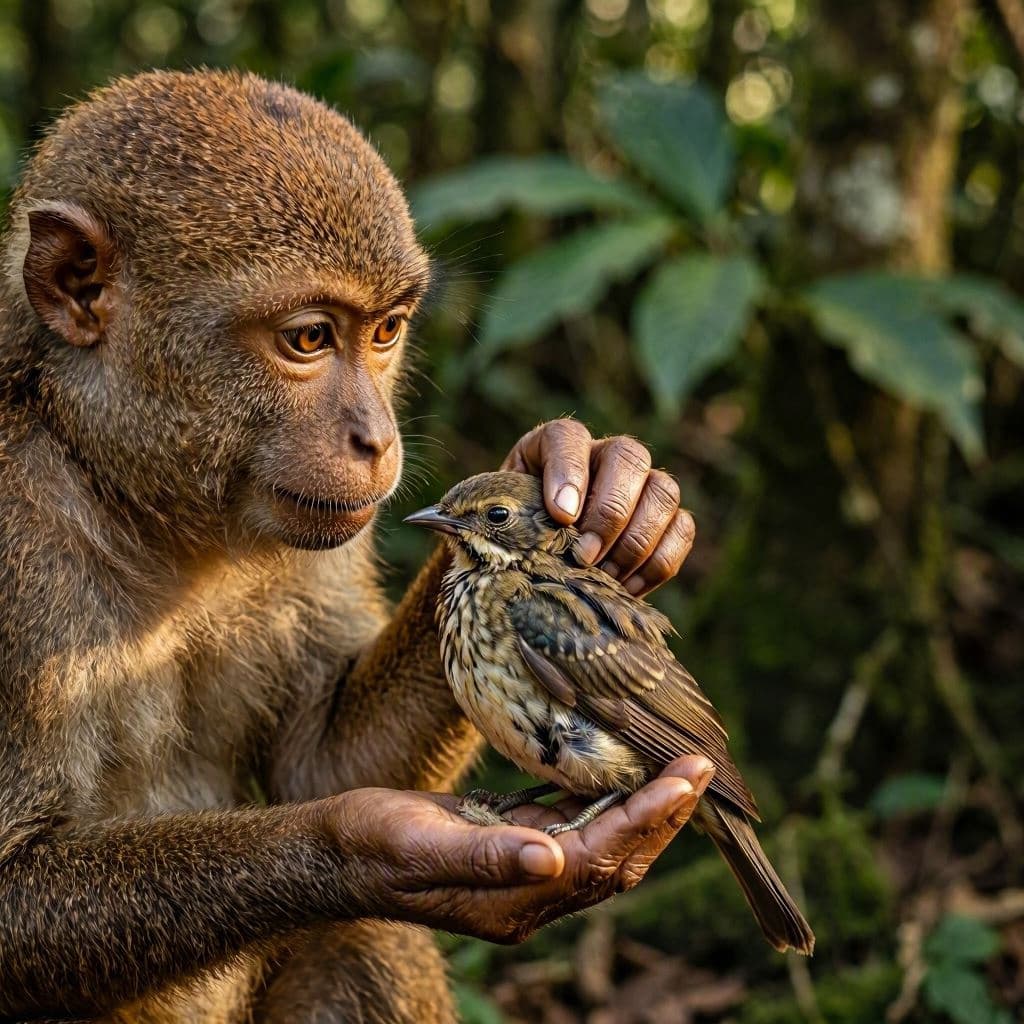
The study, which reviewed decades of observational data, documented hundreds of cases of interspecies interaction. These were not merely fleeting encounters but often involved sustained contact, such as playing, grooming, and even carrying young animals of other species. Such behaviors mirror the ways humans form attachments to domesticated animals, suggesting that the desire for companionship may be deeply rooted in primate psychology.
One of the most striking findings was the diversity of partners involved. Primates were observed interacting with birds, squirrels, and even larger mammals like deer. In some cases, these interactions appeared mutually beneficial, offering protection or foraging advantages. In others, they seemed driven by curiosity or a simple desire for social connection. This complexity challenges the notion that animal relationships are solely transactional.
For scientists, these observations provide clues to the evolutionary origins of pet-keeping. If primates naturally seek out cross-species bonds, it suggests that the human practice of keeping pets is not an anomaly but an extension of an ancient biological tendency. It highlights the social flexibility of primates and their capacity for empathy and cooperation across biological boundaries.
The implications for understanding animal cognition are significant. Recognizing another species as a potential partner requires a level of social awareness and communication skill. It implies that primates can interpret the intentions and emotions of very different creatures, a cognitive feat that underscores their intelligence. This ability may have played a role in the development of complex social structures in early human ancestors.
However, researchers caution against anthropomorphizing these interactions too heavily. While they resemble pet-keeping, the motivations may differ. For a monkey, carrying a squirrel might be a form of play or exploration rather than affection in the human sense. Nevertheless, the frequency and nature of these bonds suggest a genuine interest in other species that goes beyond mere predation or avoidance.
These findings also have conservation implications. Understanding how primates interact with other animals can help protect biodiversity. Preserving habitats that support diverse species allows these natural relationships to flourish. It reminds us that ecosystems are webs of connection, where every species plays a role in the social fabric of the forest.
As we continue to study our primate cousins, we learn more about ourselves. Their interactions with other animals reflect a universal desire for connection, one that transcends species lines. In watching a monkey gently groom a bird, we see a glimpse of the shared social heritage that binds all mammals together.
AI Image Disclaimer: Visuals in this article are AI-generated illustrations of primate behavior and interspecies interactions, designed to visualize the scientific concepts without depicting specific real-world events.
Sources: Phys.org, The Conversation, ZME Science, Frontiers in Psychology
Published by Banx Network. This article is part of the Banx decentralized media programme, powered by the BXE token on the XRP Ledger.