
Many technological advances depend not only on new ideas but also on stronger materials capable of performing under increasingly demanding conditions. From aerospace engineering to energy systems, improvements in material science quietly support progress across countless industries.
Researchers have announced the development of a high-temperature copper alloy that demonstrates significantly improved mechanical strength and thermal stability. The breakthrough could expand the use of copper-based materials in environments where conventional alloys experience performance limitations.
Copper has long been valued for its excellent electrical and thermal conductivity. However, maintaining these properties while improving strength at elevated temperatures has remained a significant engineering challenge.
Scientists achieved the improvement by carefully modifying the alloy's internal microstructure. Advanced processing techniques created stable microscopic features that help maintain mechanical performance even under prolonged exposure to high temperatures.
Potential applications include aerospace systems, advanced manufacturing equipment, electrical infrastructure, and energy technologies where components must withstand demanding operating conditions.
Researchers continue conducting durability testing to evaluate long-term performance under repeated thermal cycles. Additional studies will help determine the alloy's suitability for large-scale industrial deployment.
Materials scientists emphasize that laboratory breakthroughs require extensive validation before commercial implementation. Manufacturing processes, production costs, and industrial compatibility will all influence future adoption.
As research continues, the new copper alloy demonstrates how incremental improvements in material science can enable broader technological progress. Stronger and more reliable materials often become the foundation upon which future innovations are built.
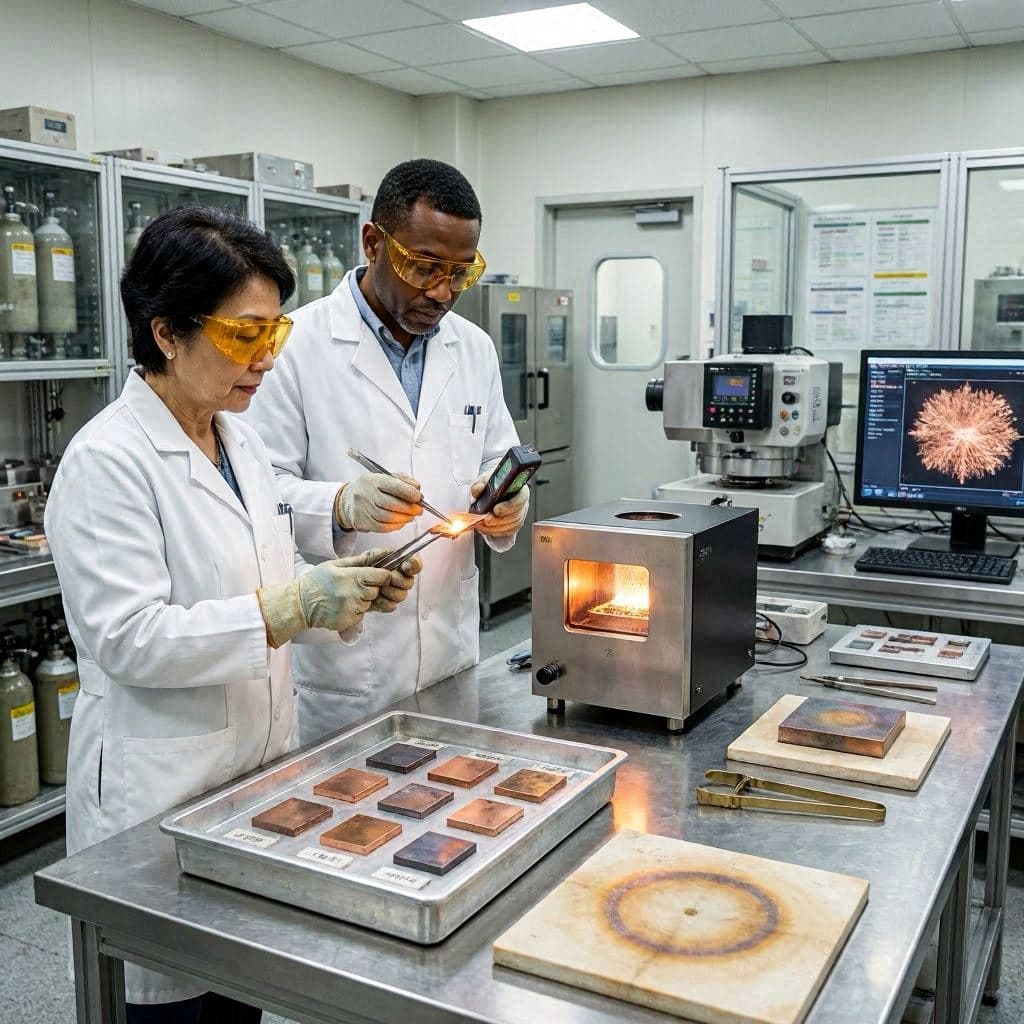
AI-generated image disclaimer: This illustration was generated using AI for scientific visualization and is not an image from the research laboratory.
Source Verification: ScienceDaily, peer-reviewed materials science journals.
Published by Banx Network. This article is part of the Banx decentralized media programme, powered by the BXE token on the XRP Ledger.



