

Key Highlights
- Australia faces a proposed 12.5% tariff on exports linked to forced labor.
- U.S. officials argue for stronger trade measures to combat modern slavery.
- The proposal will undergo public consultation before any final decision.
Australia's trade landscape is currently under scrutiny as the nation responds to a recent proposal from the United States that could impose a 12.5 percent tariff on certain Australian exports. This initiative is part of a broader U.S. effort to address forced labor in global supply chains, a pressing issue that has gained significant attention in recent years.
The proposal was unveiled by the Office of the United States Trade Representative, which is conducting a comprehensive review involving multiple countries. U.S. officials assert that the introduction of stronger trade measures is essential to encourage trading partners to prevent products associated with forced labor from entering international markets. Australia is one of the countries identified for the proposed tariff increase, raising concerns among local exporters.
In response, Australian government representatives have firmly rejected the proposal, emphasizing that the country already has robust legislation in place aimed at combating modern slavery and forced labor. They argue that Australia's existing regulatory framework aligns with international standards and that the proposed tariffs would contradict the long-standing Australia–United States Free Trade Agreement.
The proposed tariffs are not set to take effect immediately; instead, they will enter a public consultation phase. This period is crucial as it allows various stakeholders—including governments, businesses, and industry groups—to provide feedback on the potential economic and legal ramifications of the proposal. Trade specialists highlight that supply chain transparency has become an increasingly vital issue, with governments and multinational corporations facing mounting pressure to ensure that imported products are free from human rights violations.
Australian exporters are particularly attentive to the proposal, given that the United States is one of Australia's most significant trading partners. The exact impact of the proposed tariffs will depend on the final scope and implementation, but industry representatives stress that maintaining predictable trading conditions is essential for long-term investment and business planning.
Economists note that trade negotiations often continue during consultation periods. Historical precedents show that previous tariff proposals have been revised following discussions between governments and industry stakeholders, making the consultation process a critical stage in determining the outcome.
Officials from both Australia and the United States have indicated that dialogue will persist as the review progresses. Australia remains committed to addressing forced labor issues while asserting that its current legal framework already meets internationally recognized standards. The outcome of the consultation process will ultimately dictate whether the proposed tariff advances or undergoes further modifications.
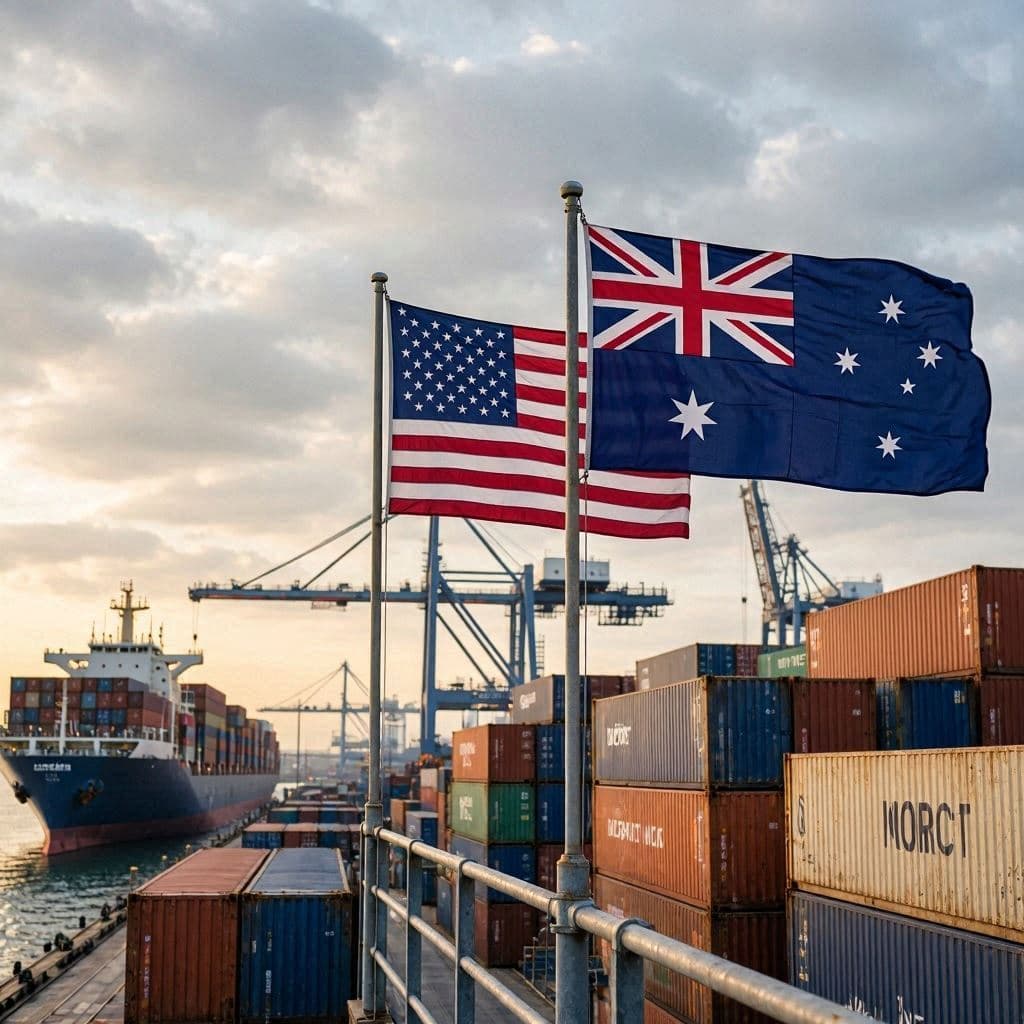
AI-generated image disclaimer: This article includes an AI-generated illustration created solely to visually represent international trade discussions and does not depict an actual meeting.
Published by Banx Network. This article is part of the Banx decentralized media programme, powered by the BXE token on the XRP Ledger.




