Spider silk begins as a liquid, tucked inside a body no larger than a fingernail. From that unlikely origin comes a thread stronger than steel by weight, elastic enough to absorb the shock of struggling prey, and resilient enough to survive wind, rain, and time. For years, this contradiction has fascinated scientists. Now, research suggests that the secret lies not in size or scale, but in a tiny molecular maneuver that turns softness into strength.
At the heart of spider silk are proteins that behave in an unusual way as they leave the spider’s body. Inside the silk gland, these proteins float freely, flexible and disordered. But as the silk is drawn out through narrow ducts, subtle chemical and physical changes force the molecules to reorganize. They fold, align, and lock together with remarkable precision, transforming a fluid into a solid fiber in an instant.
The key discovery centers on how specific segments of these proteins snap into tightly packed structures at just the right moment. Short, repeating molecular units form crystalline regions that act like anchors, while surrounding sections remain flexible. This balance between rigidity and movement allows the silk to stretch under stress without breaking. When tension is released, the molecular bonds relax rather than fail, preserving the thread’s integrity.
What makes this process extraordinary is its efficiency. The spider does not need extreme heat, pressure, or complex machinery. Instead, slight changes in acidity, ion concentration, and mechanical pulling guide the proteins into their final form. It is a molecular sleight of hand, refined by evolution, that achieves what human manufacturing still struggles to replicate.
Understanding this trick has implications far beyond arachnids. Engineers and materials scientists are eager to mimic spider silk’s properties for use in medical sutures, biodegradable textiles, and lightweight structural materials. The challenge has always been consistency. Artificial silks often lack the same toughness, breaking down under stress where natural silk holds firm. By uncovering the precise molecular choreography, researchers are edging closer to closing that gap.
There is also a broader lesson embedded in the silk itself. Strength does not always come from mass or force, but from organization at the smallest scales. In spider silk, durability emerges from cooperation—millions of molecules responding together to gentle cues, forming a material that defies expectations.
Each strand spun in a garden or forest is a quiet demonstration of this principle. Nearly invisible, easily overlooked, spider silk carries within it a molecular strategy honed over millions of years. In learning how it works, scientists are not just decoding a remarkable material, but rediscovering how much power can reside in the smallest of changes.
AI Image Disclaimer
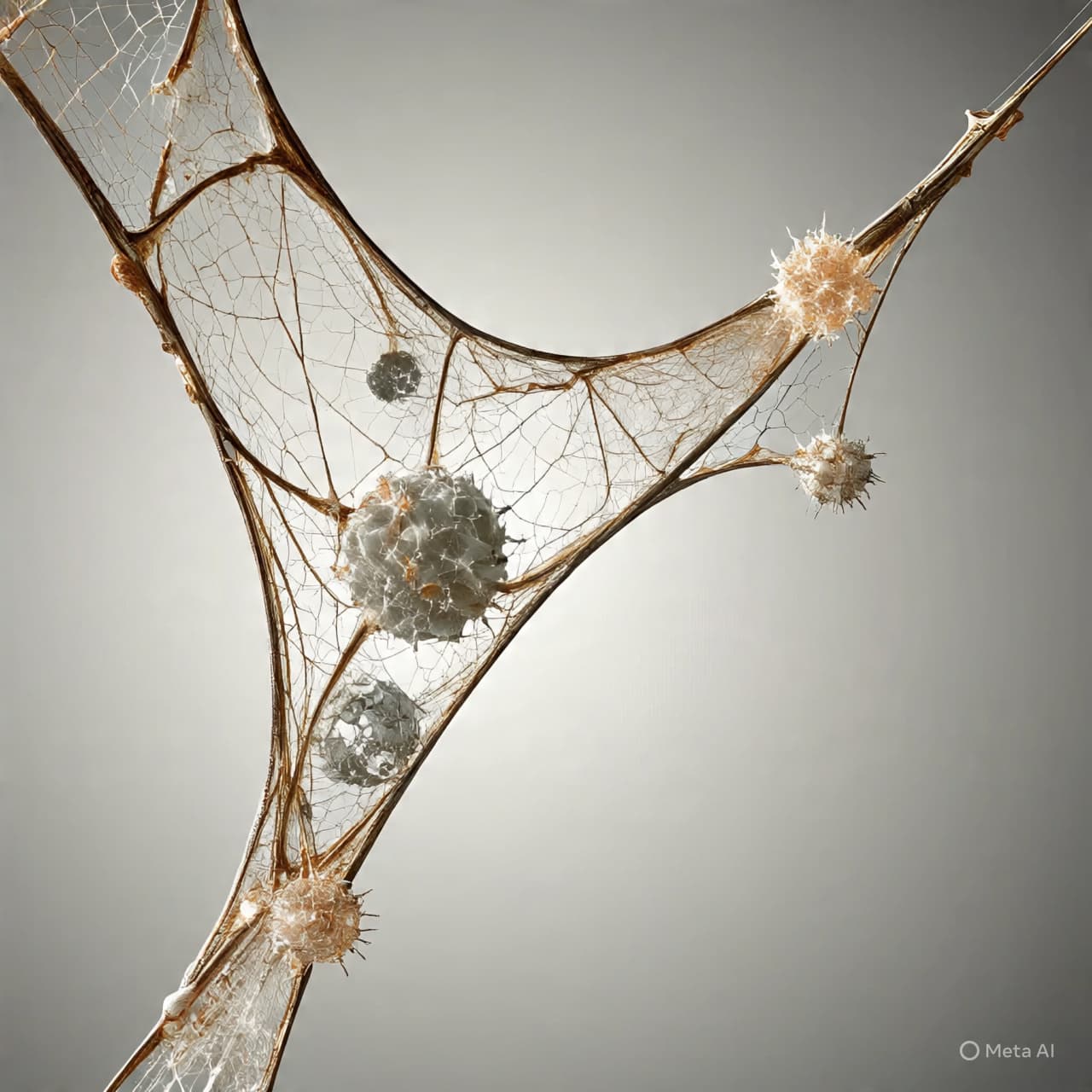
Visuals are AI-generated and serve as conceptual representations.
Sources
Nature Materials Science Proceedings of the National Academy of Sciences Max Planck Institute for Polymer Research Harvard John A. Paulson School of Engineering and Applied Sciences
Published by Banx Network. This article is part of the Banx decentralized media programme, powered by the BXE token on the XRP Ledger.