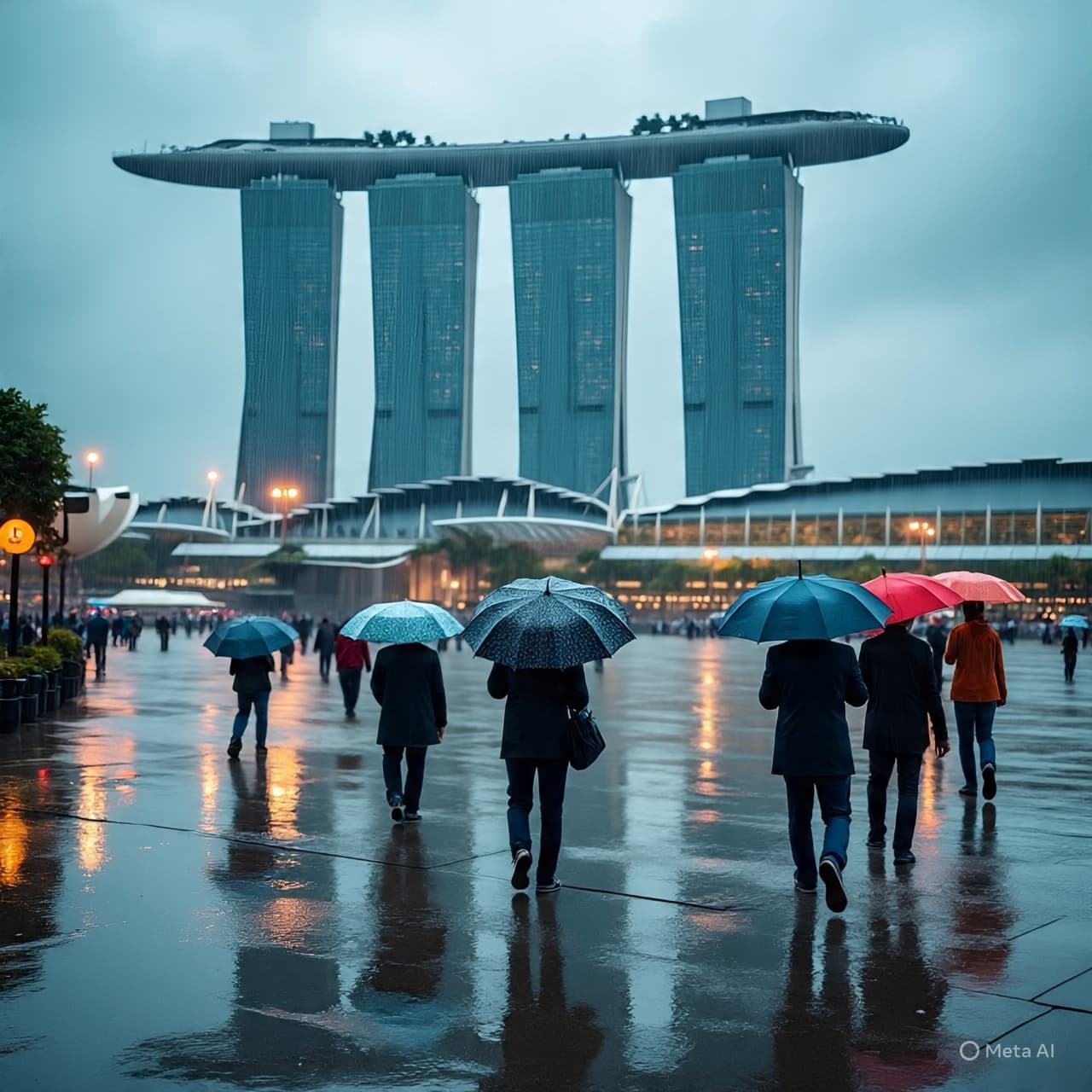
There is a certain poetry in the way Singapore’s skies can shift — from the comforting grey of rain‑laden clouds to the shimmering gold of tropical sun — but in 2025 those skies told a story of extremes that caught even seasoned meteorologists’ attention. Singapore recorded its wettest March on record, and two of its warmest months — June and November — also set new temperature marks, reflecting a year in which weather patterns swung between soaking monsoons and unrelenting heat.
March 2025 was exceptional not merely for the volume of rain but for how it reshaped expectations of the island’s climate. Historically one of the drier months, March saw an islandwide average rainfall of 482.9 mm — about 130 per cent above its long‑term average — a figure driven by a series of monsoon surges that brought sustained downpours across wide swathes of the country. That deluge made March the wettest March in Singapore’s recorded history.
The unusually high rainfall did not begin or end in March, either. January and April were themselves markedly wetter than usual, contributing to 2025 ranking as the seventh‑wettest year for Singapore since records began in 1980. A combination of short‑lived La Niña conditions and a negative phase of the Indian Ocean Dipole helped foster atmospheric conditions that were unusually conducive to rain — flooding not just gardens and streets but also statistical records.
Yet as the rain eased and the calendar turned toward the equatorial sun, a different kind of record was made. June 2025 was the warmest June ever recorded on the island, tied only with the benchmark year of 1997, with a mean temperature of about 29.3 °C. That warmth carried through the dry southwest monsoon season — a period when tropical cities often feel the full force of sunlight on already hot pavement.
The heat did not stop with June. November, usually a month of transition toward wetter weather, also broke temperature records. Singapore’s daily maximum and minimum temperatures reached new highs for a November, with a peak of 35.4 °C and a minimum of 27.7 °C — both surpassing previous records. These statistics reflected how even those seemingly gentler parts of the year can bear the imprint of broader climatic shifts.
Taken together, these weather extremes — record rainfall turning city gardens lush and storms frequent, and blistering heat testing body and pavement alike — paint a picture of a city‑state whose climate in 2025 was anything but ordinary. They are reminders of how global climate patterns and local atmospheric phenomena can, in concert, deliver weather that surprises, challenges and reshapes everyday life in ways both immediate and enduring.
AI Image Disclaimer “Visuals are created with AI tools and are intended for conceptual representation, not real photographs.”
Sources Singapore saw wettest March, warmest June and November on record in 2025 — Channel NewsAsia. Record wet March in Singapore and warm June and November — Mediacorp Berita.
Published by Banx Network. This article is part of the Banx decentralized media programme, powered by the BXE token on the XRP Ledger.


.jpg&w=3840&q=75 "Flash Mudslide Buries Agricultural Village Houses: Five Killed in Al-Mahwit Governorate")