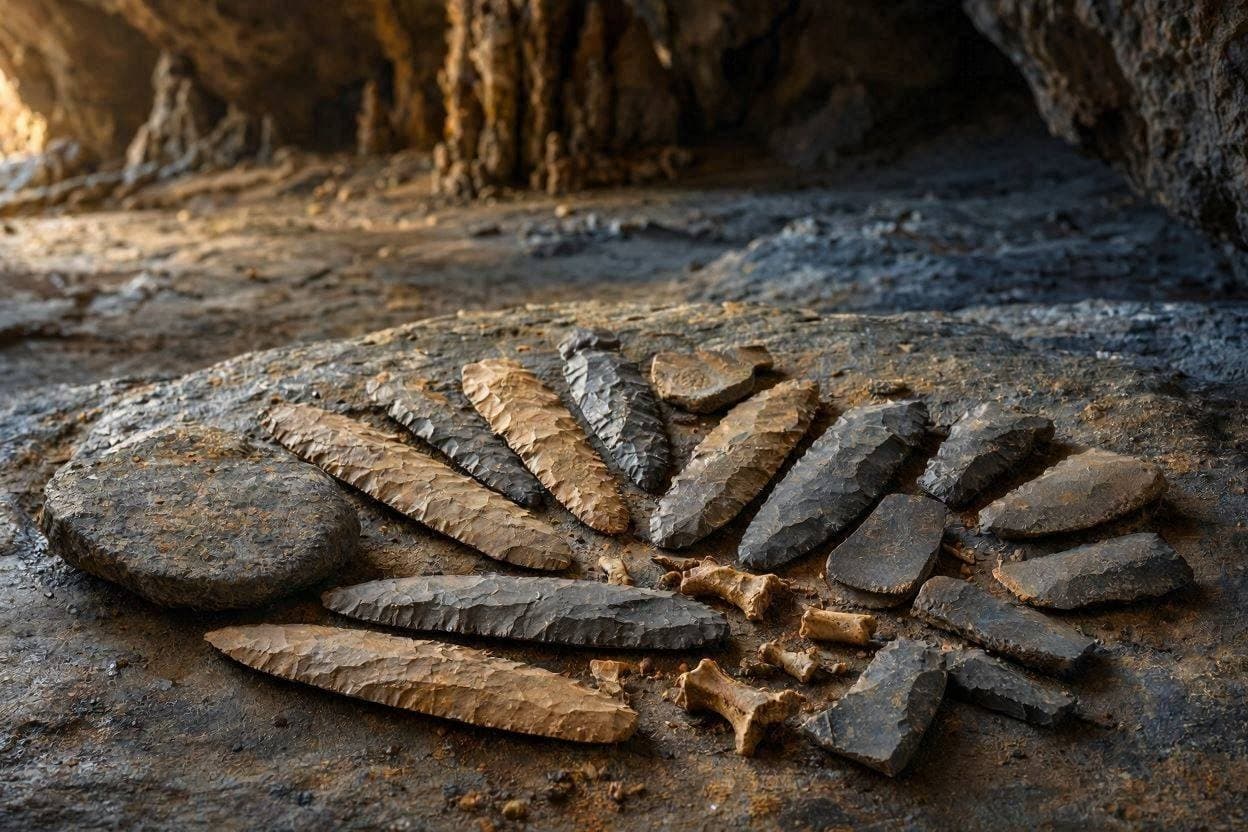
In the quiet darkness of Ararat-1 Cave in Armenia, time seems to stand still. Yet, within its layers of sediment lies a story of human ingenuity and adaptation. Recent excavations have uncovered stone tools dating back 50,000 years, revealing a sophisticated "split strategy" for survival. These artifacts suggest that ancient hunter-gatherers did not rely on a single method but adapted their techniques to changing environments. This discovery invites us to look closer at the roots of human flexibility, showing that our ancestors were masters of innovation long before recorded history.
Body: The tools, including blades, scrapers, and points, were analyzed using advanced typological and osteological methods. Researchers found evidence of two distinct production styles coexisting in the same layers. One style focused on efficiency and speed, producing standardized blades for quick tasks. The other emphasized durability and versatility, creating heavier tools for more demanding work. This duality suggests a strategic approach to resource management, allowing groups to respond to different challenges.
The cave itself served as a seasonal shelter, occupied during harsh winters and abandoned in warmer months. The presence of these tools indicates that the inhabitants were not merely surviving but thriving through planning. They likely stored resources and prepared tools in advance, anticipating the needs of the coming season. This foresight is a hallmark of cognitive complexity, distinguishing early humans from other species.
The "split strategy" may have been a response to environmental instability. The region experienced fluctuating climates, with periods of cold and dryness alternating with milder conditions. By maintaining a diverse toolkit, hunter-gatherers could exploit various food sources, from large game to small plants. This adaptability would have been crucial for survival in a unpredictable landscape.
Archaeologists also noted the use of local materials, such as obsidian and flint, sourced from nearby deposits. The selection of raw materials reflects a deep knowledge of the surrounding geography. Transporting these stones into the cave required effort, indicating their value to the community. Each tool represents not just utility, but a connection to the land and its resources.
The findings challenge earlier assumptions that Paleolithic societies were rigid in their practices. Instead, they appear to have been dynamic and responsive, capable of shifting strategies as needed. This flexibility may have been key to their longevity, allowing them to persist through millennia of change. It highlights the importance of cultural transmission, where skills and knowledge were passed down through generations.
For modern observers, the discovery offers a lesson in resilience. In a world facing its own environmental challenges, the ability to adapt and diversify is more important than ever. The ancient inhabitants of Ararat-1 Cave demonstrate that survival is not just about strength, but about smart, flexible thinking. Their legacy is written in stone, waiting to be read.
Closing: The stone tools from Ararat-1 Cave are more than artifacts; they are evidence of human creativity and endurance. They remind us that our ancestors faced uncertainty with ingenuity, developing strategies that allowed them to thrive. As we uncover more of their story, we gain a deeper appreciation for the roots of our own adaptability.
AI Image Disclaimer: Images included here are AI-generated conceptual illustrations of archaeological sites and stone tools, designed to visualize the historical context without depicting specific real-world excavation footage.
Sources: EurekAlert! National Geographic Education Science News Armenian National Academy of Sciences
Published by Banx Network. This article is part of the Banx decentralized media programme, powered by the BXE token on the XRP Ledger.