
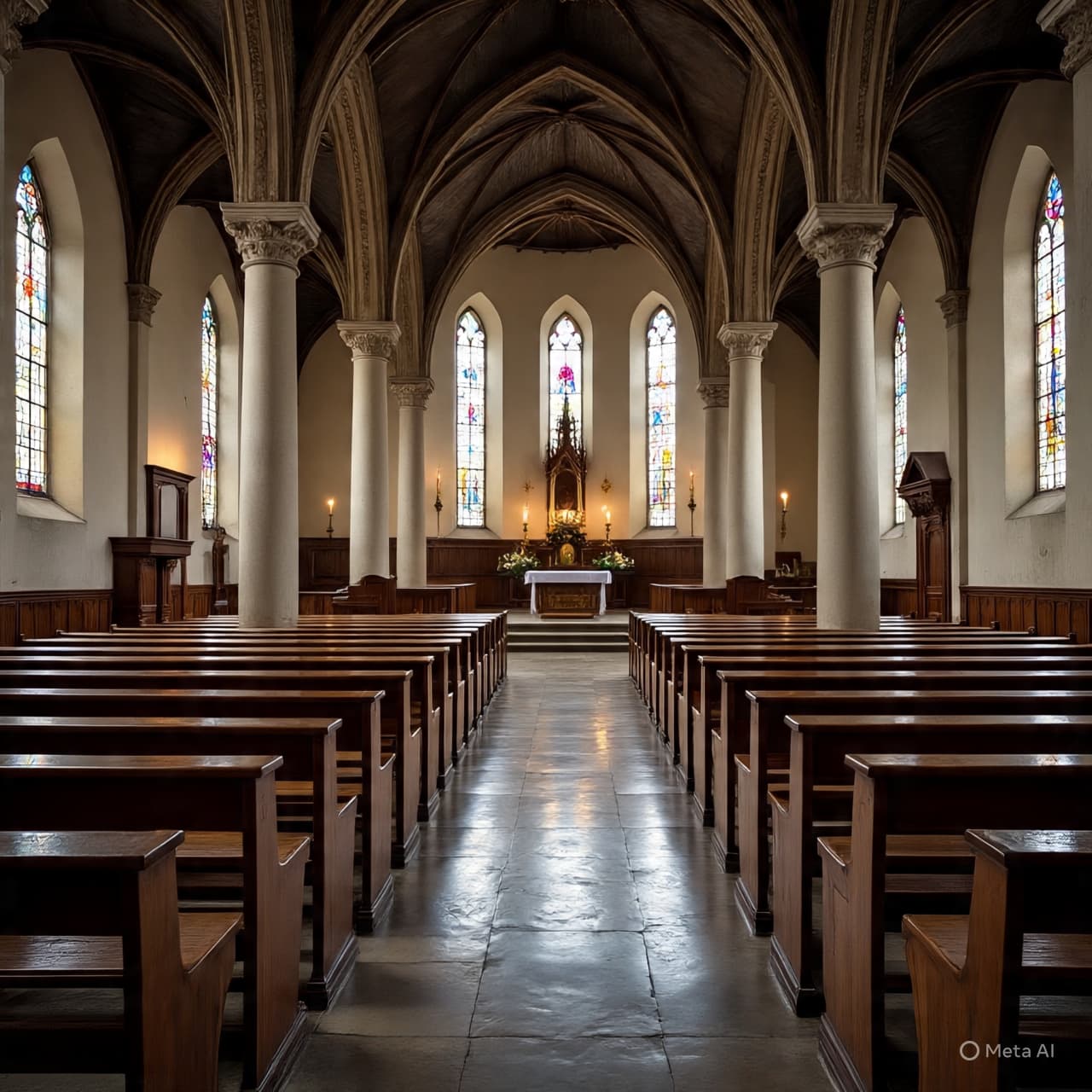
For nearly eight centuries, the sound of bells has folded into the daily rhythm of Cork, rising above shopfronts and river bridges, marking time in a city that has grown and reshaped itself around stone walls and quiet cloisters. Generations have passed beneath the same arches — merchants, students, families — their footsteps tracing a continuity that seemed almost permanent. Now, that long thread is preparing to loosen.
A religious order with an association to Cork stretching back close to 800 years has announced it will close its city centre church, bringing an era to an end. The decision, members say, follows declining numbers within the order and the practical realities of maintaining historic buildings amid changing congregations.
The order first established its presence in medieval Cork, weaving itself into the spiritual and civic life of the city. Over centuries, its church became a landmark — a place of worship, reflection, and refuge — surviving political upheaval, economic shifts, and the quiet transitions of modern Ireland. Baptisms, weddings, funerals, and daily Mass formed the steady cadence of its ministry.
In recent decades, however, religious vocations across Ireland have fallen sharply. Aging memberships and reduced attendance have led many congregations to consolidate parishes or close properties that can no longer be sustained. Representatives of the order acknowledged that while the decision is painful, it reflects a broader national pattern.
The church building itself, situated in the heart of Cork’s commercial district, has long been both a spiritual sanctuary and a point of architectural interest. Its stone façade and interior detailing stand as reminders of medieval foundations and later restorations. Discussions are expected regarding the future use of the site, with heritage preservation likely to be part of the conversation.
For parishioners, the closure is more than administrative. It is the loss of a familiar space — the particular echo of hymns against stone, the scent of incense on winter mornings, the quiet pew where one might sit unnoticed. Some have spoken of gratitude for centuries of service, even as they express sadness at the ending.
Church leaders have emphasized that pastoral care will continue through neighboring parishes, and that the decision does not signal a withdrawal from Cork altogether, but rather a reshaping of presence. Still, the symbolic weight of closing a church so deeply rooted in the city’s history is difficult to overlook.
Ireland’s religious landscape has shifted significantly over the past half-century, reflecting broader social and cultural change. Institutions once central to civic identity have found themselves navigating new expectations and realities. In Cork, as elsewhere, faith communities adapt — sometimes by merging, sometimes by letting go of buildings that once seemed immovable.
When the final service is held, it will mark not only the closing of doors but the culmination of an 800-year story in that particular place. The bells may fall silent in the city centre, but their resonance — carried in memory and record — will remain part of Cork’s layered history.
AI Image Disclaimer
The accompanying images are AI-generated representations created for illustrative purposes and are not real photographs.
Sources
RTÉ News
The Irish Times
Cork City Council
Diocese of Cork and Ross
Published by Banx Network. This article is part of the Banx decentralized media programme, powered by the BXE token on the XRP Ledger.


.jpg&w=3840&q=75 "US Declares Drought Disaster for Parts of Puerto Rico as Dry Conditions Persist")