
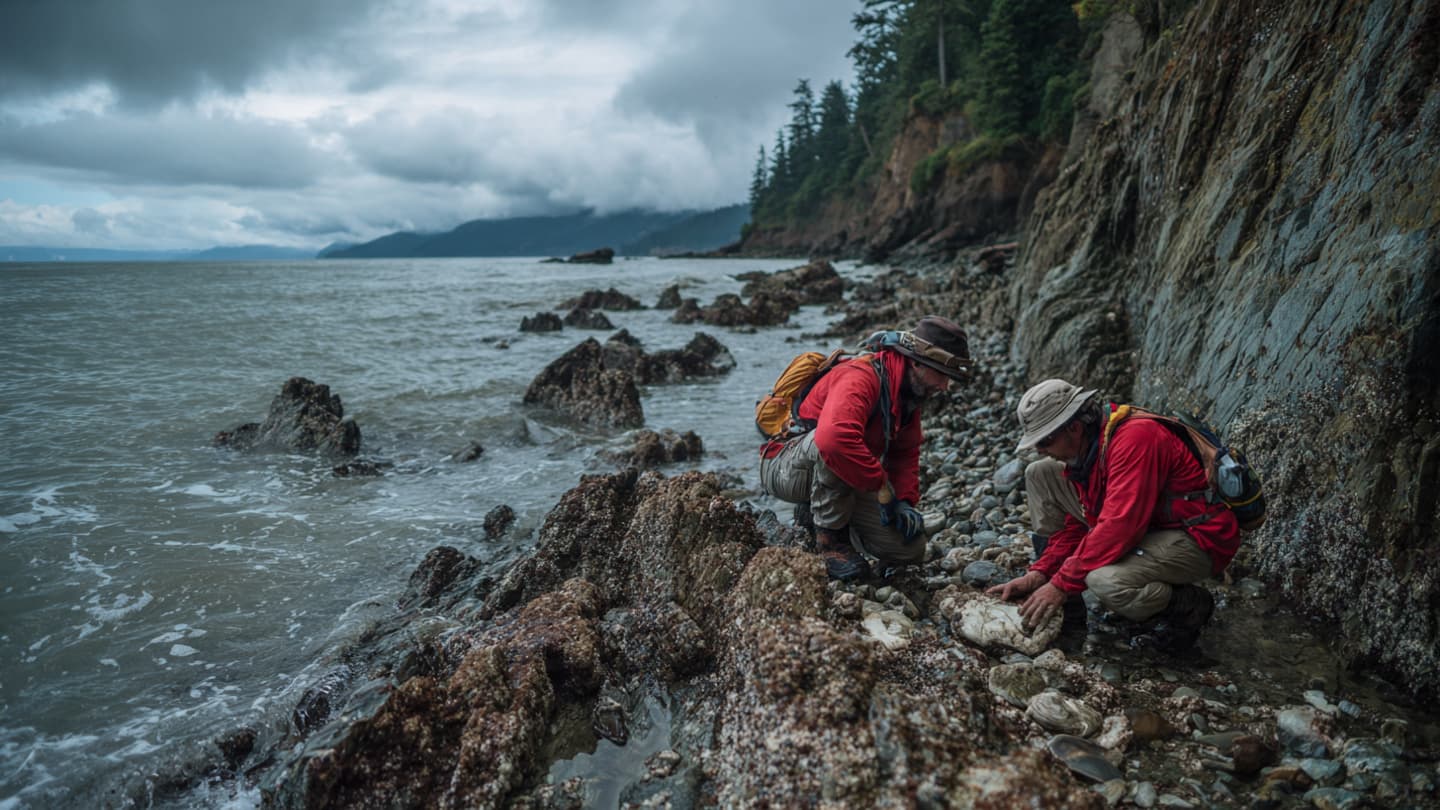
Coastlines often appear timeless to those standing before them. Yet beneath every cliff and weathered stone lies a history shaped over millions of years by oceans, wind, pressure, and gradual geological change.
Scientists studying Australia’s famous Twelve Apostles rock formations have uncovered fossil evidence helping explain how the iconic coastal structures developed across vast stretches of geological time.
Researchers analyzed ancient marine fossils embedded within surrounding limestone formations along Victoria’s southern coastline. The findings offer new insight into environmental conditions that existed when the region lay beneath prehistoric seas.
The Twelve Apostles were formed primarily through erosion as powerful Southern Ocean waves slowly carved limestone cliffs into isolated pillars. Fossil evidence now provides additional detail about the ancient marine ecosystems that once occupied the area.
Geologists say fossil records are essential for reconstructing environmental history. Tiny remnants of ancient organisms can reveal ocean temperatures, biodiversity patterns, and sediment conditions from millions of years ago.
Australia’s southern coastline contains some of the world’s most visually striking geological landscapes, attracting millions of visitors annually while also serving as important scientific research sites.
Researchers emphasize that coastal formations remain dynamic rather than permanent. Natural erosion continues reshaping the Twelve Apostles, with several rock columns collapsing over recent decades due to ongoing environmental forces.
The study also highlights the relationship between tourism and conservation. Scientists and environmental agencies continue balancing public access with efforts to protect fragile geological and ecological systems.
For visitors gazing across the rugged coastline today, the ancient fossils hidden within the stone offer a quiet reminder that landscapes themselves are living records of Earth’s long and patient history.
AI Image Disclaimer: Certain accompanying images were AI-generated to artistically represent geological formations and prehistoric coastal environments.
Sources Verified: ABC News Australia, Geological Society of Australia, ScienceDaily, Parks Victoria
Published by Banx Network. This article is part of the Banx decentralized media programme, powered by the BXE token on the XRP Ledger.



