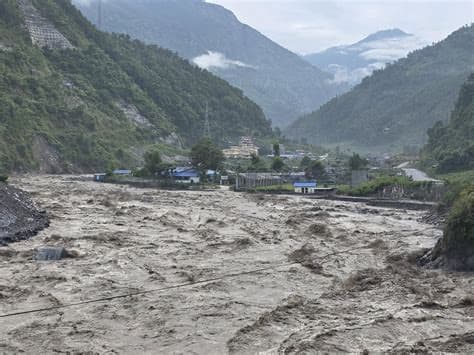
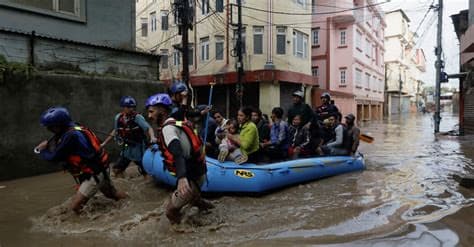
There are landscapes we trust without thinking — towpaths walked for decades, canals that carry time as gently as water. In England, one such familiar scene was abruptly rewritten when the ground itself gave way, opening a vast sinkhole that swallowed canal boats and turned a quiet waterway into a place of urgency and alarm.
The sinkhole, which appeared suddenly along a stretch of canal, caused multiple boats to slide into the collapsing earth as sections of the bank crumbled away. Emergency services were quickly dispatched, launching a rescue operation amid fears that people could be trapped or injured. Fire crews, police, and waterway authorities worked together to secure the area as the scale of the collapse became clear.
Witnesses described a startling transformation — water draining rapidly, boats tilting at unnatural angles, and the canal’s edge breaking apart with little warning. What had been a stable route for leisure craft and liveaboard vessels became unstable ground, prompting evacuations and road closures nearby. Authorities moved swiftly to account for all individuals believed to be in the area at the time of the collapse.
Initial assessments suggest the sinkhole may be linked to ground instability beneath the canal bed, though officials cautioned that a full investigation is still underway. Engineers are examining whether erosion, aging infrastructure, or underground voids contributed to the sudden failure. Until those questions are answered, access to the canal remains restricted.
For local residents and boat owners, the incident has been both shocking and deeply unsettling. Many spoke of the canal as a constant presence — a corridor of calm through towns and countryside. Seeing it fracture so dramatically has raised concerns about the safety of similar waterways across the region, particularly as extreme weather and prolonged rainfall place additional stress on historic infrastructure.
Waterway authorities have emphasized that incidents of this scale are rare, but they acknowledge that Britain’s extensive canal network requires constant monitoring and maintenance. Crews are now focused on stabilizing the site, preventing further collapse, and safely recovering the damaged boats. The process is expected to take days, if not weeks.
As emergency operations continue, the canal sits in uneasy stillness, its interrupted flow a reminder that even the most familiar environments can change without notice. The priority, officials say, remains ensuring safety and understanding how such a rupture could occur — so that calm waters elsewhere remain just that.
AI IMAGE DISCLAIMER “Images in this article are AI-generated illustrations, meant for concept only.”
SOURCES BBC News Reuters Sky News The Guardian Associated Press
Published by Banx Network. This article is part of the Banx decentralized media programme, powered by the BXE token on the XRP Ledger.