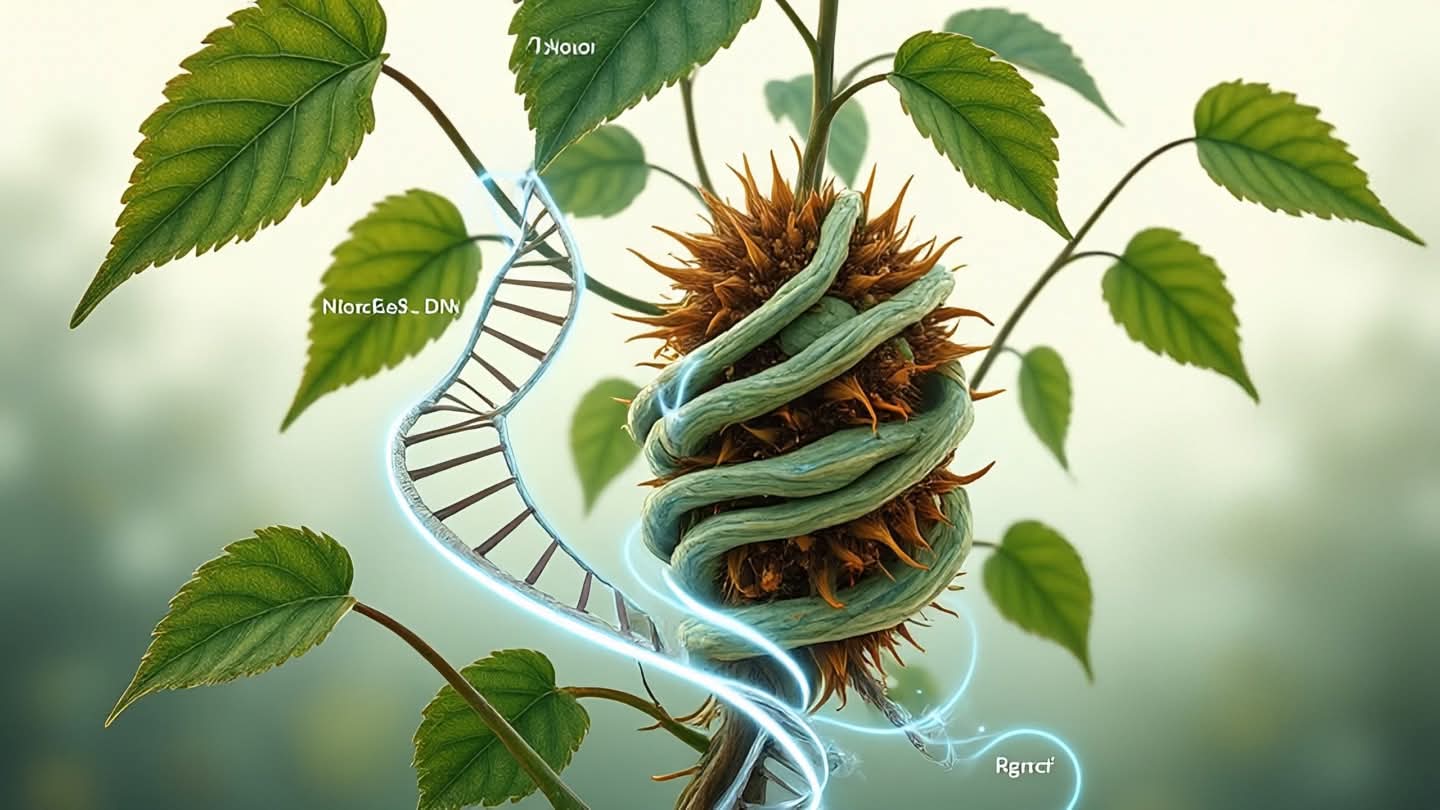
In the forest understory, a silent theft is occurring. Parasitic plants, often viewed as mere freeloaders, are engaging in a sophisticated form of biological hacking. Recent discoveries reveal that these plants do not just steal nutrients from their hosts; they also steal genes. More remarkably, they remodel these stolen genetic sequences to suit their own needs, acting as natural genetic engineers in a process that blurs the lines between species.
The study focuses on parasitic plants like dodder and mistletoe, which form physical connections called haustoria with their host plants. Through these bridges, they siphon water and nutrients. However, researchers found that large fragments of DNA also cross this boundary. Once inside the parasite, these foreign genes are not merely passive passengers; they are integrated into the parasite’s genome and expressed to perform specific functions.
This horizontal gene transfer is not a random accident but a strategic adaptation. The parasites appear to select genes that confer advantages, such as resistance to stress or enhanced metabolic efficiency. By remodeling these genes, they optimize them for their parasitic lifestyle, effectively upgrading their own biological toolkit using parts borrowed from their victims.
This phenomenon challenges the traditional tree-of-life model, which assumes vertical inheritance from parent to offspring. Instead, it suggests a web of genetic exchange, where species can acquire traits directly from unrelated neighbors. This lateral movement of genes accelerates evolution, allowing parasites to adapt rapidly to new hosts and environments.
The implications for plant biology are profound. It raises questions about the stability of genomes and the extent of genetic sharing in nature. If parasites can steal and use genes, what other organisms might be capable of similar feats? This discovery opens new avenues for understanding plant evolution and ecosystem dynamics.
For agriculture, this knowledge is a double-edged sword. While it offers insights into plant resilience, it also highlights the potential for pests to acquire harmful traits from crops. Understanding the mechanisms of gene transfer could help develop strategies to protect crops from parasitic infections and prevent the spread of undesirable genes.
Scientists are now investigating the molecular machinery that allows parasites to integrate and remodel foreign DNA. Identifying the enzymes and pathways involved could provide tools for biotechnology, potentially enabling more precise genetic engineering in crops. Nature, it seems, has already perfected techniques that humans are still striving to master.
The findings, published in a leading botanical journal, underscore the complexity of plant interactions. As we learn more about these genetic thieves, we gain a deeper appreciation for the ingenuity of evolution and the interconnectedness of life.
AI Image Disclaimer: Please be aware that any images accompanying this article are AI-generated illustrations designed to evoke the themes of plant biology and genetic exchange.
Sources: Nature Plants Current Biology Science Daily American Society of Plant Biologists The New York Times
Published by Banx Network. This article is part of the Banx decentralized media programme, powered by the BXE token on the XRP Ledger.