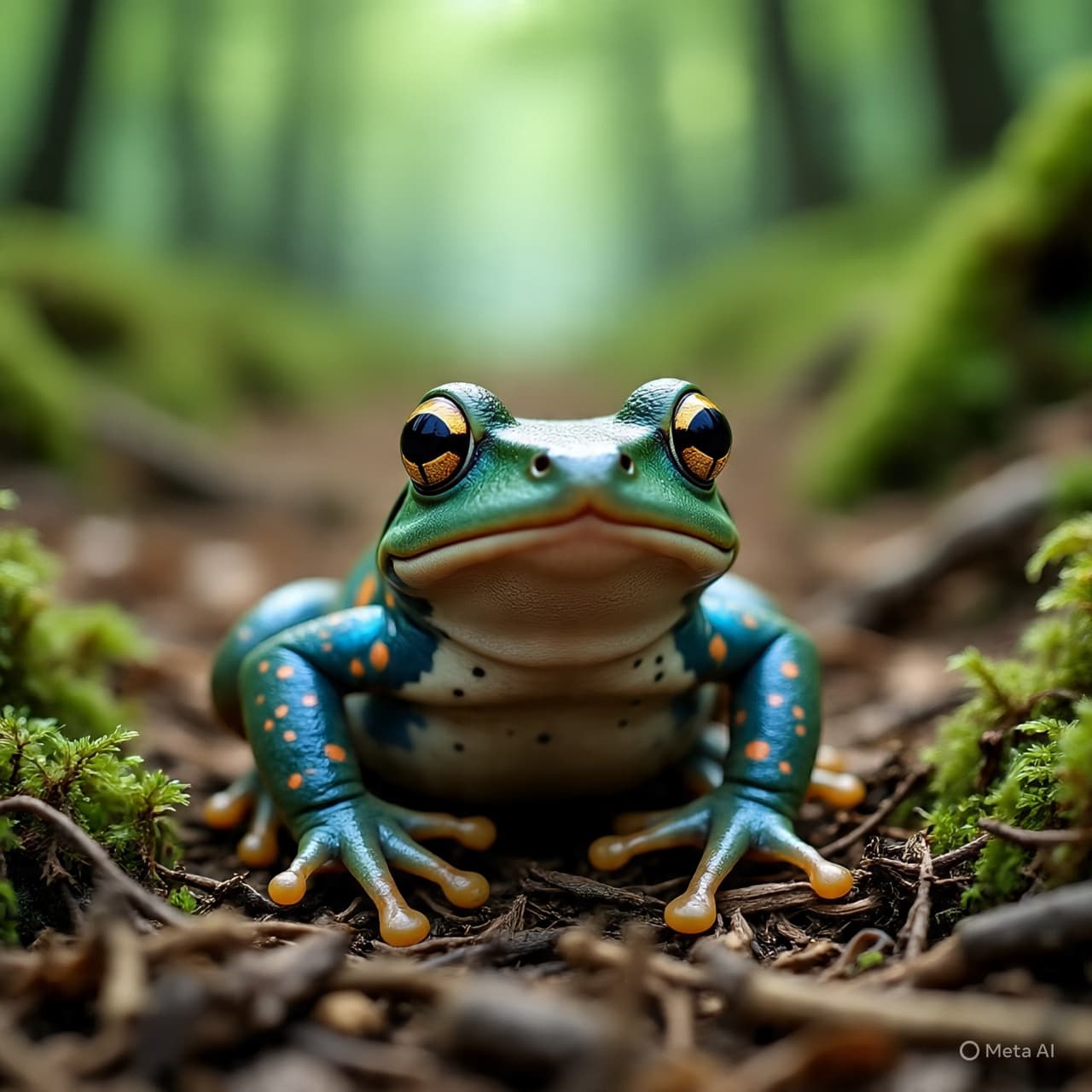
In the dense, emerald rainforests of India’s Western Ghats, a creature once likened to a living canvas of stars now seems to have vanished — possibly forever. The galaxy frog (Melanobatrachus indicus), a tiny amphibian named for its shimmering, star‑like spots, has disappeared from a study site in Kerala, researchers report, with evidence suggesting that human disturbance — particularly from wildlife photographers — may have destroyed its fragile habitat.
These diminutive frogs, each only the size of a fingertip and breathing through their sensitive skin, lived in microhabitats beneath fallen logs and leaf litter — environments so delicate that even small changes can be disastrous. When scientists returned to a site where up to seven individuals had been recorded in 2020, they found the log overturned, vegetation trampled and no frogs at all. Attempts to locate survivors in subsequent visits proved fruitless.
Initial suspicions that natural predators were responsible gave way to a more troubling explanation. Trackers familiar with the area reported that groups of photographers had been visiting the site repeatedly, searching for opportunities to capture images of the rare amphibians. In doing so, they turned over logs, trampled the surrounding plant life and even handled the frogs without protective gloves, a practice that can transmit disease, cause stress and damage the animals’ delicate skin. At least two frogs were reported to have died after prolonged handling.
The galaxy frog is not just another species; it is the sole member of its family, representing a unique and irreplaceable branch of amphibian evolution. Its disappearance from a known habitat is not only tragic for biodiversity but also a stark warning about the unintended consequences of unregulated wildlife tourism and amateur photography. Conservationists emphasize that while photography can raise awareness and appreciation for rare species, it must be conducted ethically, with strict respect for animal welfare and habitat protection.
Experts, including those from the Zoological Society of London’s EDGE of Existence Programme, have long highlighted the fragile existence of species like the galaxy frog, whose life depends on finely balanced environmental conditions. They argue that disturbances too often start with innocent curiosity — a desire for a perfect photograph — but can escalate into damage that imperils entire populations.
The reported disappearance is a sobering chapter in the ongoing struggle to balance human fascination with nature and the need for its protection. For the galaxy frog, the moment of wonder captured on camera may have come at the cost of its future in the wild. Conservationists hope this loss will serve as a catalyst for stronger ethical guidelines and more rigorous protection regimes — before other rare species face a similar fate.
AI Image Disclaimer Visuals are created with AI tools and are not real photographs; they are intended for conceptual representation only.
Sources: The Guardian; Discover Wildlife; news reports on galaxy frog disappearance linked to photographer disturbance.
Published by Banx Network. This article is part of the Banx decentralized media programme, powered by the BXE token on the XRP Ledger.