
Key Highlights
- Prime Minister Keir Starmer refrains from announcing emergency measures amid the Iran conflict.
- He warns of a coming economic 'storm' affecting the UK.
- Critics urge for immediate government action to address rising energy costs.
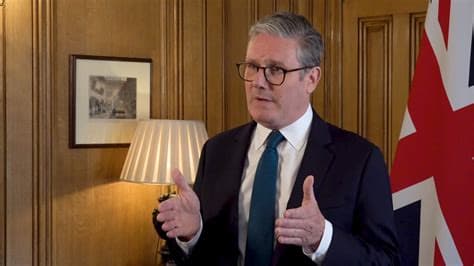
Prime Minister Keir Starmer recently addressed the nation regarding the UK's strategy to mitigate potential economic fallout from the ongoing conflict in Iran. In a press conference, he acknowledged the gravity of the situation but opted not to implement emergency measures at this time. Instead, he framed the government's current decisions as a proactive response to the challenges that lie ahead.
Starmer emphasized that April marks a pivotal moment for new government policies, including increases in the minimum wage and adjustments to family benefits. While these announcements may not be groundbreaking, he underscored their significance in positioning the UK to effectively manage the economic impacts of the war. The Prime Minister's remarks reflect a broader strategy aimed at stabilizing the economy during uncertain times.
During the press conference, Starmer employed the metaphor of a coming "storm" to describe the anticipated economic turbulence, characterizing it as "fierce." He stated, "This will not be easy," alluding to both the broader economic effects of the conflict and the complexities involved in reopening the vital Strait of Hormuz, a crucial passage for global oil supply.
The absence of immediate emergency measures has sparked criticism from various political factions. Opposition parties, including the Greens, Conservatives, and Liberal Democrats, have called on Starmer to take more decisive action, such as subsidizing energy bills and eliminating taxes on household energy. These calls for action highlight the growing concern over rising energy costs and the potential for economic instability.
In defense of his approach, Starmer pointed to the three-month energy price cap as a protective measure, arguing that additional support might not be necessary until the autumn. Despite these reassurances, pressures from various parties continue to mount, pushing for immediate government intervention to alleviate the financial burden on households.
Furthermore, Starmer hinted at the possibility of military involvement to ensure the safety of the Strait of Hormuz. He reaffirmed that the UK would not engage directly in the Iran conflict but would instead seek to collaborate with European allies. This approach underscores a commitment to long-term strategies aimed at enhancing national security while navigating the complexities of international relations.
Starmer's remarks resonate deeply amid fears of rising energy costs and economic instability, making it clear that the government is preparing for uncertain times ahead. The Prime Minister asserts that how the UK navigates this period will significantly define its future, emphasizing the importance of strategic planning and collaboration in the face of adversity.
Published by Banx Network. This article is part of the Banx decentralized media programme, powered by the BXE token on the XRP Ledger.



