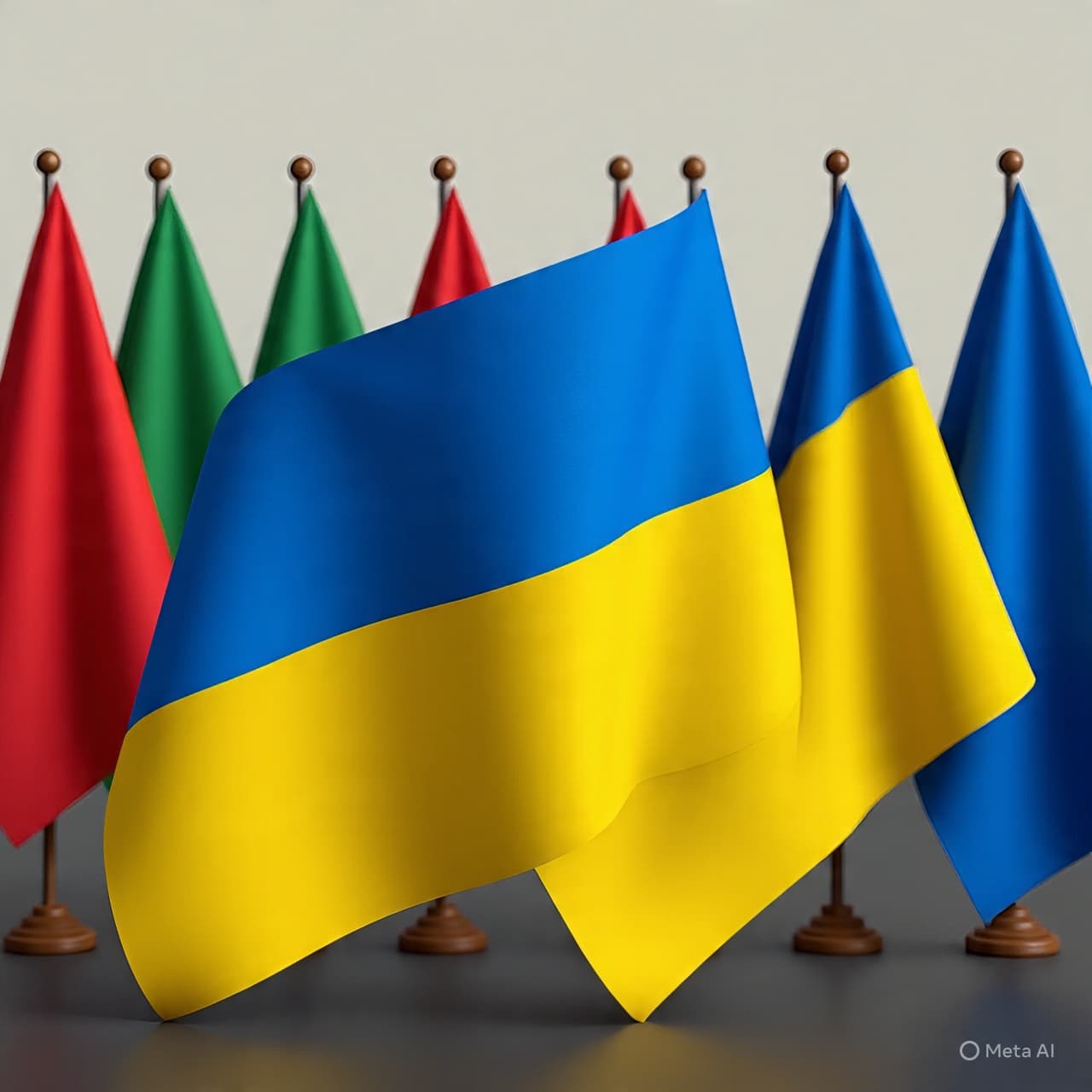
Europe has learned how to speak in unison during moments of crisis. Declarations are drafted quickly, flags are raised, and phrases like “unwavering support” travel smoothly from Brussels to national capitals. In its public posture toward Ukraine, the continent has once again found a common language. Yet beneath the harmony, there remains a noticeable pause—a hesitation that reveals itself not in words, but in limits.
Since Russia’s full-scale invasion, Europe has mobilized resources on a scale that would have seemed improbable a decade ago. Military aid has flowed eastward. Sanctions have been tightened and retightened. Energy systems have been reconfigured with remarkable speed. Politically, Ukraine has been drawn closer to the European project, offered candidate status and a future framed as shared and European.
These are not small gestures. They reflect a continent that understands what is at stake—not only for Ukraine’s sovereignty, but for the credibility of Europe’s own postwar order. The idea that borders cannot be changed by force is not an abstract principle in Europe; it is the foundation upon which decades of peace were built.
And yet, Europe’s commitment has remained carefully bounded.
Weapons are delivered, but often after long debate. Red lines are declared, revised, and sometimes quietly abandoned. Security guarantees are discussed in theory, deferred in practice. Membership in NATO is acknowledged as aspirational, but perpetually postponed. Even the language of victory is treated cautiously, replaced by calls for endurance, resilience, and “as long as it takes”—a phrase notable for its flexibility.
This is not hypocrisy. It is strategy shaped by fear, memory, and political reality.
Europe is balancing two imperatives that rarely sit comfortably together: supporting Ukraine strongly enough to ensure its survival, while avoiding a direct confrontation with a nuclear-armed Russia. For countries closer to the eastern frontier, the threat feels immediate and existential. For others farther west, the calculus includes domestic fatigue, economic strain, and voters wary of escalation.
The result is a form of solidarity that is real, but conditional.
Ukraine is encouraged to fight on, yet reminded—implicitly—that Europe’s own risk tolerance has a ceiling. Kyiv is welcomed into Europe’s future, but not fully into its present security architecture. Each step forward is paired with a hesitation, each promise with an unspoken caveat.
From Ukraine’s perspective, this ambiguity is frustrating. From Europe’s, it is unavoidable.
The European Union was not designed for war leadership. Its strength lies in regulation, consensus, and gradual integration—not rapid, decisive power projection. The war has pushed the bloc into unfamiliar territory, forcing it to act faster and harder than its institutional DNA prefers. That it has done so at all is significant. That it has not gone further is telling.
Still, commitment should not be measured only by absolutes. Europe’s support has reshaped the battlefield, stabilized Ukraine’s economy, and signaled to Moscow that aggression carries lasting costs. It has also transformed Europe itself, accelerating defense cooperation and rethinking long-held assumptions about security.
What remains unresolved is whether Europe is willing, eventually, to remove the asterisks from its promises.
For now, the message to Ukraine is clear but incomplete: you are not alone—but neither are you fully shielded. Europe stands with Ukraine, firmly and visibly, yet always with one eye on the edge of the map, and one hand hovering near the brake.
Published by Banx Network. This article is part of the Banx decentralized media programme, powered by the BXE token on the XRP Ledger.