Key Highlights
- U.S. equity futures opened higher despite geopolitical tensions.
- April nonfarm payrolls data is crucial for market sentiment.
- Economists predict a significant drop in job growth compared to March.
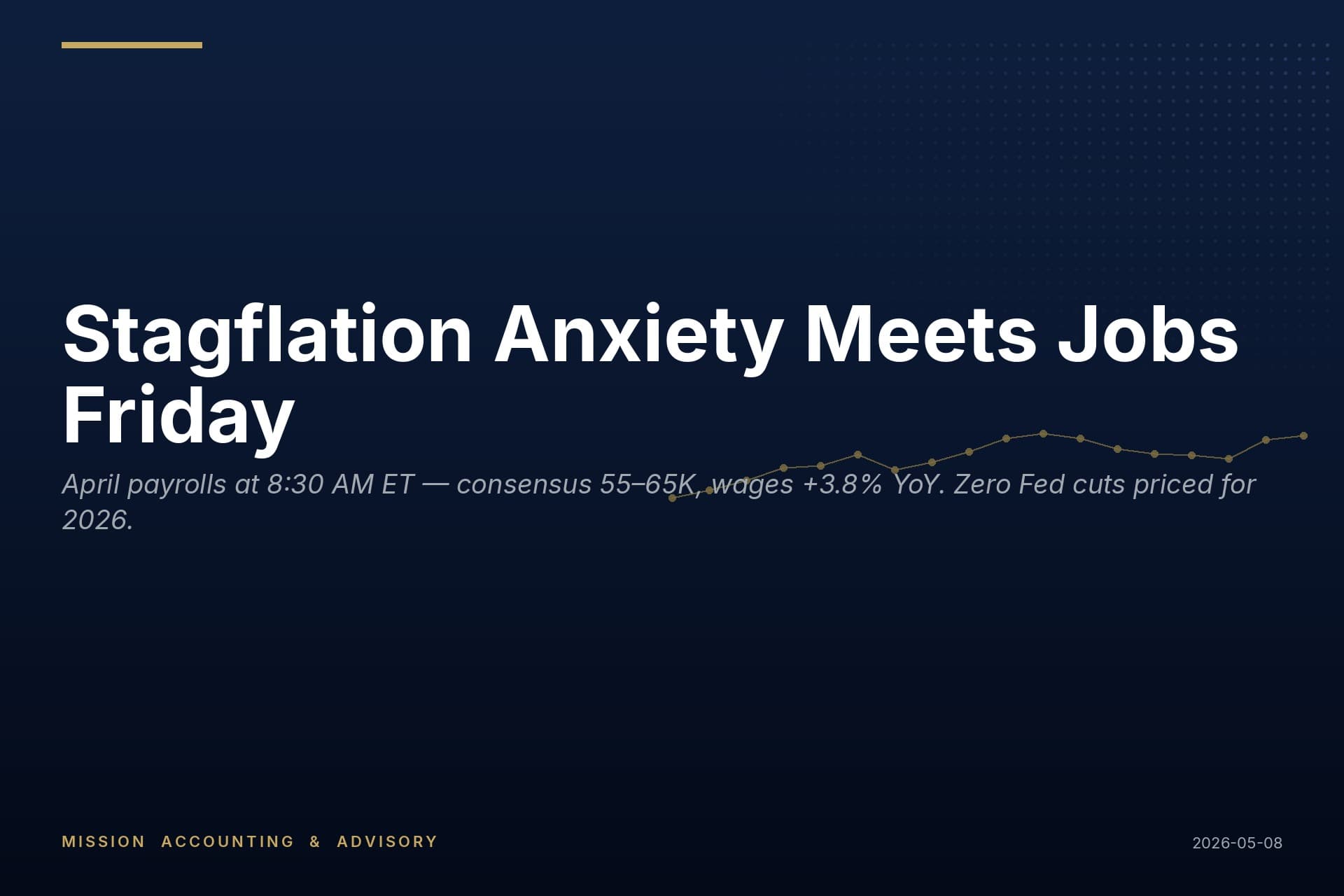
As the week draws to a close, U.S. equity futures have opened firmly in the green, buoyed by optimism despite a heavy news flow overnight. Tensions escalated in the Strait of Hormuz, where Iran launched drone strikes at U.S. warships, prompting a military response from the U.S. However, the primary focus for investors today is the April nonfarm payrolls report, set to be released at 8:30 a.m. ET. This data point is critical, as it could either reignite hopes for monetary easing or reinforce the prevailing “stagflation trade” that has become a common assumption among Wall Street analysts for the coming years.
In pre-market trading, S&P 500 futures hovered around 7,397, reflecting a 0.47% increase, following the cash index's first close above 7,300 earlier this week. Dow futures rose approximately 0.31% to near 49,853, while Nasdaq-100 futures led the charge with a 0.66% gain to 28,870. The dollar remained steady, gold prices were flat, and Treasury yields showed little change ahead of the payrolls release. Market sentiment appears to be positioned for a number that validates the slowdown narrative without triggering fears of a significant economic downturn.
Economists have sharply revised their expectations for the April payrolls over the past two weeks. According to Dow Jones surveys, the median forecast now stands at approximately 55,000 to 65,000 jobs added, a stark decline from March's robust figure of 178,000. The unemployment rate is anticipated to remain steady at 4.3%, while average hourly earnings are projected to increase by 0.3% month-over-month and 3.8% year-over-year. This wage growth remains a concern for the Federal Reserve, which is wary of persistent inflation in the services sector.
Adding complexity to the situation, the ADP private payrolls report released earlier this week indicated a stronger-than-expected job growth of 109,000, surpassing the anticipated 84,000. While the ADP and BLS reports often diverge, this upside surprise raises the likelihood of a less-negative headline number than the lowest consensus estimates suggest. Should the BLS report show job growth closer to 100,000 with a stable unemployment rate, a relief rally in growth stocks could ensue, alongside a modest increase in Treasury yields.
The Federal Reserve's recent meeting left interest rates unchanged, with three hawkish dissents advocating for a shift away from dovish guidance. Chair Jerome Powell acknowledged that the perspectives among officials regarding potential rate hikes versus cuts are now more balanced than before. Current market pricing suggests that cuts are unlikely until the unemployment rate rises to 4.5% or job growth turns negative. A soft jobs report in the range of 50,000 to 100,000 is not expected to significantly alter the Fed's trajectory.
The significance of today's data is heightened by the inflation backdrop. The Strait of Hormuz is a critical transit point for about 20% of the world's seaborne crude oil. Even a limited conflict between Iran and the U.S. could support oil prices, complicating the Fed's narrative around disinflation. Coupled with a labor market that is showing signs of cooling but not collapsing, this creates a classic stagflation scenario characterized by persistent inflation, slowing growth, and a central bank facing conflicting pressures.
In terms of earnings, the Friday docket is lighter than earlier in the week, but several key companies are reporting. Toyota's earnings will provide insights into global auto demand, while Sony's results will shed light on consumer electronics trends. Additionally, Brookfield Asset Management's report will offer data on institutional appetite for credit and infrastructure investments.
For individual investors and small business owners, the implications are clear. Expect volatility in the markets following the payrolls report, and it may be wise to avoid trading in the first five minutes after the release, as the second market reaction often proves more durable. A weak jobs report does not automatically translate to bullish equity sentiment; if the number falls below 30,000 with rising unemployment, the market may react by pricing in stagflation rather than rate cuts, leading to outperformance in defensive sectors over growth stocks.
Published by Banx Network. This article is part of the Banx decentralized media programme, powered by the BXE token on the XRP Ledger.