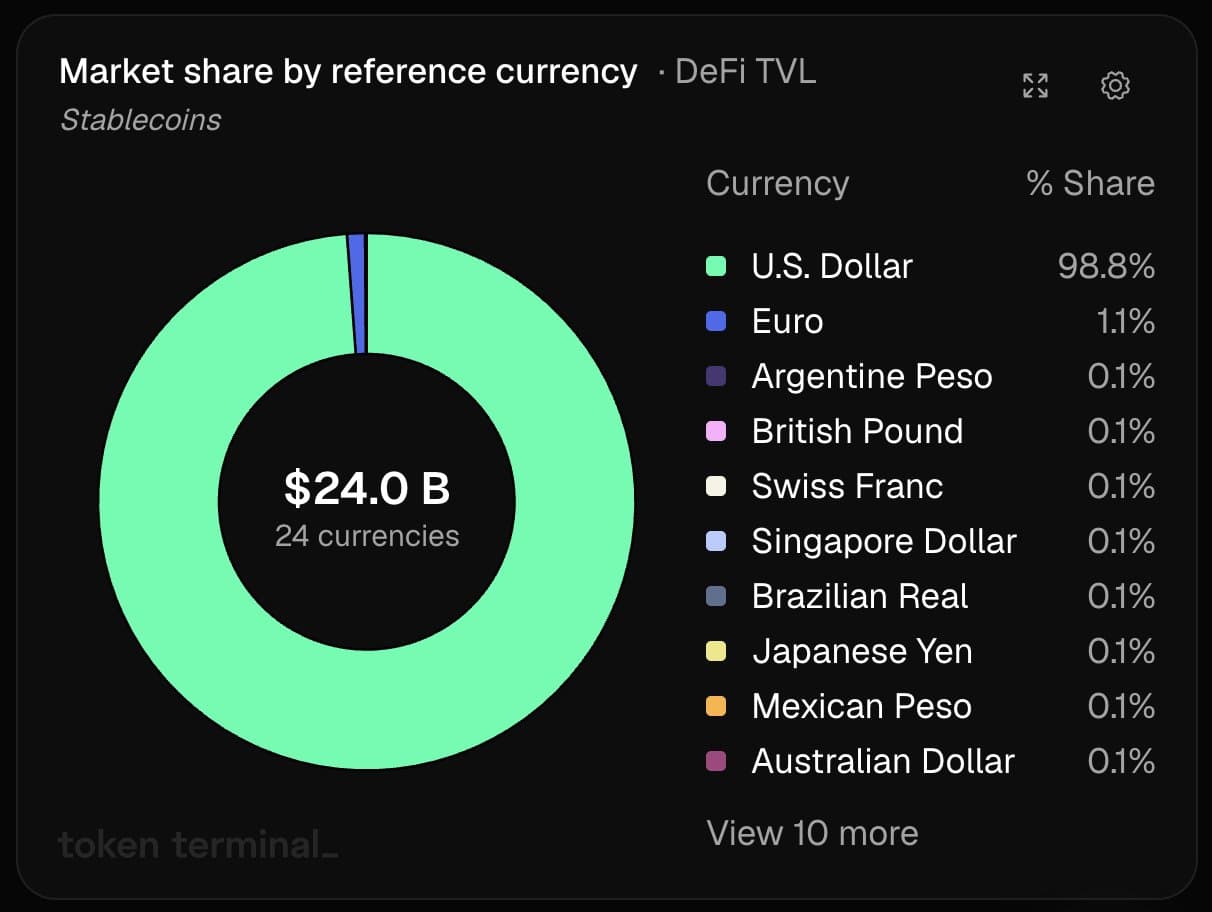
Stablecoins are becoming an increasingly important source of liquidity for decentralised finance, with deposits into DeFi protocols reaching approximately $24 billion after expanding by 560.8% over three years. The figures were highlighted by Token Terminal on October 26, 2026, according to a post shared on social media. The dataset indicates that stablecoins linked to the US dollar account for 98.8% of deposits when classified by reference currency, followed by euro-denominated stablecoins at 1.1%. The figures suggest that dollar-linked digital assets continue to dominate the use of stablecoins in decentralised financial markets. However, the $24 billion deposited into DeFi represents only a portion of the wider stablecoin market, which the accompanying post values at approximately $298.4 billion. This distinction matters because the broader stablecoin market includes tokens held for payments, exchange trading, transfers and other purposes rather than being deposited into decentralised applications. Stablecoins provide liquidity without conventional price volatility Stablecoins are cryptocurrencies designed to maintain a relatively stable value against a reference asset, most commonly a national currency such as the US dollar. Many are backed by reserves that may include cash, short-term government securities and other assets. Others use different mechanisms, including crypto collateral or algorithmic arrangements. Their appeal in DeFi comes from the ability to transfer digital value without taking the same direct exposure to cryptocurrency price fluctuations associated with assets such as Bitcoin. Users can deposit stablecoins into lending protocols, where their assets may be borrowed by other participants. Depending on the protocol, depositors may receive interest or other forms of compensation. Stablecoins can also support decentralised exchanges, liquidity pools and payment applications. These functions make them an important component of the infrastructure connecting cryptocurrency markets with dollar-denominated financial activity. Why deposits have expanded The reported 560.8% increase over three years indicates substantial growth in the amount of stablecoins allocated to decentralised financial applications. Several factors can contribute to that expansion. First, stablecoins allow traders to move between cryptocurrency positions without repeatedly converting funds into traditional bank deposits. Second, lending protocols provide opportunities for holders to supply capital to borrowers. Returns vary according to demand, available liquidity, protocol incentives and market conditions. Third, stablecoins can be transferred across supported blockchain networks, allowing users to access applications with different fee structures and financial products. The development of decentralised exchanges and automated lending markets has also increased the range of activities in which stablecoins can be used. However, growing deposits do not automatically demonstrate that every DeFi application is profitable, safe or sustainable. Some activity may be driven by temporary incentives, speculative demand or strategies that involve borrowing and redepositing assets. The dollar's overwhelming share According to the displayed Token Terminal figures, US-dollar-linked stablecoins represent 98.8% of deposits when measured by reference currency. Euro-linked stablecoins account for 1.1%, with several other currencies representing much smaller proportions. This concentration reflects the dollar's established role in international finance and cryptocurrency trading. Many cryptocurrency markets quote asset prices against dollar-linked stablecoins. Traders also use these tokens to measure portfolio values and maintain exposure to dollar-denominated purchasing power. For DeFi applications, the availability of dollar-linked assets can improve liquidity and make lending and trading markets easier to compare. Nevertheless, the concentration introduces risks. Disruptions affecting major dollar stablecoins, their issuers or their reserve arrangements could influence a substantial share of DeFi activity. The figures also do not mean that 98.8% of all stablecoins worldwide are deposited in DeFi. They describe the reference-currency composition of the deposits in the dataset. Risks remain despite growing adoption Stablecoin deposits expose users to several forms of risk. A token may lose its intended peg if market confidence weakens, liquidity deteriorates or concerns emerge about its reserves. DeFi applications also face smart-contract vulnerabilities, governance disputes, liquidation events and potential failures involving external services. Users may additionally face losses when borrowing positions become undercollateralised or when protocol incentives decline. Unlike conventional bank deposits, assets placed in decentralised protocols generally do not automatically receive the same protections as insured bank accounts. Investors must therefore evaluate the specific stablecoin, the protocol's security arrangements and the conditions governing withdrawals. What the $24 billion figure means The growth in DeFi stablecoin deposits demonstrates that digital dollar instruments are being used for more than exchange trading. They are increasingly functioning as capital within lending markets and other blockchain-based financial applications. The next stage of development will depend on whether protocols can maintain reliable liquidity, manage risk and attract users without relying excessively on temporary incentives. If stablecoin deposits continue growing, they could strengthen the role of blockchain-based financial services in cryptocurrency markets. However, the quality of that growth will matter as much as its size. The key question is whether expanding deposits translate into durable financial activity rather than temporary capital movements driven by speculation.
Published by Banx Network. This article is part of the Banx decentralized media programme, powered by the BXE token on the XRP Ledger.