History is not merely a record of the past but a living dialogue that shapes the present. At Fort Carlton Provincial Historic Park, politicians and Indigenous leaders gathered to commemorate the 150th anniversary of Treaty 6. This milestone offers a moment for reflection on the promises made and broken, and a renewed commitment to building a future based on mutual respect and reconciliation.
Treaty 6, signed in 1876, covers much of central Alberta and Saskatchewan. It was intended to establish peace and friendship between the Crown and First Nations, including the Cree, Saulteaux, and Assiniboine peoples. For Indigenous leaders, the anniversary is not just a celebration but a reminder of the ongoing struggle to uphold the treaty’s spirit and intent. They emphasize that the relationship defined by the treaty is one of nation-to-nation partnership, not subjugation.
Politicians attending the event acknowledged the historical injustices faced by Indigenous communities and pledged to work toward meaningful change. Prime Minister Mark Carney and other dignitaries participated in traditional ceremonies, listening to elders and chiefs who shared their perspectives on the treaty’s legacy. This act of listening is seen as a crucial step in healing the wounds of the past and fostering trust.
The commemorations included cultural performances, feasts, and educational workshops aimed at teaching younger generations about the significance of Treaty 6. These activities help to preserve Indigenous languages and traditions, ensuring that they remain vibrant parts of Canada’s cultural fabric. For many attendees, the event was a powerful affirmation of identity and resilience.
However, the celebration is tempered by the reality of unresolved issues. Land rights, resource sharing, and self-governance remain points of contention. Indigenous leaders used the platform to call for concrete actions, such as improved access to clean water, better housing, and greater control over education and health services. They argue that true reconciliation requires more than symbolic gestures; it demands systemic change.
The gathering also highlighted the importance of unity among diverse Indigenous groups. Despite differences in language and custom, there is a shared commitment to honoring the treaty and protecting their rights. This solidarity strengthens their voice in negotiations with the government and ensures that their concerns are heard clearly.
As the sun set over Fort Carlton, the message was clear: the next 150 years must be different from the last. By working together, Canadians and Indigenous peoples can build a society that respects the dignity and sovereignty of all. The anniversary serves as a beacon of hope, guiding the way toward a more just and inclusive future.
The 150th anniversary of Treaty 6 is a poignant reminder of the enduring bond between Indigenous peoples and the Crown. It calls for continued dialogue, action, and respect to ensure that the treaty’s promises are fulfilled for generations to come.
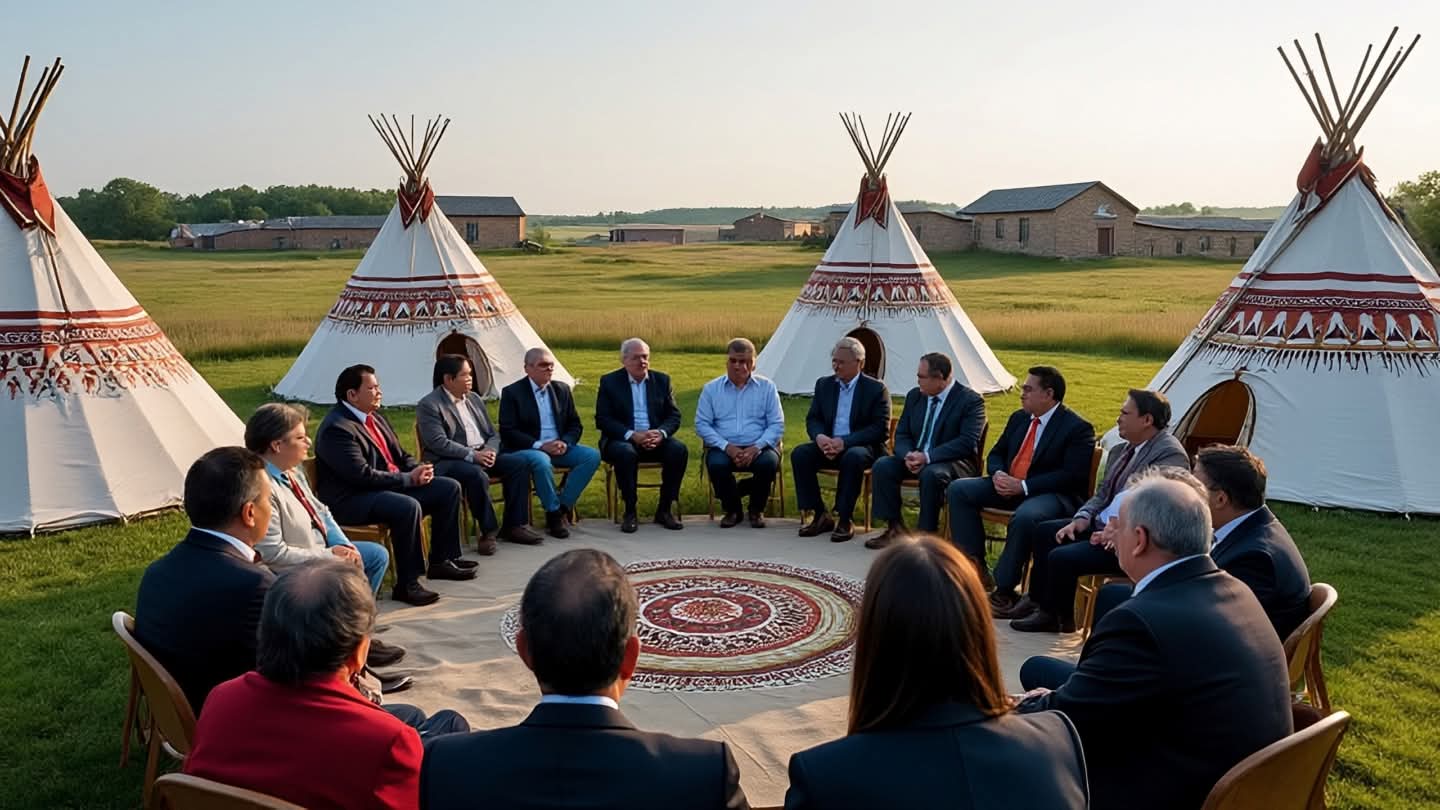
AI Image Disclaimer: Any images used in conjunction with this article are AI-generated conceptualizations meant to illustrate the themes of history and reconciliation.
Sources: Yahoo News, Castanet, Winnipeg Free Press, Indigenous Climate Action
Published by Banx Network. This article is part of the Banx decentralized media programme, powered by the BXE token on the XRP Ledger.