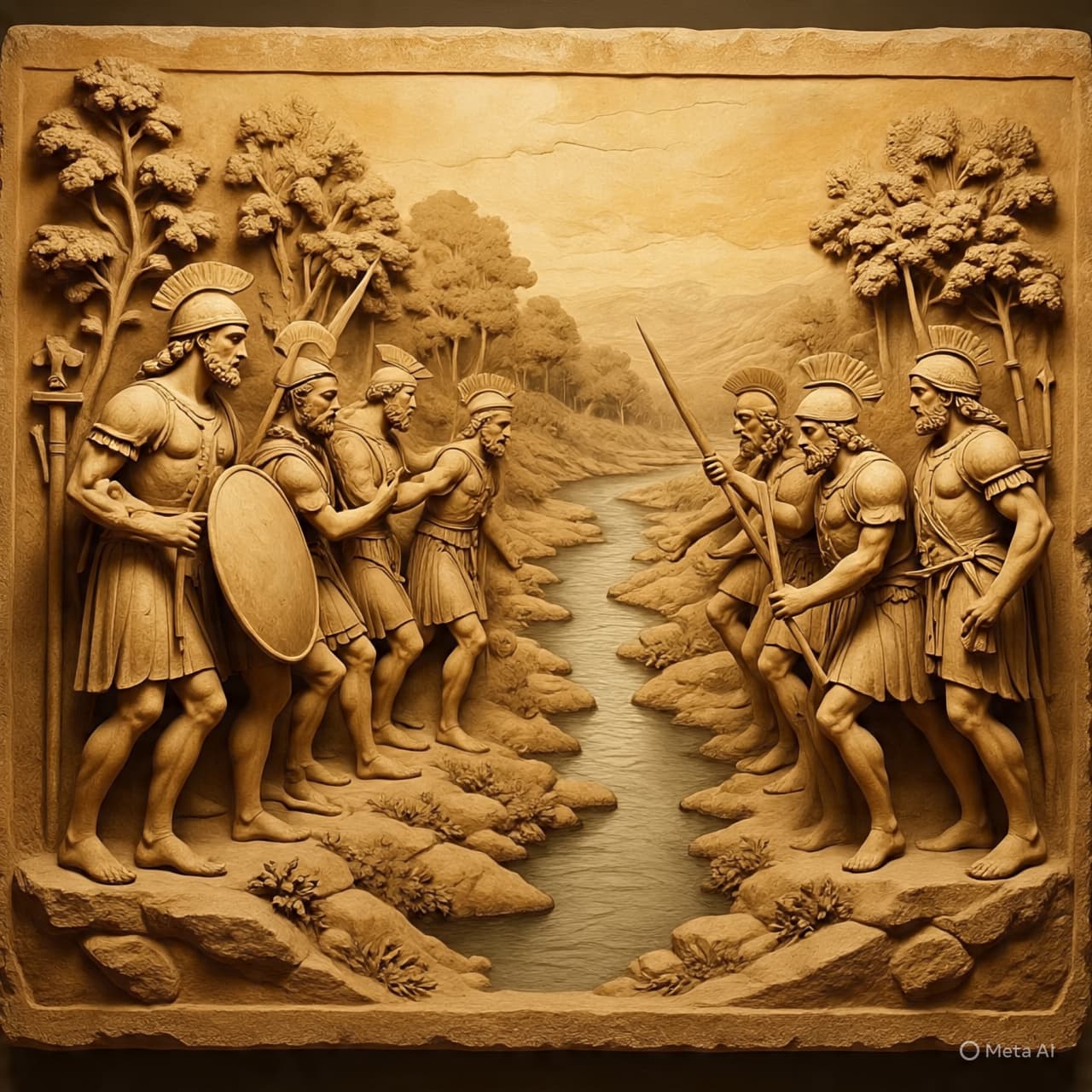
In Rome’s Piazza Colonna, a 40‑meter column of Carrara marble winds a visual story — one of soldiers crossing rivers, walls rising and falling, and battles that tested the mettle of an empire and its philosopher‑king. Completed in AD 193 to honor Emperor Marcus Aurelius’ military leadership, the column’s frieze stands as both art and testament to the turbulent conflicts of his reign.
Marcus Aurelius (ruled 161–180 AD) is often remembered for his Meditations, the Stoic reflections penned amid war camps on the Danube frontier. But the epic battles he faced were no intellectual exercise; they were brutal, multi‑year campaigns against tribes pressing on Rome’s northern borders.
The defining theatre of his military life was the Marcomannic Wars (approximately 166–180 AD), a series of engagements against Germanic tribes such as the Marcomanni, Quadi and allied Sarmatian groups along the Danube River. After a wave of incursions into Roman territory, Marcus Aurelius took command, leading the legions north to defend the empire’s provinces and restore stability.
Early in this long struggle, a devastating defeat at Carnuntum saw Roman forces overwhelmed by a coalition of Marcomanni and Quadi near modern Austria, costing thousands of soldiers’ lives. Despite this setback, the campaigns continued, and the emperor persevered, reorganizing his forces and deepening the frontier defenses.
Over the years, a combination of Roman engineering, strategic counter‑offensives and prolonged engagements gradually pushed many tribal groups back across the Danube — though full pacification proved elusive, and the wars drained Roman manpower and resources. These distant battles demanded not just military savvy but personal endurance from the emperor, who wrote reflections on duty, mortality and leadership even as the winter cold bit into the legions.
The column in Rome does more than celebrate victory; its somber carvings portray the grim reality of warfare — fortified camps, combat scenes, and the chaos of battle — reminding viewers that Marcus Aurelius’ reign was as much shaped by frontier strife as by philosophical introspection.
Through these epic battles, Marcus Aurelius helped secure Rome’s northern borders, leaving behind monuments of both marble and memory that invite later generations to ponder the cost of empire and the weight of leadership.
AI Image Disclaimer Illustrations were produced with AI tools and are not real photographs.
Sources (news & reference) Visual Capitalist — Statuegraphic on Marcus Aurelius’ battles and his column UNRV — Overview of Marcus Aurelius’ campaigns in the Marcomannic Wars WorldHistoryEdu — Roman military actions under Marcus Aurelius AncientWarHistory — Highlights of key battles and events in the Marcomannic Wars LiveScience news — Archaeological context of Danube frontier defenses during Marcus Aurelius’ reign
Published by Banx Network. This article is part of the Banx decentralized media programme, powered by the BXE token on the XRP Ledger.