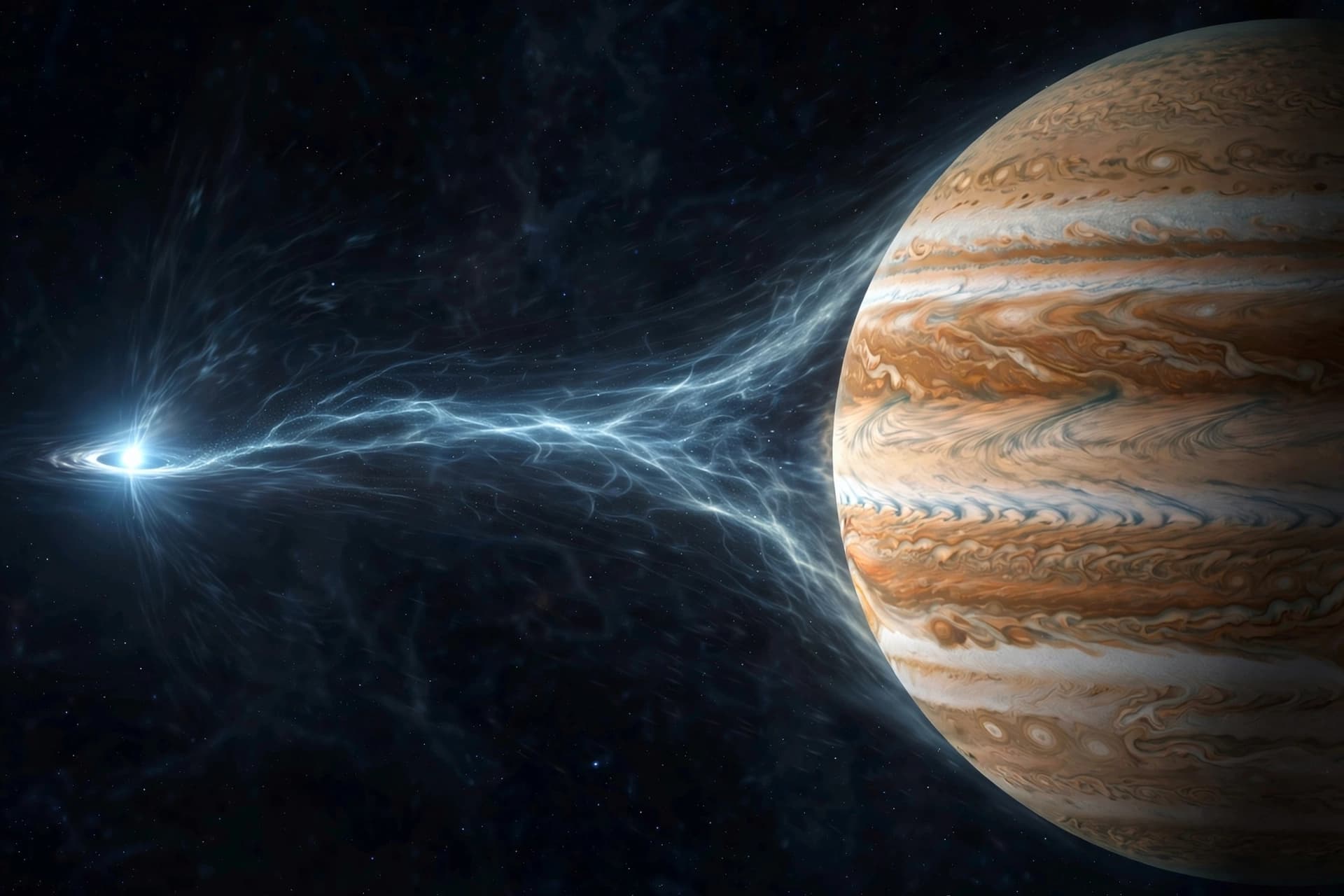
In the vast darkness of the Milky Way, most stars move in orderly orbits, bound by the gentle gravity of the galactic center. But occasionally, a star is flung outward at tremendous speed, becoming a cosmic runaway. One such star, traveling faster than any other known in our galaxy, has become a beacon for astronomers. Its extreme velocity may hold the key to understanding the violent interactions near supermassive black holes.
This hypervelocity star, identified through detailed spectroscopic analysis, is moving at speeds exceeding millions of miles per hour. Such velocities are too high to be explained by normal stellar dynamics. Instead, scientists believe it was ejected from the galactic center, likely through a close encounter with the supermassive black hole Sagittarius A*. The gravitational slingshot effect can accelerate stars to escape velocity, casting them out into the halo of the galaxy.
By tracing the star’s path backward, astronomers can pinpoint its origin with greater precision. This trajectory provides indirect evidence of the black hole’s mass and spin, parameters that are difficult to measure directly. The star acts as a probe, carrying information from the extreme environment of the galactic core to the quieter outskirts where it can be observed more easily.
The study of hypervelocity stars also sheds light on the population of binary systems near black holes. It is thought that when a binary pair approaches a black hole, one star may be captured while the other is ejected at high speed. Observing the properties of the ejected star, such as its age and composition, helps test these theoretical models of three-body interactions.
Furthermore, these stars challenge our understanding of stellar evolution. Moving so quickly through the interstellar medium, they experience different environmental conditions than stationary stars. Studying their atmospheres and magnetic fields can reveal how extreme motion affects stellar physics, offering insights into the resilience of stars under unusual stresses.
The discovery also has implications for the search for dark matter. As hypervelocity stars travel through the galactic halo, their motion is influenced by the distribution of invisible mass. Discrepancies between their expected and observed paths could hint at the presence of dark matter substructures, providing a new method for mapping the unseen components of the galaxy.
As telescopes become more powerful, the number of known hypervelocity stars is expected to grow. Each new addition to this rare class offers another data point for refining our models of galactic dynamics. They are messengers from the heart of the Milky Way, bringing stories of gravity’s most extreme power.
Researchers continue to track the star’s movement, using advanced instruments to refine its velocity and trajectory. The findings contribute to a growing body of evidence about the dynamic and often violent history of our galactic center.
AI Image Disclaimer: The images associated with this piece are AI-generated visualizations intended to represent the themes of stellar motion and black hole interactions.
Sources: The Astrophysical Journal ESA Gaia Mission Space.com Scientific American Nature Astronomy
Published by Banx Network. This article is part of the Banx decentralized media programme, powered by the BXE token on the XRP Ledger.