
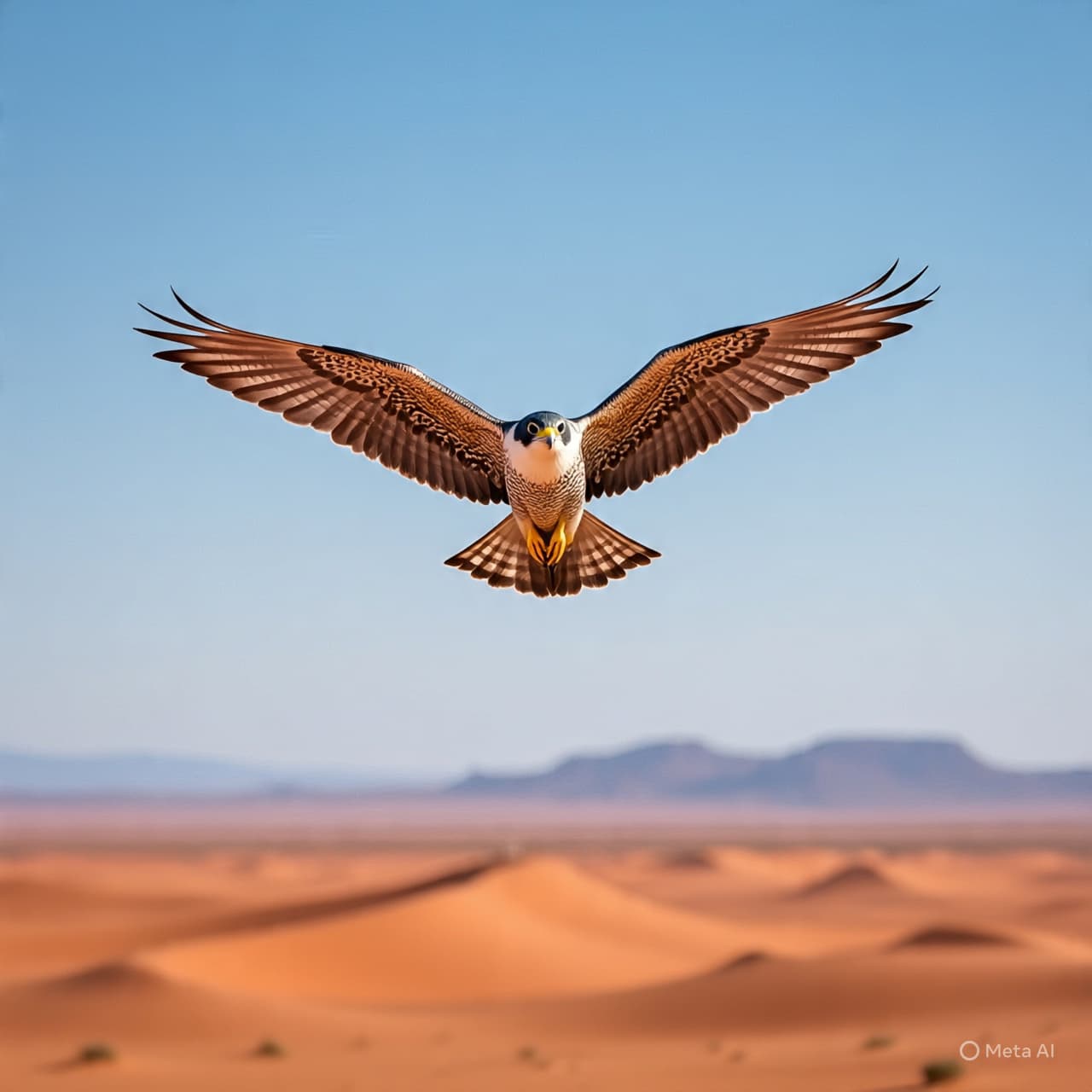
Key Highlights
- First Sighting:The peregrine falcon, the fastest bird on Earth, has been confirmed in Central Australia.
- Speed Record:Known to reach speeds over 240 miles per hour, this sighting is significant for the region.
- Ecological Implications:Researchers are considering the implications of this sighting on local ecosystems and migratory patterns.
The center of Australia often announces itself through absence. Long horizons stretch uninterrupted, the air trembles with heat, and the land holds its breath beneath a vast, indifferent sky. It is a place where movement feels deliberate and rare, where even the wind seems to pause before crossing the plains. Yet, recently, something moved faster than anything else ever recorded in flight.
Observers in the Central Australian outback documented the presence of the peregrine falcon, widely regarded as the fastest animal on Earth, marking the first confirmed sighting of the species in this part of the continent. Known for reaching speeds over 240 miles per hour during its hunting dives, the falcon’s appearance here quietly redraws the invisible maps that define where certain creatures are expected to be.
The peregrine falcon is no stranger to Australia’s coastlines and cliffs, nor to urban towers where height mimics the rock faces it favors. However, the deep interior, with its sparse prey and extreme conditions, has long remained beyond its recorded range. This sighting, confirmed through photographic evidence and expert verification, suggests a subtle shift—whether in migratory patterns, climate pressures, or the expanding adaptability of a species known for resilience.
There was no spectacle to announce the moment. No crowd, no noise. Just a flash of motion against the sky, a shape cutting cleanly through the heat haze before vanishing again into the distance. For researchers, the significance lies not only in the rarity of the event but in what it may signal about changing ecosystems. Species move not with declarations, but with instinct, responding to variables humans often notice only later.
As records are updated and scientists consider what brought the falcon inland, the outback resumes its quiet dominance. The land does not change its tone for visitors, no matter how swift or rare. Yet the sky, briefly, has been rewritten. Somewhere between red dust and thin cloud, the world’s fastest falcon has passed through, leaving behind a reminder that even the most familiar landscapes still hold the capacity to surprise.
Published by Banx Network. This article is part of the Banx decentralized media programme, powered by the BXE token on the XRP Ledger.



