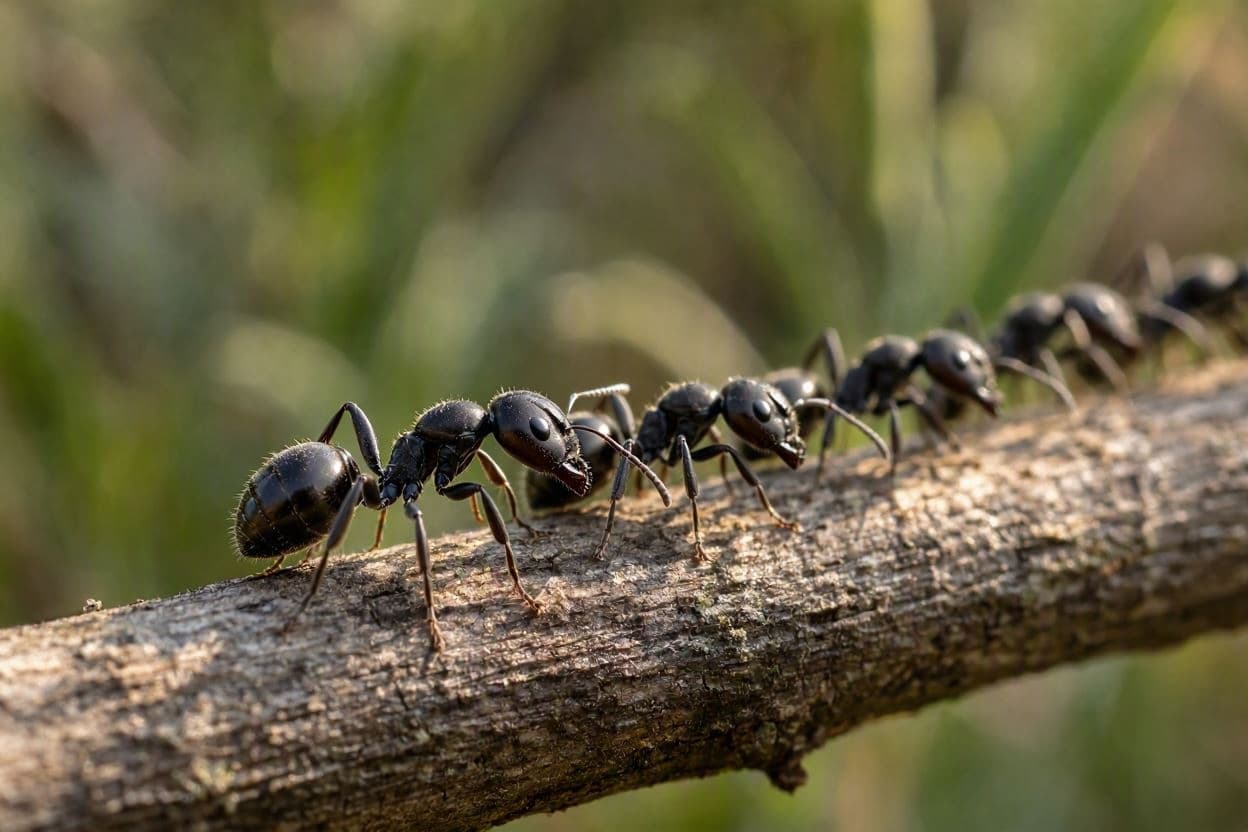
In the quiet corners of our gardens, complex societies thrive, built by creatures no larger than a grain of rice. Ants are masters of cooperation, moving as a single entity despite having no central commander. Recent simulations have revealed a fascinating truth: the spark that ignites a colony’s collective behavior often comes from a single individual. This discovery invites reflection on the power of initiative and the emergent properties of simple interactions. It is a reminder that great movements often begin with small, solitary acts.
Researchers used computer models to simulate ant behavior, focusing on how tasks like foraging and nest building are coordinated. They found that when one ant begins a task, it triggers a chain reaction, encouraging others to join. Momentum builds from mimicry. Leadership is subtle.
This "spark" effect highlights the importance of individual agency within a group. While the colony operates as a superorganism, its efficiency relies on the willingness of individuals to act without explicit instruction. Autonomy fuels order. Trust enables action.
The findings have implications beyond biology, offering insights into robotics and artificial intelligence. Swarm robotics, which mimics ant behavior, could benefit from algorithms that allow single units to initiate complex tasks. Innovation follows nature. Biology guides technology.
For observers of human society, the analogy is compelling. Social movements, cultural shifts, and organizational changes often start with a few brave individuals who dare to move first. Courage inspires participation. One leads, many follow.
As we study these tiny architects, we gain a deeper appreciation for the complexity of simple systems. The ant colony is a testament to the power of connection and the beauty of decentralized intelligence. Wisdom lies in simplicity.
Simulations show that a single ant can trigger collective behavior in a colony, highlighting the role of individual initiative in swarm intelligence. The research offers insights for robotics and social dynamics. The hope is for applications in efficient decentralized systems.
AI Image Disclaimer: Visuals associated with this article are AI-generated to illustrate the themes of biology and collective behavior.
Sources: PLOS Computational Biology Science Daily New Scientist
Published by Banx Network. This article is part of the Banx decentralized media programme, powered by the BXE token on the XRP Ledger.