
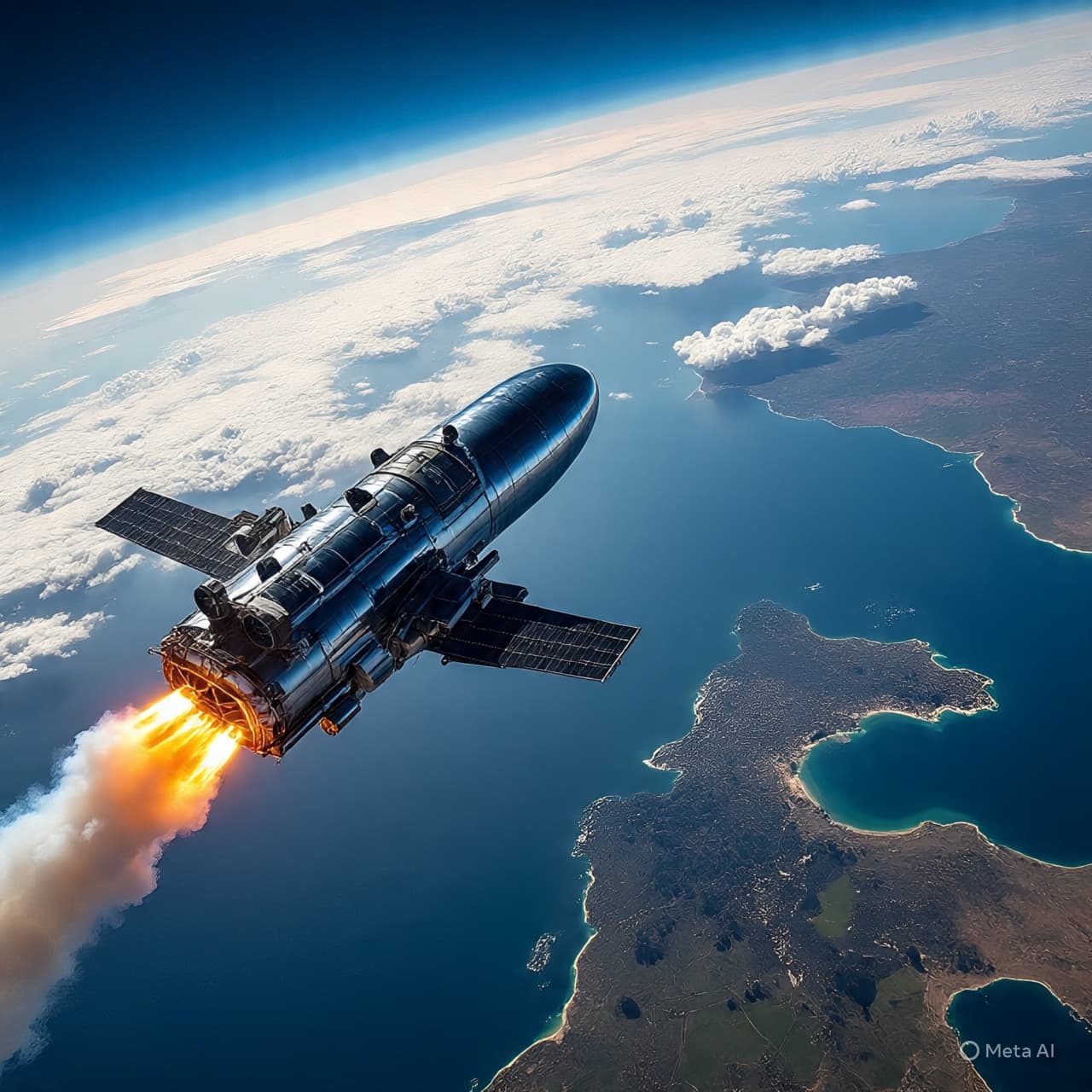
Key Highlights
- NASA's Crew-11 mission is set for an early return due to a medical issue.
- This marks the first medical evacuation in ISS history.
- The affected astronaut is stable, and the decision emphasizes crew health.
NASA is preparing for a significant milestone in space exploration as the Crew-11 mission, which launched on August 1, 2025, is set to return to Earth earlier than planned due to a medical issue affecting one of its astronauts. This unprecedented event marks the first medical evacuation from the International Space Station (ISS) in its nearly 25-year history, highlighting the agency's commitment to astronaut health and safety.
The Crew-11 team includes NASA astronauts Zena Cardman, who serves as commander, and Mike Fincke, the pilot, alongside Japan's Kimiya Yui and Russian cosmonaut Oleg Platonov. Originally scheduled for a six-month mission, the crew was expected to remain aboard the ISS until mid-February 2026. However, a medical concern identified in early January prompted NASA to reassess the mission timeline, leading to the decision for an early return.
On January 13, mission managers authorized the Crew-11 Dragon spacecraft, Endeavour, to undock from the ISS. The undocking is scheduled for January 14 at approximately 5 p.m. ET, with a splashdown expected off the coast of California early the next morning, around 3:40 a.m. ET. While NASA has not disclosed specific details about the medical issue due to privacy concerns, officials have confirmed that the affected astronaut is stable and that the agency determined a more thorough evaluation and care on the ground were necessary.
This controlled medical evacuation is not an emergency extraction, reflecting NASA's proactive approach to crew health. The ISS is equipped with medical resources, but the decision underscores the importance of comprehensive medical care that can only be provided on Earth. The early return of Crew-11 also included a change of command ceremony, where Mike Fincke transferred control of the ISS to Russian cosmonaut Sergey Kud-Sverchkov. This transition is significant as the station prepares for a reduced crew while awaiting the arrival of Crew-12, which is anticipated to launch ahead of its previously scheduled mid-February date.
Remaining aboard the ISS during this interim period are NASA astronaut Christopher Williams and Russian cosmonauts Sergey Mikaev and Sergey Kud-Sverchov. They will continue to maintain station operations until Crew-12 arrives, ensuring that the ISS remains functional and safe for ongoing research and international collaboration.
The early return of Crew-11 not only represents a critical moment in NASA's history but also serves as a test of international cooperation and spacecraft readiness in supporting astronaut health in space. As the agency continues to push the boundaries of human spaceflight, the lessons learned from this mission will undoubtedly inform future operations and enhance the safety protocols for astronauts venturing into orbit.
Published by Banx Network. This article is part of the Banx decentralized media programme, powered by the BXE token on the XRP Ledger.



