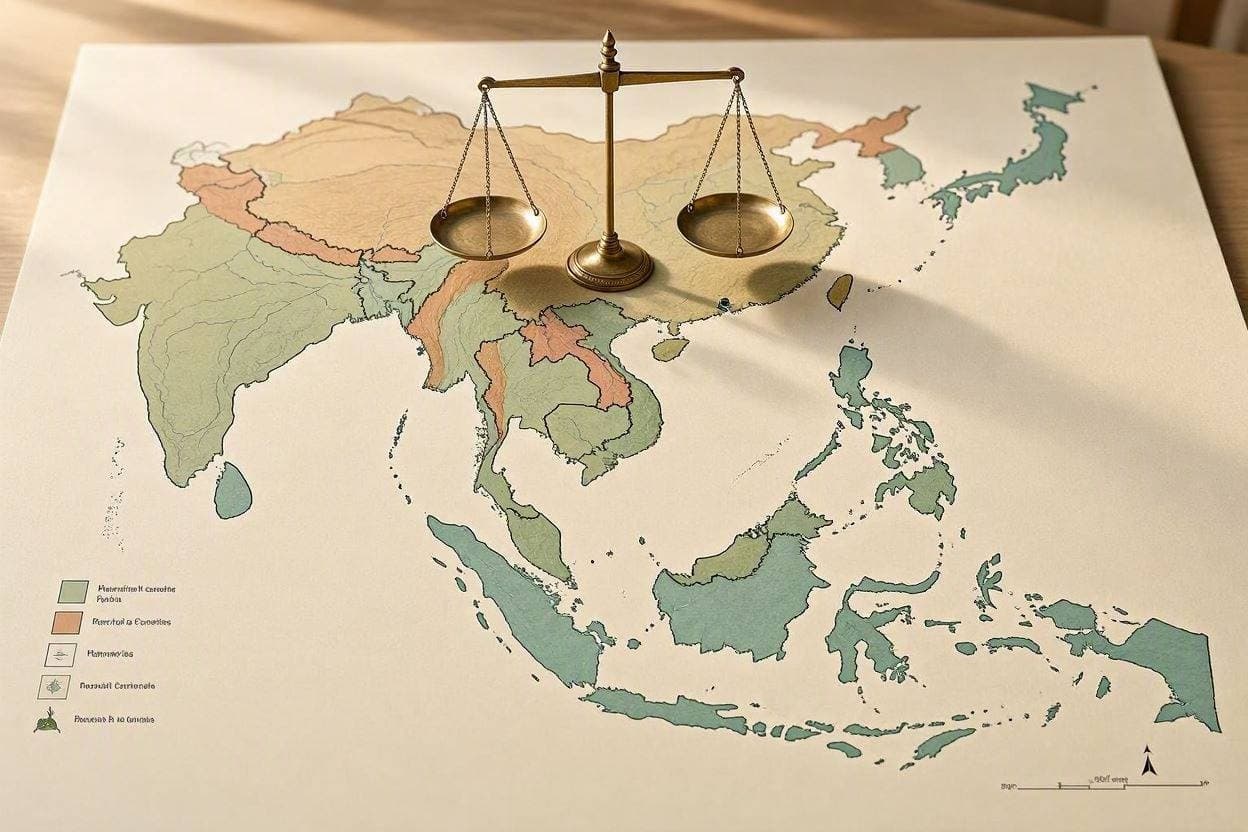
Southeast Asia has long been a crossroads of cultures and commerce, a region where diverse nations have learned to navigate complex relationships with grace and pragmatism. Today, as the rivalry between the United States and China intensifies, ASEAN finds itself at the center of geopolitical attention. Yet, the bloc remains firm in its stance: Southeast Asia is not an arena for great power competition. This declaration is not merely diplomatic rhetoric but a strategic imperative for a region that values stability, neutrality, and economic cooperation. It is a call for respect for ASEAN’s centrality and a reminder that peace is built on dialogue, not division.
The Association of Southeast Asian Nations (ASEAN) has consistently advocated for an "open door" policy, welcoming engagement from all partners while refusing to take sides. This approach, often described as hedging, allows member states to benefit from economic ties with China while maintaining security partnerships with the United States. It is a delicate balance, requiring skillful diplomacy and a strong sense of regional unity. The goal is to avoid being caught in the crossfire of conflicting interests.
Recent surveys indicate that while many Southeast Asians are concerned about China’s growing influence, they also recognize the importance of Chinese trade and investment. Similarly, the United States is viewed as a key security partner, but there is ambivalence about its long-term commitment to the region. ASEAN leaders understand that forcing a choice between the two superpowers would be detrimental to their own development and sovereignty.
The principle of non-interference, a cornerstone of ASEAN’s charter, reinforces this neutral stance. Member states agree to resolve disputes through consensus and peaceful means, rejecting external pressure to align with one bloc or another. This internal cohesion is crucial for maintaining the bloc’s credibility and effectiveness on the global stage. Without unity, ASEAN risks becoming fragmented and vulnerable to external manipulation.
Economic integration within ASEAN also plays a vital role in strengthening its position. The Regional Comprehensive Economic Partnership (RCEP) and other trade agreements enhance the region’s collective bargaining power. By presenting a united front, ASEAN can negotiate more favorable terms with both the US and China, ensuring that its interests are protected. Economic strength translates into political leverage.
International observers note that ASEAN’s neutrality is not passive but active. It involves proactive engagement in regional forums, mediation in conflicts, and promotion of inclusive growth. The bloc seeks to shape the rules of the game rather than simply reacting to them. This agency is essential for navigating the uncertainties of the current geopolitical landscape.
ASEAN’s refusal to become an arena for US-China rivalry is a testament to its strategic wisdom. By prioritizing neutrality and unity, the region aims to preserve its autonomy and prosperity. As great powers compete, ASEAN stands firm, advocating for a multipolar world where cooperation prevails over confrontation.
AI Image Disclaimer: The images provided are AI-generated to visually represent the geopolitical and diplomatic aspects of the story.
Sources: South China Morning Post Brookings Institution ISEAS-Yusof Ishak Institute
Published by Banx Network. This article is part of the Banx decentralized media programme, powered by the BXE token on the XRP Ledger.