
Key Highlights
- Ceasefire Extension:A fragile arrangement aimed at reducing hostilities.
- Hezbollah's Stance: Defiance amid ongoing tensions over sovereignty.
- International Monitoring:UN peacekeepers observe the complex situation.
In the southern reaches of Lebanon, where hills fold into one another like pages left half-read, the air often carries the memory of agreements that never fully settle. Ceasefires here are less endings than pauses—brief arrangements of silence stretched across landscapes that have learned to listen for what comes next.
It is within this uneasy stillness that Hezbollah has signaled defiance in response to the latest extension of a ceasefire arrangement involving Israel and Lebanon. The extension, meant to preserve a fragile reduction in cross-border hostilities, has instead highlighted how provisional such pauses remain. Each renewal of terms appears less like resolution and more like the continuation of a waiting game—one measured in restraint, not certainty.
Statements attributed to Hezbollah framed the extension not as closure but as an unresolved condition, reflecting longstanding tensions over sovereignty, deterrence, and the presence of armed actors outside full state control. The group’s position underscores a broader reality in Lebanon’s political landscape: that official agreements and on-the-ground alignments often move at different speeds, shaped by different logics of security and survival.
On the other side of the border, Israel’s security considerations remain tied to preventing escalation along its northern frontier, where periodic exchanges have, over time, hardened into patterns of anticipation and response. The ceasefire extension, in this context, functions less as a final agreement and more as a managed interval—an attempt to contain volatility without fully resolving its causes.
International observers, including United Nations peacekeeping forces stationed in the region, continue to monitor the situation with caution. Their presence reflects the long-standing effort to stabilize a border that has rarely been free from tension for extended periods. Yet even these frameworks, carefully constructed over years, exist within limits defined by political will on both sides.
What emerges is not a single event but a layered landscape of interpretation: each statement, each extension, each response adding another thin layer to an already complex history. In Lebanon, where political authority is distributed across competing centers of influence, responses to ceasefire arrangements often carry multiple meanings at once—strategic, symbolic, and domestic.
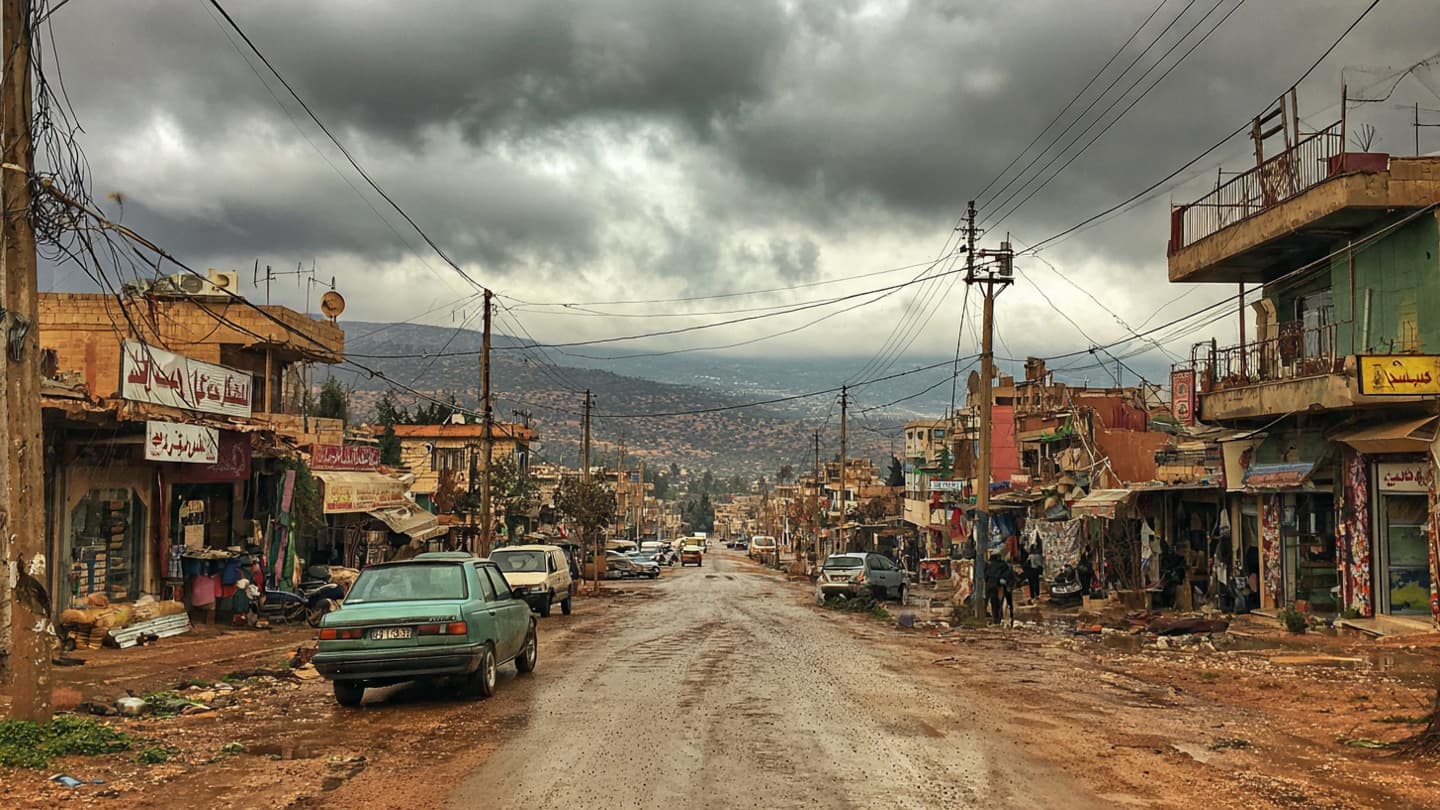
As the extension takes hold, life in border-adjacent areas continues in its familiar rhythm of adaptation. Communities accustomed to uncertainty navigate daily routines with an awareness shaped by years of fluctuation between calm and disruption. The ceasefire, in this sense, is not only a diplomatic instrument but also a lived condition—experienced unevenly, interpreted locally, and felt in the pauses between news cycles.
The situation remains fluid, with no immediate indication of structural change in the positions held by the involved parties. What is clear, however, is that the extension of ceasefire terms has not resolved underlying disagreements, but rather re-exposed them in a quieter register.
In the end, the region continues to exist in a space where agreements are extended but not fully embraced, and where calm arrives not as an arrival point, but as a temporary arrangement across a longer, unfinished story.
Published by Banx Network. This article is part of the Banx decentralized media programme, powered by the BXE token on the XRP Ledger.



