
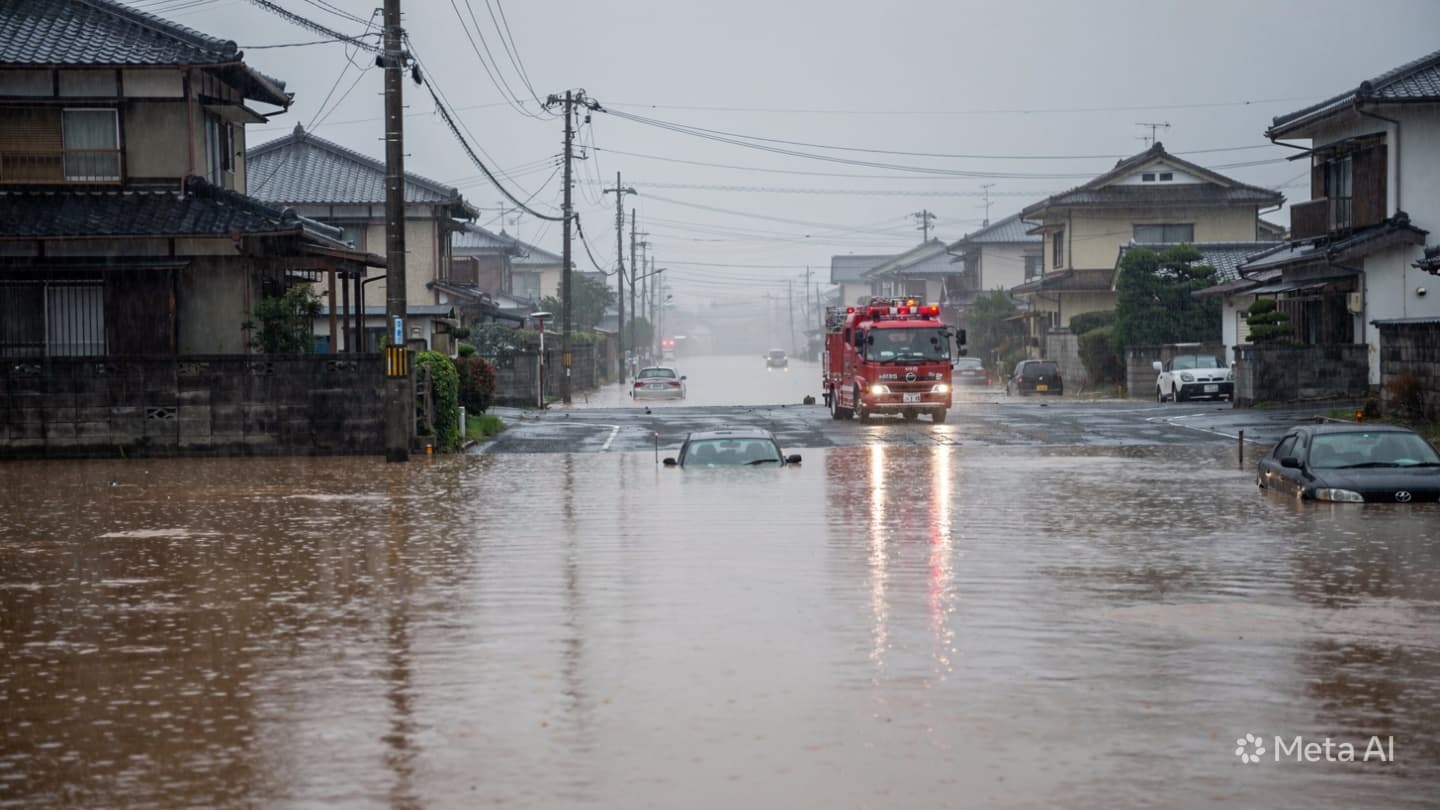
Key Highlights
- Three individuals hospitalized due to severe flooding in southern Japan.
- Hundreds of households under mandatory evacuation advisories.
- Emergency services face logistical challenges amid ongoing rain.
Tokyo, Japan—In the early hours of Thursday, torrential rains led to severe flooding across southern Japan, catching many residents off guard as they attempted to evacuate their homes. Emergency medical teams confirmed that three individuals were hospitalized after being swept away by rapidly moving currents. The flooding has affected multiple prefectures, creating significant challenges for local emergency services.
Municipal workers are currently engaged in efforts to manage overflowing river systems that breached their banks overnight. The sheer volume of water has compromised the integrity of several local roads, isolating some communities from mainland access. Many residents have been forced to retreat to the upper floors of their homes as floodwaters inundate lower levels. In response to the crisis, power grids in the worst-hit areas have been shut down as a precautionary measure.
Hospital administrators are on high alert, anticipating a surge in patients due to water-related injuries. The three individuals currently hospitalized are receiving treatment, and their conditions are under constant assessment as medical staff work to keep pace with the demand for care. The hospital itself is facing challenges, including water ingress in its basement levels, complicating operations.
State media reports indicate that hundreds of households are currently under mandatory evacuation advisories. Disaster management agencies are actively distributing sandbags and clearing debris from culverts to mitigate the flow of water. The public is being urged to avoid all non-essential travel in the southern regions, as many highway sections remain closed due to significant standing water.
The strain on public services is evident across the affected areas. Local government leaders have convened emergency meetings to discuss the potential for long-term displacement of citizens. Temporary shelters are reaching maximum capacity as more evacuees arrive, and the lack of electricity is complicating the distribution of food and clean water to these centers.
Engineering crews are deployed in the field, working to pump out flooded subways and tunnels. Their progress is hindered by the relentless rain that continues to fall over the basin. Each time a drain is cleared, it is quickly overwhelmed by new inflows, highlighting the scale of the destruction to local infrastructure as day breaks.
Official updates are being provided in short, factual bursts to keep the public informed of the latest risks. There is currently no indication of when the water might recede or when recovery efforts can truly begin. The primary focus remains on preventing further loss of life during this critical window of danger. Local police are patrolling affected blocks to monitor for any stranded individuals, ensuring that help reaches those in need.
The situation remains fluid, with water levels fluctuating based on the intensity of precipitation in the mountains. This uncertainty has created a sense of anxiety among those still trapped in their homes. Rescue boats have been deployed to reach the most inaccessible areas, with each mission representing a calculated risk for the crew members involved.
Published by Banx Network. This article is part of the Banx decentralized media programme, powered by the BXE token on the XRP Ledger.



