
Key Highlights
- South Korea's Foreign Ministry expresses regret over Japan PM's shrine offering.
- Takaichi's offering is her first since taking office in October.
- Approximately 120 Japanese lawmakers visited the shrine, raising concerns.
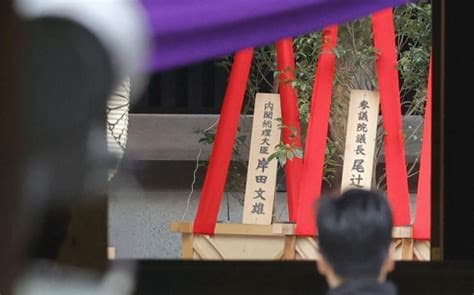
The South Korean government has officially conveyed its deep regret over Japanese Prime Minister Sanae Takaichi's ritual offering to the Yasukuni Shrine during its annual spring festival. This shrine, which honors Japan's war dead, including 14 Class A war criminals convicted for their roles in World War II, is viewed by many, particularly in South Korea and China, as an attempt to downplay Japan’s militaristic history.
In a statement, South Korea's Foreign Ministry spokesperson Park Il emphasized the nation's disappointment, urging Japanese leaders to confront their historical wrongdoings with genuine remorse. "We express deep disappointment and regret that responsible leaders in Japan have repeatedly made offerings to or visited the Yasukuni Shrine," Park stated. He added that these actions hinder the potential for building trust and mutual respect in bilateral relations.
The controversy surrounding Takaichi's offering is compounded by the fact that it is her first since taking office last October. Previously, she had made regular visits to the shrine, prompting speculation that her current actions reflect a shift in her hardline stance towards South Korea. While Takaichi sent her offering virtually, approximately 120 lawmakers from Japan’s Liberal Democratic Party (LDP) attended the shrine in person, further showcasing the divide between government leaders and public sentiment regarding historical issues.
The Yasukuni Shrine not only memorializes Japan's military past but also serves as a focal point for historical grievances stemming from Japan's colonial rule in Korea from 1910 to 1945. As a result, any high-profile visit or offering by Japanese officials is often seen as a lack of accountability for the wartime atrocities that were committed.
Takaichi's decision comes amid ongoing efforts to improve diplomatic relations between South Korea and Japan, as both nations face the growing influence of China and shifting regional dynamics. However, the offering and subsequent visits by lawmakers have raised concerns that such actions may derail progress towards reconciliation.
This situation exemplifies the complexities that continue to affect Japan-South Korea relations, emphasizing the need for both sides to address historical grievances to foster a cooperative future. The ongoing dialogue will likely remain tense as both nations navigate these sensitive historical waters.
Published by Banx Network. This article is part of the Banx decentralized media programme, powered by the BXE token on the XRP Ledger.



