Key Highlights
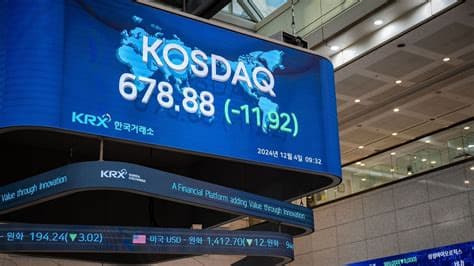
- Kospi Index:South Korea's Kospi index has dropped 11% in two days.
- Market Reaction:Investors are pulling funds amid geopolitical tensions.
- Economic Concerns:Analysts warn of potential long-term impacts on trade and investment.
In a dramatic turn of events, South Korea's Kospi index has experienced its steepest decline since the Lehman Brothers crash, dropping 11% in just two days. This downturn comes amid heightened geopolitical tensions and a sell-off across regional markets, primarily driven by escalating conflicts in the Middle East. The rapid decline has raised alarms among investors and market analysts alike, who are closely monitoring the situation.
Investors reacted swiftly to the increasing uncertainty, pulling funds from the stock market as fears mount over the potential economic repercussions of the ongoing conflict. The sell-off reflects broader concerns about global stability and its impact on trade and investment. Many market participants are worried that the instability in the Middle East could disrupt supply chains and affect the profitability of South Korean companies, particularly those heavily reliant on international trade.
Market experts are closely monitoring the situation, indicating that the sharp sell-off may continue if tensions persist. The Kospi's decline has sent shockwaves throughout the financial community, prompting discussions among government officials and financial regulators about potential measures to stabilize the market. The focus remains on addressing investor confidence and preventing further declines, as the situation evolves.
The South Korean government has expressed concern over the market's volatility and is considering interventions to restore stability. Analysts suggest that the government may need to implement policies aimed at bolstering investor confidence and mitigating the economic fallout from the conflict. This could include fiscal measures or incentives to encourage investment in the domestic market.
With experts warning of a prolonged downturn, the South Korean economy braces for potential impacts that could ripple through various sectors. The ongoing conflict in the Middle East not only poses risks to the stock market but also threatens to complicate the recovery from the pandemic-related downturn. As the situation develops, stakeholders across the economy will be watching closely to gauge the long-term implications of these geopolitical tensions on South Korea's financial landscape.
Published by Banx Network. This article is part of the Banx decentralized media programme, powered by the BXE token on the XRP Ledger.