
Key Highlights
- Thousands of protesters marched in major South African cities.
- Heavy police and military presence aimed to prevent violence.
- Protests linked to demands for undocumented migrants to leave the country.
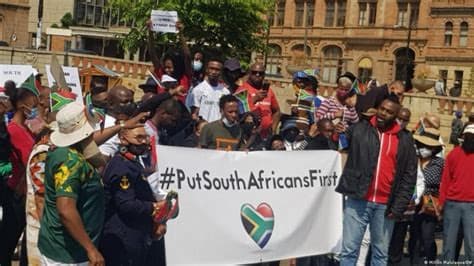
Thousands of people participated in anti-migrant protests across South Africa on [insert date], with significant demonstrations occurring in major cities such as Johannesburg, Durban, and Pretoria. The protests were marked by a heavy police presence, as authorities sought to maintain order and prevent any potential violence. The demonstrations were organized by various anti-immigrant groups, who set an unofficial deadline for undocumented migrants to exit the country.
In several areas, reports indicated that some foreigners, fearing intimidation, had already fled their homes. Others remained in temporary camps, awaiting processing and possible repatriation. The South African police reported that a number of individuals had been sent back to their home countries, primarily from other African nations, as part of ongoing efforts to address undocumented immigration.
Security measures included the deployment of police and private security personnel to guard key routes and public buildings. While authorities stated that the marches were largely peaceful, there were isolated incidents of violence reported at the fringes of the protests. In Johannesburg, for instance, the army was deployed on a contingency basis in certain neighborhoods, particularly those with high migrant populations.
During the protests, police reported arrests related to violent incidents, including a shooting that left two individuals injured, one of whom was a teenager. Additionally, some protesters were reported to have damaged property, and in various parts of the city, businesses temporarily closed as a precaution against potential unrest.
The backdrop of these protests is South Africa's ongoing struggle with high unemployment rates and widespread public discontent over economic inequality. Protest groups have increasingly blamed migrants for exacerbating job scarcity and other social pressures. However, critics and human rights advocates caution that targeting undocumented individuals could further inflame xenophobic sentiments and lead to increased violence against vulnerable populations.
Authorities have acknowledged that while registered foreign nationals are present in significant numbers, the actual figures do not fully account for those living in South Africa without proper documentation. This discrepancy lies at the heart of the demands being made by the protestors, highlighting the complex and contentious nature of immigration issues in the country.
As the situation continues to evolve, the South African government faces the challenge of addressing both the concerns of its citizens regarding economic hardship and the rights of migrants living within its borders. The protests serve as a stark reminder of the delicate balance that must be maintained in addressing these pressing social issues.
Published by Banx Network. This article is part of the Banx decentralized media programme, powered by the BXE token on the XRP Ledger.



