Every great expedition requires careful preparation not only for departure but also for return. As humanity plans increasingly ambitious missions to the Moon, Mars, and beyond, scientists are exploring new methods to ensure that valuable extraterrestrial samples can be studied safely before reaching Earth.
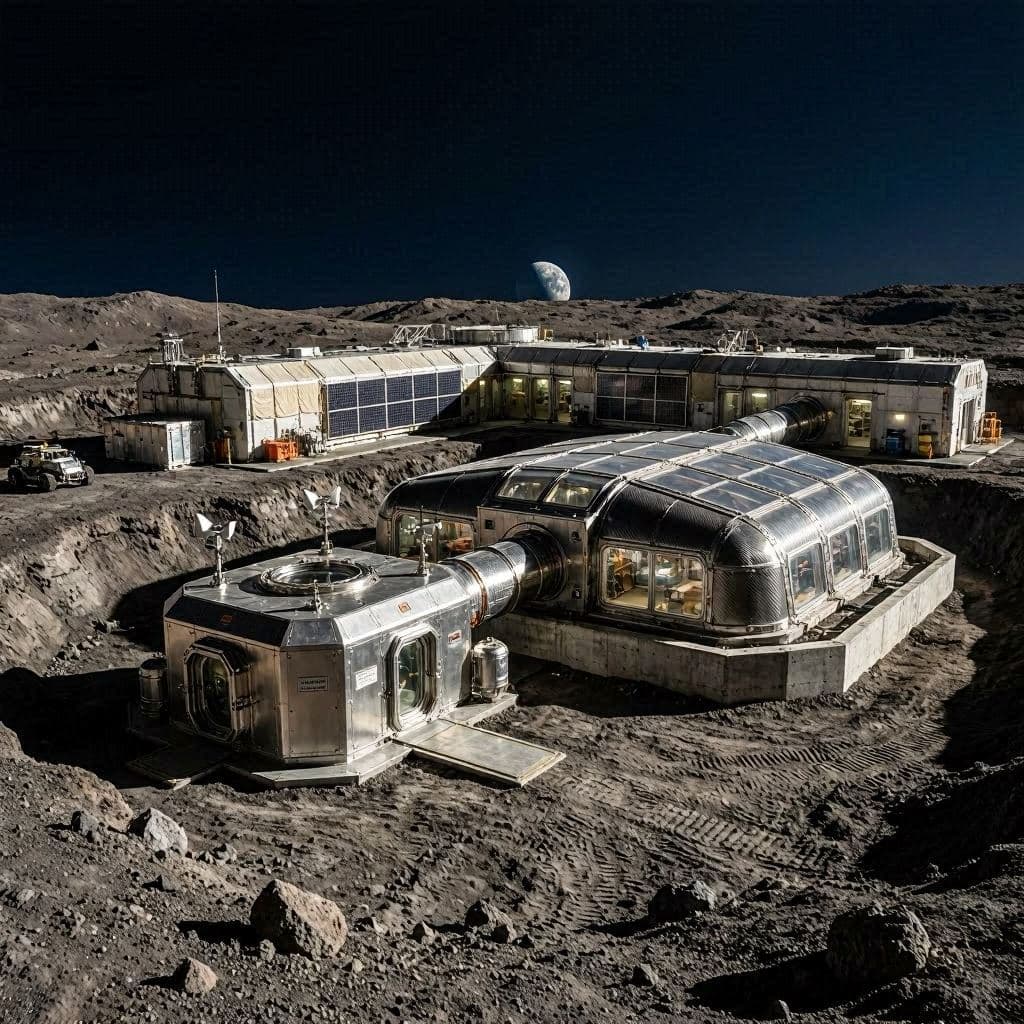
Researchers have proposed the concept of a lunar quarantine facility that could receive and examine samples collected during future space missions. The idea is intended to minimize contamination risks while preserving the scientific integrity of materials gathered beyond Earth.
Although no evidence currently suggests that extraterrestrial samples contain harmful biological material, planetary protection policies encourage precautionary measures whenever unknown environments are explored. These guidelines have shaped international space missions for decades.
A quarantine facility located on or near the Moon could allow astronauts and robotic systems to perform preliminary analyses before transporting samples to Earth. Scientists believe this approach may reduce both forward contamination and backward contamination risks.
Engineers are evaluating how such a facility might operate under the Moon's challenging environmental conditions. Reliable life-support systems, robotic laboratories, radiation protection, and secure containment technologies would all play essential roles.
The proposal remains in the conceptual research stage. Scientists emphasize that significant technological development, international cooperation, and policy discussions would be necessary before any lunar quarantine infrastructure could become operational.
Planetary protection specialists note that careful handling of extraterrestrial materials helps preserve scientific accuracy while ensuring that future discoveries can be studied responsibly. Similar principles have guided previous sample-return missions conducted by multiple space agencies.
Although the concept remains a long-term possibility, it illustrates how space exploration increasingly combines scientific ambition with careful risk management. As future missions reach farther into the solar system, thoughtful planning will continue supporting both discovery and safety.
AI-generated image disclaimer: The accompanying illustration was created using AI to visualize a conceptual scientific facility and is not an official mission image.
Published by Banx Network. This article is part of the Banx decentralized media programme, powered by the BXE token on the XRP Ledger.