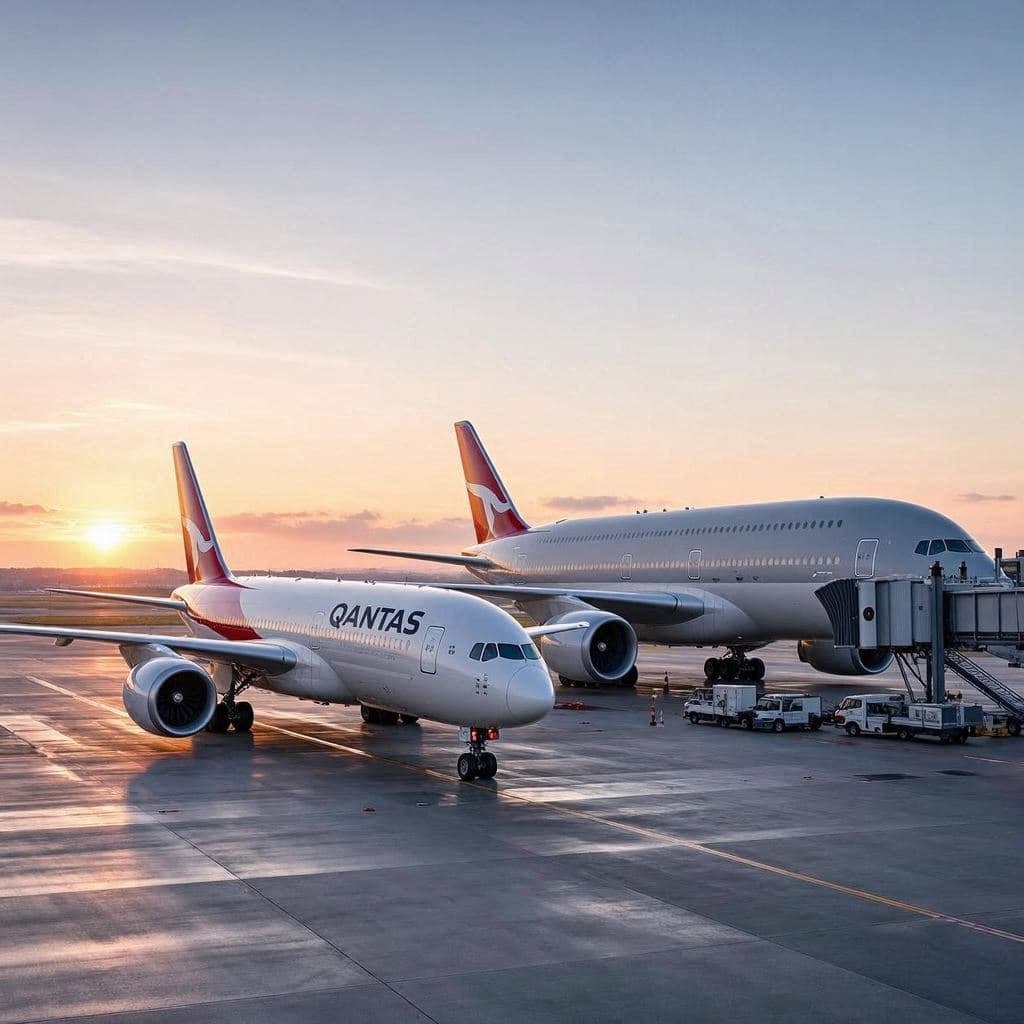
A journey is measured not only by the miles between two cities but also by the experience of moving through them. Aviation has always balanced innovation with familiarity, where each new aircraft promises greater possibilities while older icons continue to earn admiration from travelers who value comfort in a different way. As one chapter prepares to begin, another remains firmly etched in the memories of many passengers.
Qantas is preparing to introduce its first Airbus A350-1000ULR as part of Project Sunrise, a program designed to operate some of the world's longest non-stop commercial flights. The aircraft is expected to enter the fleet in 2027 and will enable direct services from Sydney to London and later Sydney to New York, with flight times approaching 20 to 22 hours.
The specially configured A350-1000ULR will carry 238 passengers in a premium-focused cabin layout, considerably fewer than the standard version of the aircraft. Qantas says the design includes larger economy seating, a dedicated Wellbeing Zone for stretching and refreshments, advanced cabin lighting, and other features intended to reduce fatigue on ultra-long journeys.
Unlike the Airbus A380, which is celebrated for its spacious twin-deck layout and exceptionally quiet cabin, the A350 emphasizes efficiency and range. Powered by two Rolls-Royce Trent XWB engines rather than four engines, it consumes less fuel while flying farther, making nonstop routes commercially viable where previous aircraft required intermediate stops.
The headline's preference for the A380 reflects an opinion shared by many aviation enthusiasts. Supporters of the superjumbo often praise its generous cabin width, smoother ride, and spacious upper deck, qualities that have helped the aircraft maintain a loyal following even as airlines gradually transition toward newer twin-engine designs. Meanwhile, proponents of the A350 point to its modern cabin technology, lower operating costs, and ability to connect cities without layovers.
Project Sunrise represents more than a fleet upgrade. It is part of Qantas' long-term strategy to connect Australia directly with destinations that have traditionally required one or more stops. By eliminating layovers, the airline aims to save travelers several hours while offering onboard features specifically developed through research on sleep, lighting, nutrition, and passenger wellbeing.
Even with the arrival of the A350, the Airbus A380 will remain an important part of Qantas' international operations for several more years. The airline has invested heavily in refurbishing its superjumbo fleet, while indicating that replacement of the aircraft is expected to occur gradually in the early 2030s as newer long-haul aircraft become available.
As aviation continues to evolve, preferences between aircraft will naturally remain personal. Some travelers may embrace the convenience of nonstop ultra-long-haul flights aboard the A350, while others will continue to appreciate the spacious comfort of the A380. Together, they illustrate how progress in aviation often builds upon the enduring legacy of the aircraft that came before.
AI Image Disclaimer: The accompanying illustrations are AI-generated artistic representations inspired by verified aviation information and are not official manufacturer or airline photographs.
Sources (verified):
Reuters Qantas Airbus Associated Press
Published by Banx Network. This article is part of the Banx decentralized media programme, powered by the BXE token on the XRP Ledger.